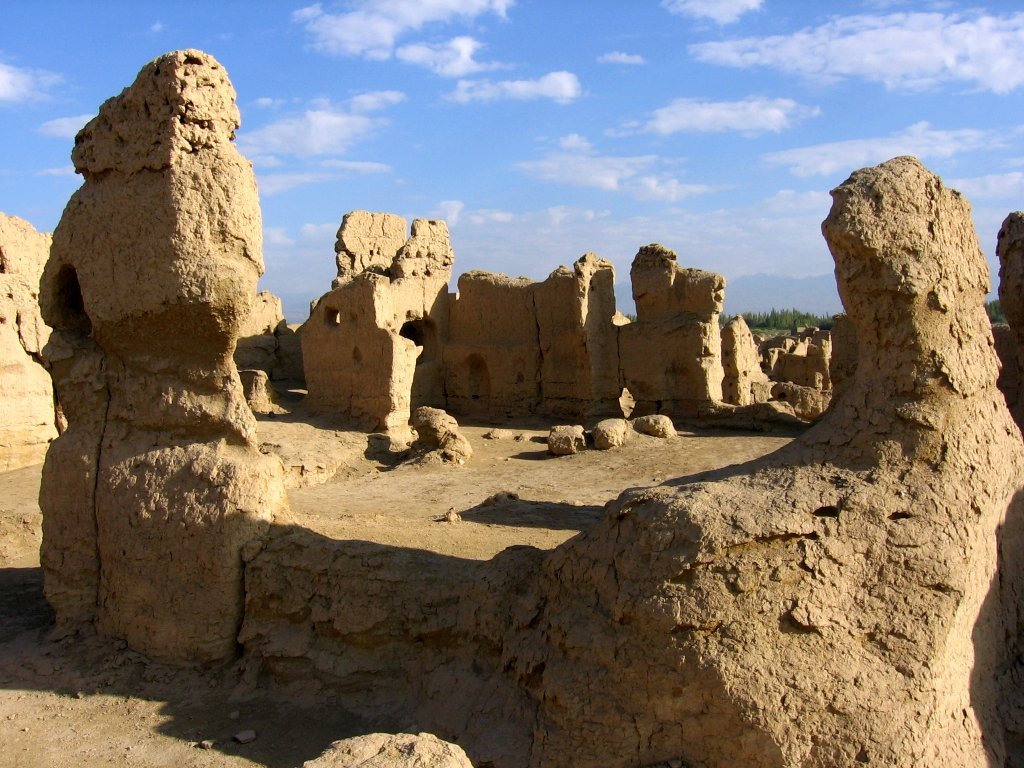
Turpan was one of the most important oasis cities on the Silk Road — a key stopping point on the route between China and Central Asia. Today it is a small, unhurried town where donkey carts still share the streets with cars, and the surrounding desert landscape is extraordinary.
The sights in and around Turpan are remarkable. The 37-metre Emin Minaret (Sugong Tower), built in 1777, stands 2 km east of town. The ghost city of Gaochang, 40 km southeast, once held 50,000 inhabitants and was ravaged by the Mongols in the 14th century — the walls and roofless houses still stand in the desert. The Astana Tombs nearby preserve mummies and frescoes from the 8th century. Jiaohe, 10 km west of town and partially restored by UNESCO, is another ancient ghost city set on a cliff above a river gorge. The Bezeklik Thousand Buddha Caves, 20 km northeast in the Flaming Mountains, contain grottoes with frescoes and views across a dramatic valley.
The Flaming Mountains themselves — so named for their reddish rock that glows in the afternoon light — are one of the classic images of the Xinjiang desert. Summer temperatures in Turpan regularly exceed 45°C; spring and autumn are far more comfortable for visiting.