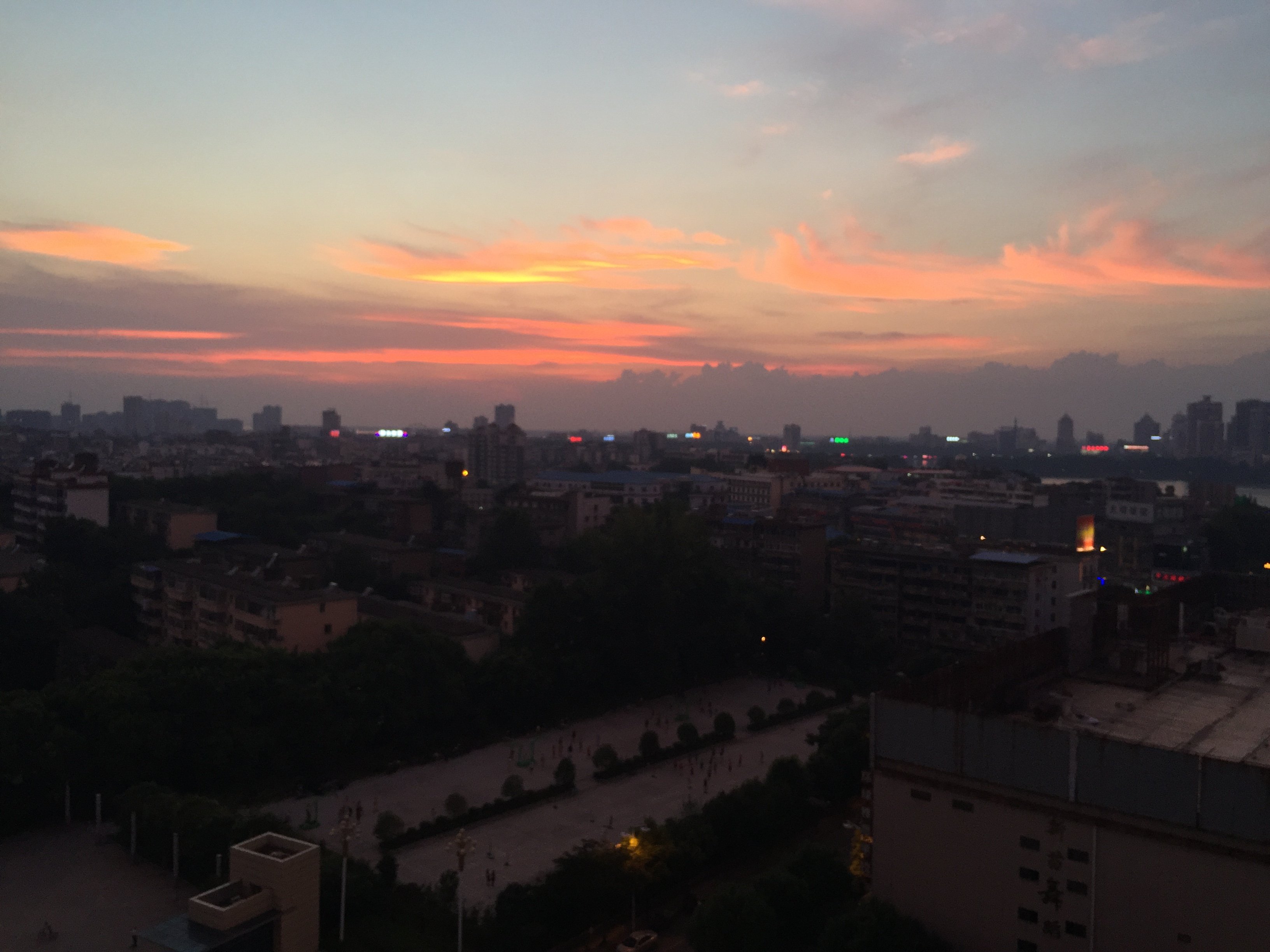
Jiujiang sits at the northern edge of Jiangxi where the Yangtze River flows past the mouth of Poyang Lake — a position that made it one of the most important river ports in central China for most of the last two millennia. In the nineteenth century it was designated one of China's first treaty ports, and the foreign concession-era architecture along the riverfront still lends certain streets a faded colonial character unusual in an otherwise modern Chinese city. The combination of river trade, tea production, and access to the interior made Jiujiang wealthy, and some of that accumulated depth persists.
The main reason most visitors come is as a gateway to Lushan, the dramatic mountain range rising just to the south that has drawn Chinese poets, philosophers, and politicians for centuries. But Jiujiang itself rewards a day's exploration. Stone Bell Hill, where the Yangtze meets Poyang Lake, is a genuinely strange geological formation — hollow cavities in the rock create low resonant sounds when struck by waves, a phenomenon that prompted Su Dongpo to write one of the more celebrated investigative essays in classical Chinese literature.
The lake and river geography shapes everything here, including the food. Freshwater fish from Poyang Lake — particularly the silver carp and mandarin fish preparations — are better in Jiujiang than almost anywhere else in the province. Sealed-jar rice wine, brewed and aged locally, is the drink worth seeking out, and Lushan cloud-and-mist tea, grown on the mountain slopes above the city, has been prized for over a thousand years.