Gandhinagar is Gujarat's capital and one of the few cities in India that was purpose-built for the job. Planned in the 1960s and modelled loosely on Chandigarh, it sits about 25 km north of Ahmedabad on the west bank of the Sabarmati river. The city is laid out in a precise grid of numbered sectors, connected by wide tree-lined avenues. It is calm, green, and a little sleepy — a stark contrast to the chaos of Ahmedabad.
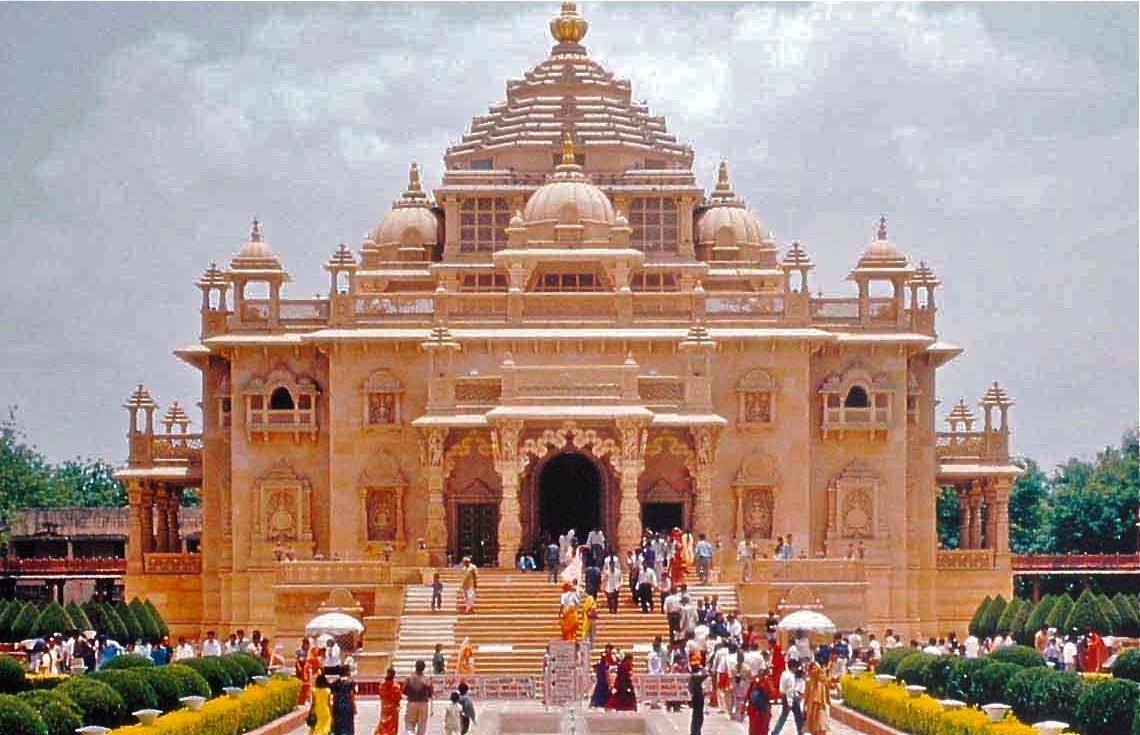
The centrepiece is Akshardham, one of the largest Hindu temple complexes in the world. Built by the Swaminarayan sect and inaugurated in 1992, the main shrine is carved from pink Rajasthani sandstone — 6,000 tonnes of it — into an elaborate mass of figures, friezes, and spires. Visitors who find the scale overwhelming will still enjoy the musical fountain show in the garden each evening. Photography inside is not allowed, and the security screening is thorough.
On the northern edge of the city, Indroda Nature Park (also called Dinosaur and Fossil Park) sits on a stretch of land where palaeontologists have found dinosaur eggs and nesting sites from the late Cretaceous period — one of only a handful of such sites in the world. The park also has a zoo and botanical garden. It is relaxed and rarely crowded.
Most people come on a half-day trip from Ahmedabad, and that is enough time to see Akshardham and one other stop. Those who want to linger can explore the wooded riverside along the Sabarmati or the largely quiet grounds of the Gujarat Science City near the highway.