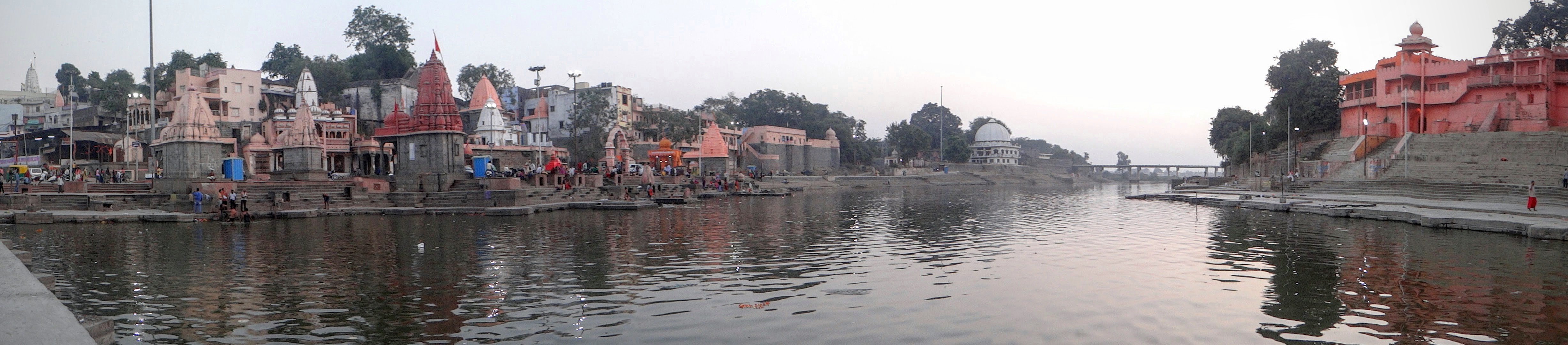
Ujjain is one of the seven sacred cities of Hinduism, an ancient place on the banks of the Kshipra River in Madhya Pradesh that has been a centre of learning, astronomy, and pilgrimage for over two thousand years. The city was the capital of the kingdom of Avanti in the time of the Buddha, and later the court of the legendary King Vikramaditya, whose patronage made it a golden age of Sanskrit literature.
The Mahakaleshwar Temple is the main draw — one of the twelve Jyotirlinga shrines to Shiva, housing a lingam that uniquely faces south. The temple complex is vast, crowded, and atmospheric, especially during the evening aarti ceremony. Every twelve years, Ujjain hosts the Kumbh Mela (known locally as the Simhasta Mela), one of the largest religious gatherings on earth, when millions of pilgrims come to bathe in the Kshipra.
Beyond the temple, Ujjain has the Vedha Shala (observatory), one of five built by Raja Jai Singh II in the 18th century, with ancient astronomical instruments still in place. The Kaliyadeh Palace on the outskirts is a fine piece of ancient Indian architecture, though in poor repair. The Bharthari Caves carry local legends worth asking about.
Ujjain is well connected by rail to most major Indian cities. The nearest airport is at Indore, about 55 kilometres away, with daily flights to Delhi, Mumbai, and Bhopal.