Aurangabad is a mid-sized city in northern Maharashtra, about 370 km east of Mumbai, and the base for visiting two of the most extraordinary UNESCO World Heritage sites in India: the rock-cut cave temples of Ajanta and Ellora. Almost everyone who comes here comes for the caves, and rightly so — but the city itself has enough Mughal history and atmosphere to reward a day of its own.
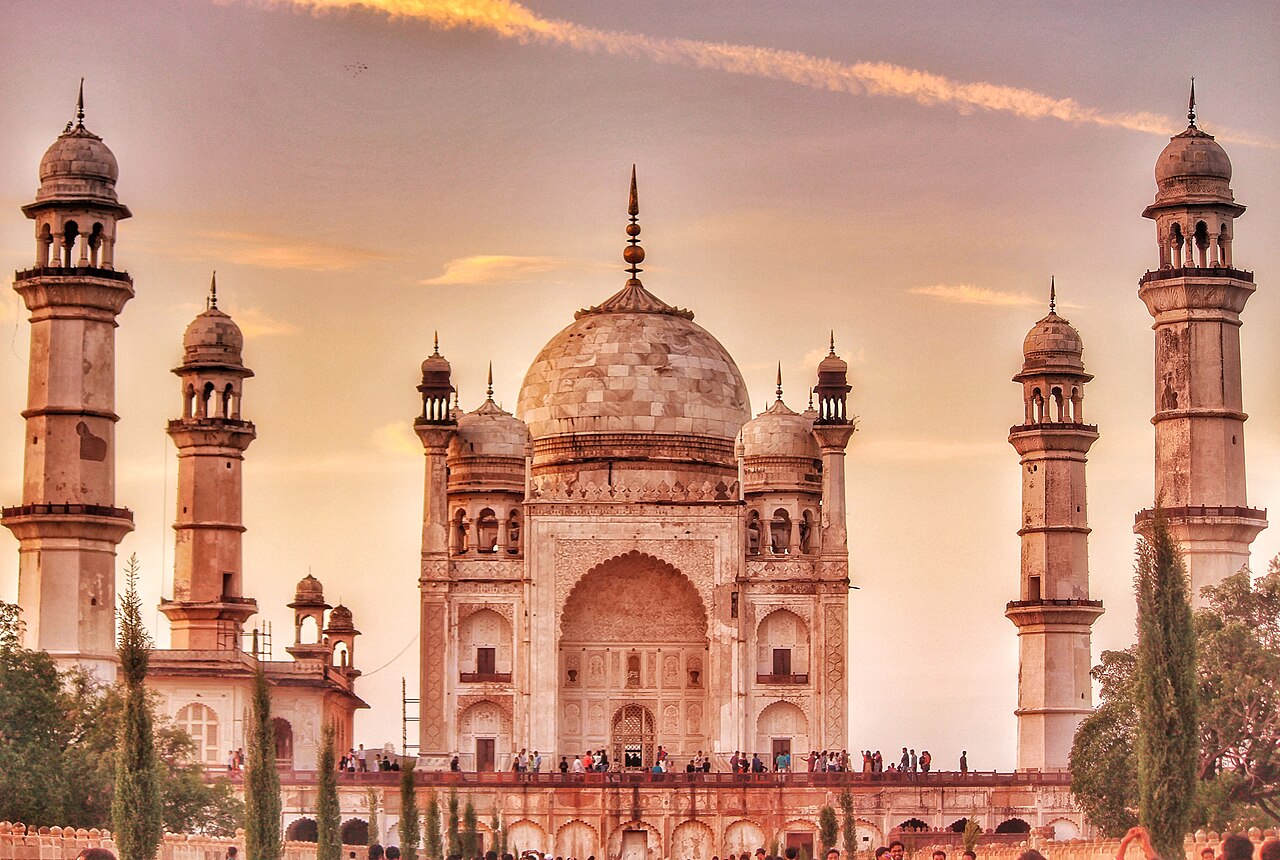
The city was founded in 1610 and became the capital of the Deccan under the Mughal emperor Aurangzeb, the last great Mughal, who ruled the empire from here for most of his long reign (1658–1707). The Bibi Ka Maqbara, on the north side of the city, is the city's most famous monument — a mausoleum built in 1660 for Aurangzeb's wife Dilras Banu, openly modelled on the Taj Mahal. It is sometimes disparagingly called "the poor man's Taj," which is both unfair and partly accurate: the proportions are Mughal-perfect, but the materials (lime plaster over basalt, rather than Agra's white marble) give it a rougher, more provincial feel. The old city walls survive in places, with four principal gateways — the Delhi Darwaza, the Jalna Darwaza, the Paithan Darwaza, and the Mecca Darwaza — still standing. The Aurangabad Caves, a small group of Buddhist rock-cut caves just outside the city, are older than Ellora and much less visited, and make a worthwhile half-day excursion if you have the time.
The real reason to be here is the day trips. Ellora, 30 km north-west, has 34 caves cut from a basalt escarpment between the 6th and 10th centuries — Buddhist, Hindu, and Jain caves side by side, culminating in the extraordinary Kailash Temple (Cave 16), a full-sized Hindu temple carved top-down from a single block of rock. It is one of the most astonishing feats of human craftsmanship in the world. Ajanta, 100 km north-east, is older (2nd century BC to 7th century AD) and purely Buddhist: 30 rock-cut monastery caves containing murals and sculptures that are among the finest surviving examples of ancient Indian painting. Both are full-day excursions from Aurangabad — Ellora is easier and quicker, Ajanta requires more time on the road but the paintings make it worth every minute. Ajanta is closed on Mondays, Ellora on Tuesdays.
Aurangabad is well connected: daily flights from Mumbai and Delhi, overnight trains from Mumbai, and regular buses from Pune. Stay in the city centre, eat Mughlai biryani at one of the old restaurants near the Mecca Gate, and give yourself at least two full days — one for each set of caves.