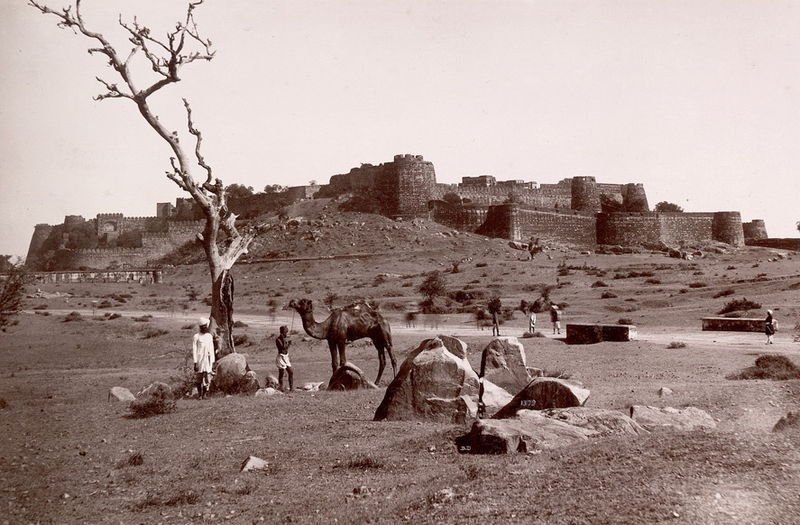
Jhansi is a railway junction city in southern Uttar Pradesh, best known as the stronghold of Rani Lakshmibai, the warrior queen who led the 1857 revolt against the British and is revered as India's Joan of Arc. Most travellers pass through on the popular Delhi-Agra-Jhansi-Khajuraho-Varanasi circuit, but the city and its surroundings deserve a stop.
Jhansi Fort, built in 1613 by Virsingh Deo of Orchha and later the seat of Rani Lakshmibai, crowns Bangra Hill above the city. The fort is where the queen famously leapt on horseback during her escape from the British siege — a memorial board marks the spot. Inside you will find Shiva and Ganesh temples, pleasure grounds, and the Kadak Bijli cannon used in the 1857 uprising. Below the fort, the Rani Mahal from the 18th century now houses an archaeological museum with an impressive collection of Chandela sculpture.
The Rani Lakshmibai Memorial at Phool Bagh — an equestrian statue of the queen with her son tied to her back — is where Jhansi gathers for national holidays. The Jhansi Cantonment Cemetery, quieter and less visited, holds graves of British soldiers killed in the same 1857 siege; walking between the two memorials in an afternoon gives the revolt a human scale it rarely has in textbooks.
Just 17 kilometres from Jhansi lies Orchha, a stunning ruined Bundela capital on the banks of the Betwa River. Founded in 1531, Orchha is packed with palaces, painted temples, and memorial towers reflected in the river — an essential day trip. The Jehangir Mahal, with its ornate fretwork, and the frescoed Lakshmi Narayan Temple are highlights.
Jhansi is well connected by train to Delhi (414 km), Agra (216 km), Gwalior (97 km), and Bhopal (292 km). Buses to Khajuraho (172 km, about 5 hours) run several times daily.