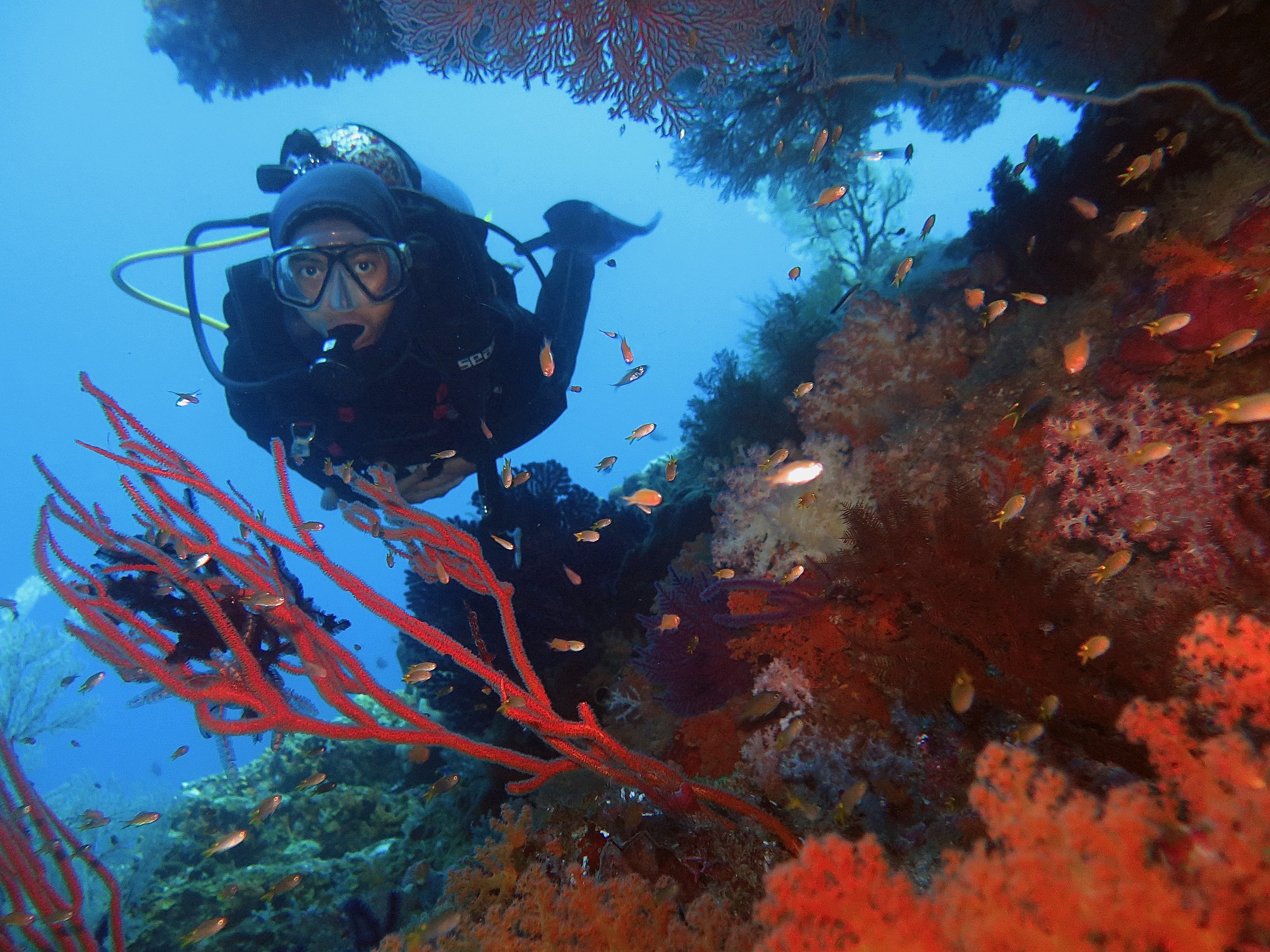
West Papuan archipelago of karst islands and reef passages at the heart of the Coral Triangle.
Raja Ampat — the Four Kings — is an archipelago of over 1,500 islands off the northwest tip of West Papua, at the point where the Pacific and Indian Oceans meet. Marine biologists say it contains more species of fish, coral, and invertebrate life than anywhere else on the planet. Every survey seems to confirm this. If you want to dive or snorkel, there is nowhere on earth that compares.
The name comes from four main islands: Waigeo, Batanta, Salawati, and Misool. Waigeo is the largest and the administrative hub, with the main town of Waisai a 3-hour fast ferry from Sorong on the mainland. Wayag, a cluster of mushroom-shaped karst islands rising from a lagoon in the far northwest, is the image that appears on every travel website about Indonesia. Pianemo, a smaller version of the same landscape, is closer to Waisai and sees more visitors. Both are extraordinary.
The diving is what sets Raja Ampat apart from every other destination. The currents that sweep through the passages between the islands carry nutrients that feed the reef, and the reef repays this with a density of life that is simply overwhelming. Wobbegong sharks rest on the reef; pygmy seahorses live in fan corals; walking sharks — which actually walk along the reef floor on their fins — are found nowhere else. The visibility is often outstanding; the water is warm. Most people leave saying it was the best diving of their lives.
Visiting takes commitment. Getting here from Europe or Australia involves at least two or three flights plus a ferry crossing. Once here, most visitors stay on a liveaboard dive boat or at a small eco-resort built on stilts over the reef. There is no mass tourism infrastructure — no beach clubs, no resorts with swimming pools, no organised day-trip boats. The isolation is the point.
Guide
Getting Around
Getting around Raja Ampat is by boat — there are no roads between the islands and no inter-island ferry system. The two main options are liveaboard dive boats and basing yourself at a resort or guesthouse and paying for day trips.
Liveaboards allow you to cover the most ground and reach the remote sites around Wayag, Misool, and the outer reefs. They range from basic converted fishing boats to luxury sailing yachts. Booking months in advance is essential for peak season (October–April).
For land-based visitors, most resorts and guesthouses include a speedboat and driver in their rates; day trips to dive sites and viewpoints are charged separately. The budget option is to stay in one of the small local guesthouses (homestays) on islands like Kri or Arborek, which are close to some of the best dive sites, and hire boat trips locally. This is significantly cheaper than the resort option and gives you more independence.
Waisai is connected to the surrounding islands by public speedboats and water taxis, but schedules are irregular.
Guide
Getting There
The gateway to Raja Ampat is Sorong, in West Papua, reached by direct flights from several Indonesian cities including Jakarta, Makassar, and Manado. From Sorong, a fast ferry runs to Waisai, the administrative capital of Raja Ampat, taking about three hours and departing daily. Waisai itself is small and mainly exists as a ferry terminal and permit office — most travellers head straight for the dive resorts or their liveaboard.
Getting to Sorong from Europe involves at least two connections and typically 24–30 hours of travel. From Australia it is easier: flights from Darwin or Cairns to Denpasar or Makassar connect to Sorong. The total journey is demanding, which is part of why Raja Ampat remains comparatively uncrowded.
A conservation permit is required on arrival at Waisai, paid in cash. This fee goes directly to local reef conservation efforts and is not optional. Check the current amount before you go as it changes periodically.
Guide
When to Go
Raja Ampat has two main seasons for diving. October to April is the drier period, with calmer seas, better visibility, and the best conditions for reaching Wayag and other remote sites. This is the peak season; prices are at their highest and liveaboards are fully booked months in advance.
May to September brings the northwest monsoon, with rougher seas and reduced visibility in some areas. Some sites, particularly in the north around Wayag, become difficult or impossible to reach. However, other sites — particularly in the south around Misool — are often calmer in this period. Manta rays are reliably seen year-round. Some operators offer lower prices in the off-season.
The most important variable is sea conditions rather than rain. Always check with your liveaboard or resort about current conditions for the sites you want to visit.