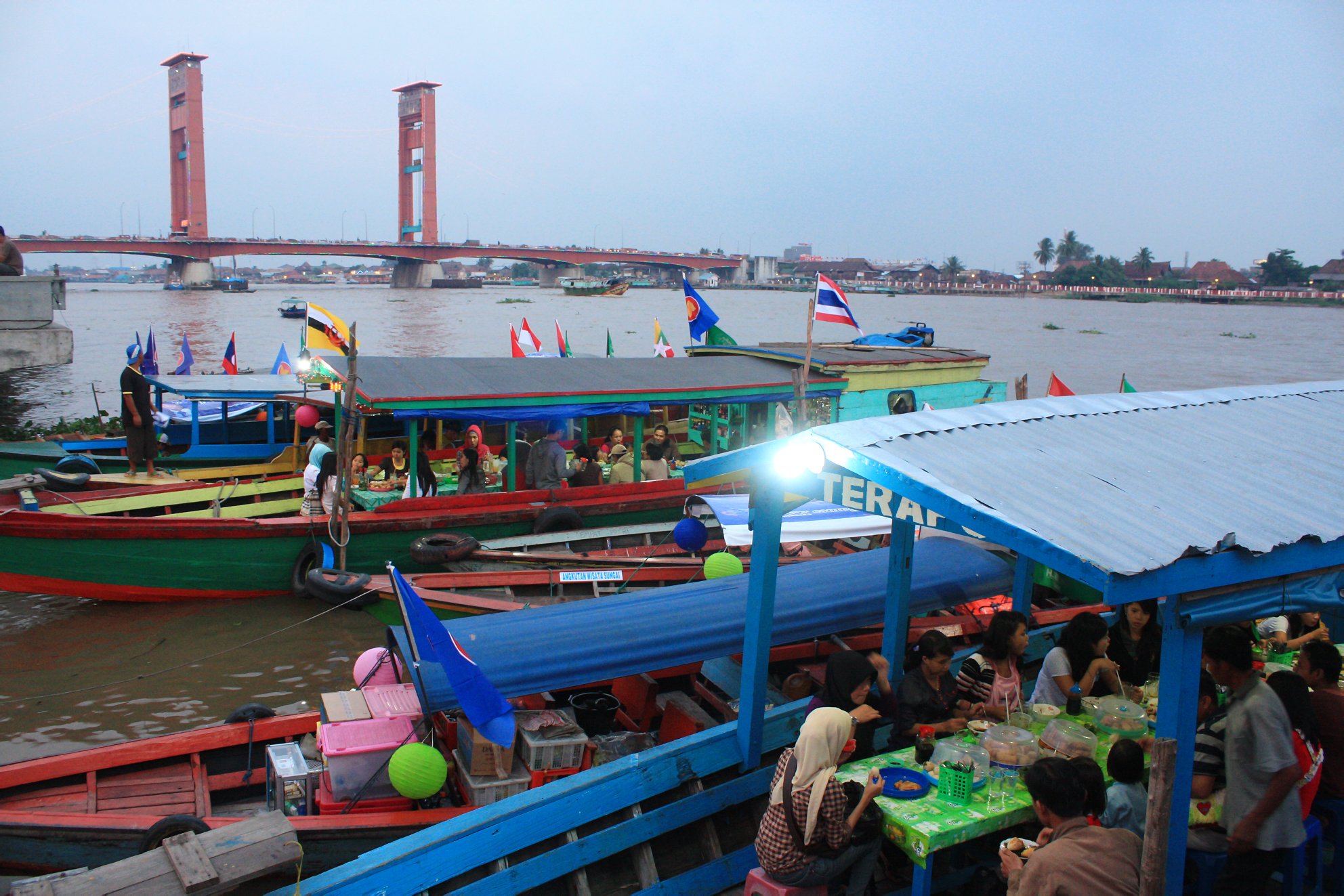
Palembang is the oldest city in Indonesia and the capital of South Sumatra, sprawling along both banks of the Musi River. It was once the centre of the Srivijaya maritime empire, which controlled trade across Southeast Asia from the seventh to the thirteenth century. That history is largely invisible today — Palembang is a modern, noisy, traffic-choked Indonesian city of nearly two million people — but dig a little and the layers appear.
The Musi River is the heart of the city. The Ampera Bridge, Palembang's most recognisable landmark, spans it, and the river itself is busy with traditional boats and floating markets. The Sultan Mahmud Badaruddin II Museum on the north bank occupies a grand colonial-era building and covers Srivijaya history and local culture, while Kuto Besak next door is the last surviving sultanate fortress in Indonesia. Nearby, the Great Mosque of Palembang is one of the largest in Southeast Asia. A river ketek downstream reaches Kemaro Island with its Chinese pagoda; upstream sits the legend-haunted hill of Bukit Seguntang.
Palembang is famous across Indonesia for pempek — deep-fried fish cakes served with a sweet-sour vinegar sauce called cuko. You will find it everywhere, from street carts to sit-down restaurants. The city also produces some of the finest songket woven textiles in the archipelago, available at the traditional weaving workshops in the Tangga Buntung neighbourhood.