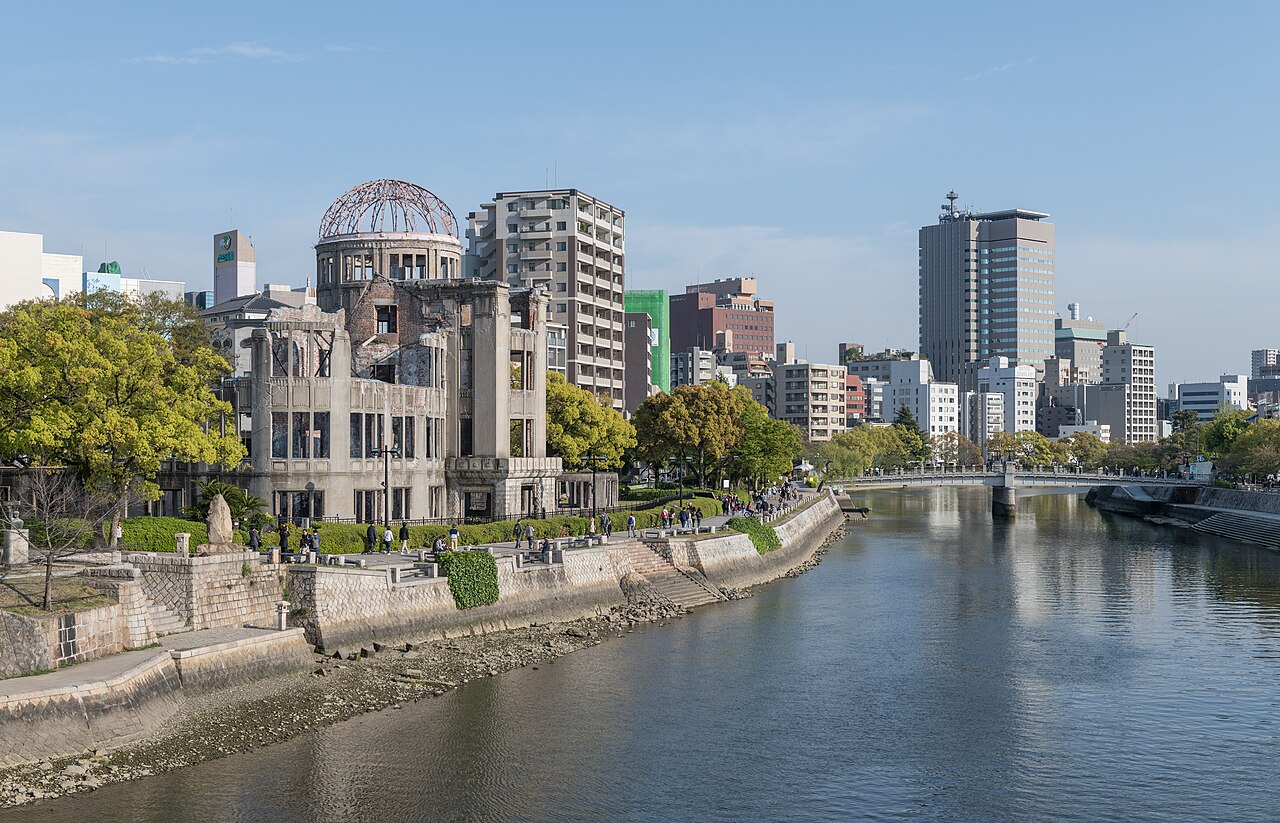
When the first atomic bomb exploded over Hiroshima on 6 August 1945, the city became an immediate symbol of the horrors of war. Today, with a population of over a million, Hiroshima has rebuilt itself into a modern industrial city — Mazda's headquarters and main factory are here — but it has not let the world forget what happened.
The Peace Park at the city centre is the heart of the memorial landscape. The skeletal A-Bomb Dome, the only structure left standing near the hypocenter, faces the Cenotaph for the Victims across a reflecting pool. Inside the Atomic Bomb Museum, photographs document the actual effects of the blast on human flesh — harrowing, essential, and unlike anything else in a Japanese museum. The Children's Peace Memorial, dedicated to Sadako Sasaki and the thousands of child victims, is surrounded by millions of paper cranes sent by schoolchildren from across Japan.
Away from the memorials, Hiroshima is a working city with covered shopping arcades and an efficient streetcar network that makes announcements in both Japanese and English.
The island of Miyajima, a 30-minute ferry and streetcar ride from the city centre, is not to be missed. The Itsukushima Shrine, built on wooden piers over the tidal waters of the bay, is one of Japan's most photographed sites — its orange torii gate standing in the sea at high tide. The island itself is peaceful, with deer wandering among the shrines.
Farther afield, the Kintai-kyo bridge at Iwakuni (45km along the JR Sanyo line) is an extraordinary five-span arched wooden structure built in 1673, originally reserved for samurai. The nearby towns of Bizen and Hagi are famous for their pottery — Bizen's deep brown stoneware has been made for a thousand years.