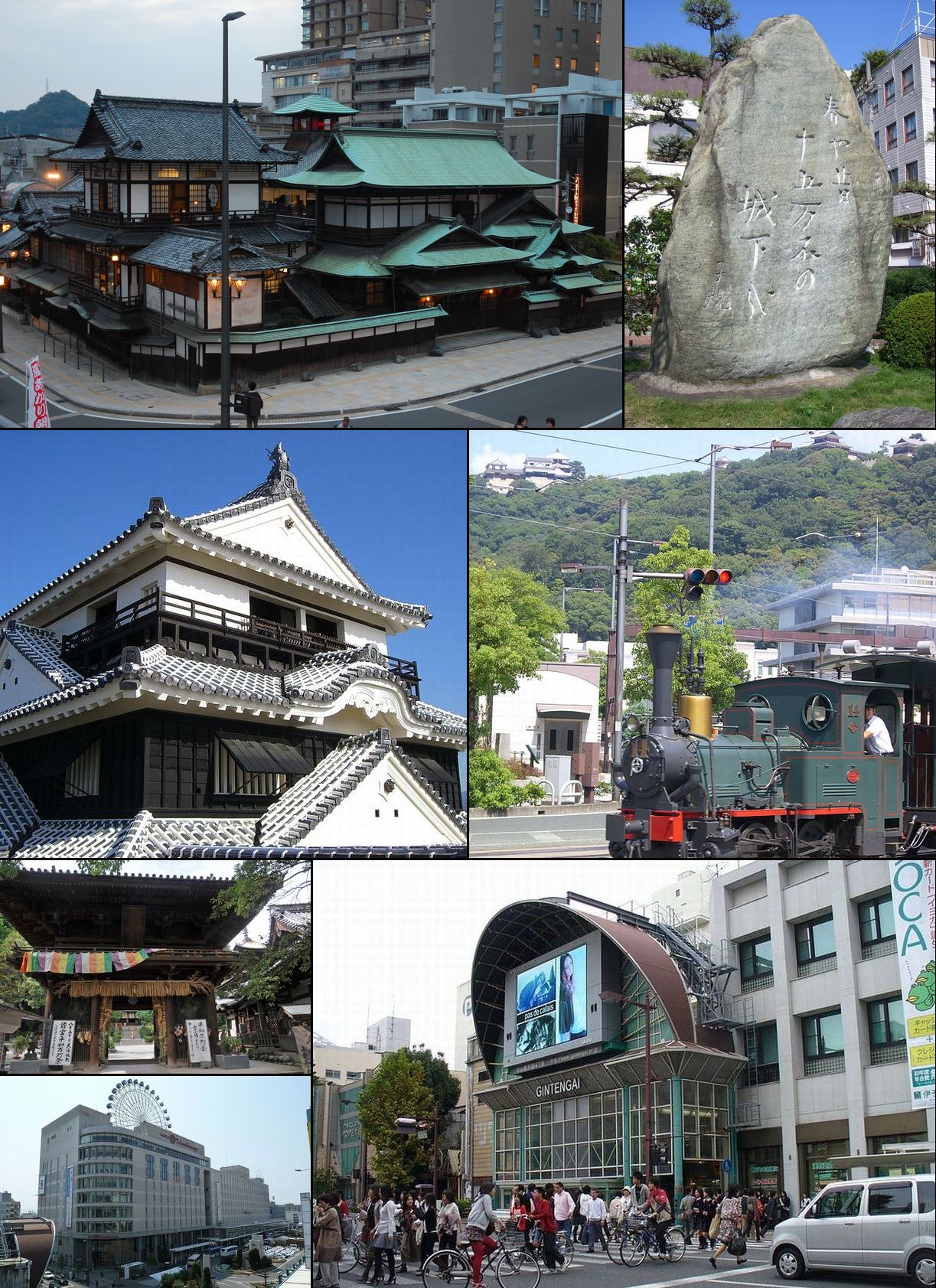
Shikoku's largest city is also arguably its most interesting. Matsuyama has one of Japan's handful of original feudal castles still standing on its hilltop, a historic hot spring resort practically attached to the city limits, and a strong literary identity rooted in haiku — the poet Masaoka Shiki was born here, and his influence is still felt.
The city and the Dogo district are essentially continuous, which means you can move between castle, temples, and thermal baths in the same afternoon. Dogo Onsen Honkan is among Japan's most celebrated hot spring bathhouses, and its old wooden building has been drawing visitors for well over a century. Isaniwa Shrine perches on a hill above the onsen district, reached by a long staircase, and is one of only three shrines in Japan built in its unusual architectural style.
Literary Matsuyama is worth exploring too. The Saka no Ue no Kumo Museum, designed by Tadao Ando, is built into a slope near the castle and celebrates the epic novel about Meiji-era Japan. The historic Botchan tram still runs on the city's old tram network — named after the famous novel in which its fictional predecessor was memorably insulted.
Matsuyama also makes a good base for Shikoku. Mt. Ishizuchi, the island's highest peak, is about an hour by bus.