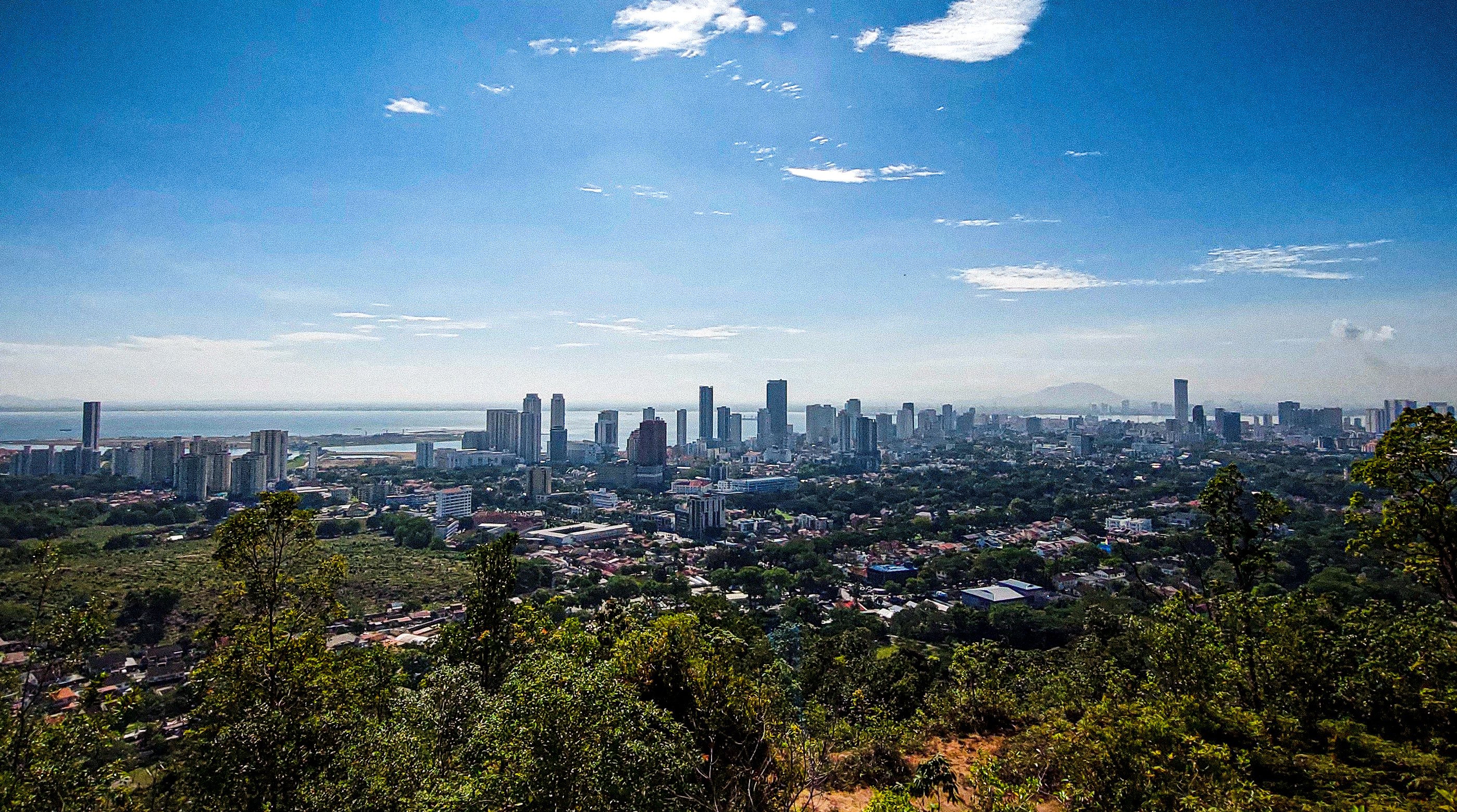
Georgetown is the capital of Penang state and one of the most rewarding cities in Malaysia for travellers. Its UNESCO-listed historic centre is a dense, walkable grid of shophouses, clan jetties, temples, mosques, and churches — a physical record of the centuries when this was one of the great trading ports of the Straits of Malacca.
The city's character comes from its mix of Malay, Chinese, Indian, and colonial British layers, all pressed together in a compact area you can cross on foot in twenty minutes. Little India bleeds into Chinatown, which runs up against the old British administrative quarter around Fort Cornwallis. The Clan Jetties — wooden stilt villages built over the harbour by Chinese immigrants — are still inhabited and still fascinating, particularly the Chew Jetty.
Georgetown's street food is legendary and arguably the best in Southeast Asia. Penang laksa (sour fish noodle soup), char kway teow (stir-fried flat noodles), and nasi kandar (rice with various curries) are the essentials. The hawker centres on Gurney Drive and the stalls along Armenian Street and Lebuh Chulia are where to find them. Prices are low and quality is remarkably consistent — follow the queues.
The street art scene, kicked off by Lithuanian artist Ernest Zacharevic's murals in 2012, has turned the old town into an open-air gallery. The murals are fun to hunt down on foot, and they have helped restore interest in buildings that were crumbling a decade ago. Beyond the historic core, Penang Hill offers a funicular ride to cooler air and views across the island, and the Kek Lok Si Temple in Air Itam is one of the largest Buddhist temples in Southeast Asia. The Khoo Kongsi clan house and the Cheong Fatt Tze Mansion are the two most spectacular heritage interiors in the city.