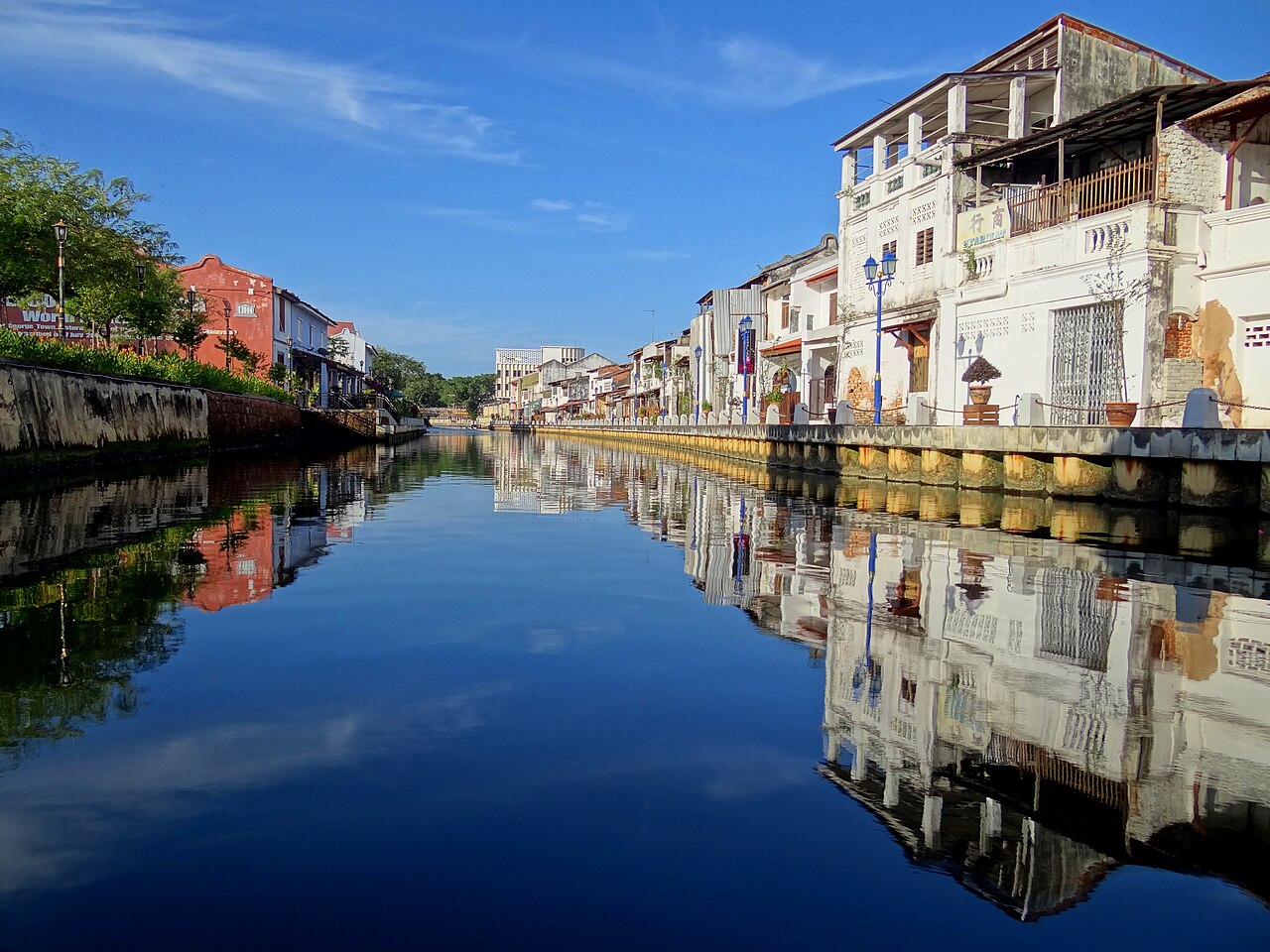
Melaka (also spelled Malacca) is one of Malaysia's most historically rich cities — a place where Portuguese, Dutch, British, Chinese, Malay, and Indian cultures have layered on top of each other for over five centuries. Founded as a trading port around 1400 by a Malay prince fleeing from Temasek (present-day Singapore), it became within decades the most important emporium in Southeast Asia. Control of Melaka was control of the spice trade between East and West.
The Portuguese took it by force in 1511, the Dutch in 1641, the British in 1795. Each colonial power left its mark: the Portuguese built the fortress whose single surviving gate, A'Famosa, still stands at the foot of St. Paul's Hill. The Dutch built the red-painted Stadthuys and Christ Church, which anchor the Red Square at the city's heart. The Chinese community established the Cheng Hoon Teng Temple in 1646 and left behind a Peranakan culture that is uniquely Melakan — best seen in the Baba Nonya Heritage Museum.
The old city is compact and walkable. Jonker Street (Jalan Hang Jebat) is the main artery of the Chinese quarter, lined with antique shops and culminating in a night market on Friday and Saturday evenings. The Kampung Kling Mosque, with its pagoda-style minaret, stands a few metres from the Buddhist temple and a Hindu shrine — a striking symbol of the city's layered religious history.
Melaka is listed as a UNESCO World Heritage Site along with Georgetown, Penang, under the designation "Historic Cities of the Straits of Malacca." It is about 150 kilometres south of Kuala Lumpur, easily reached by bus.