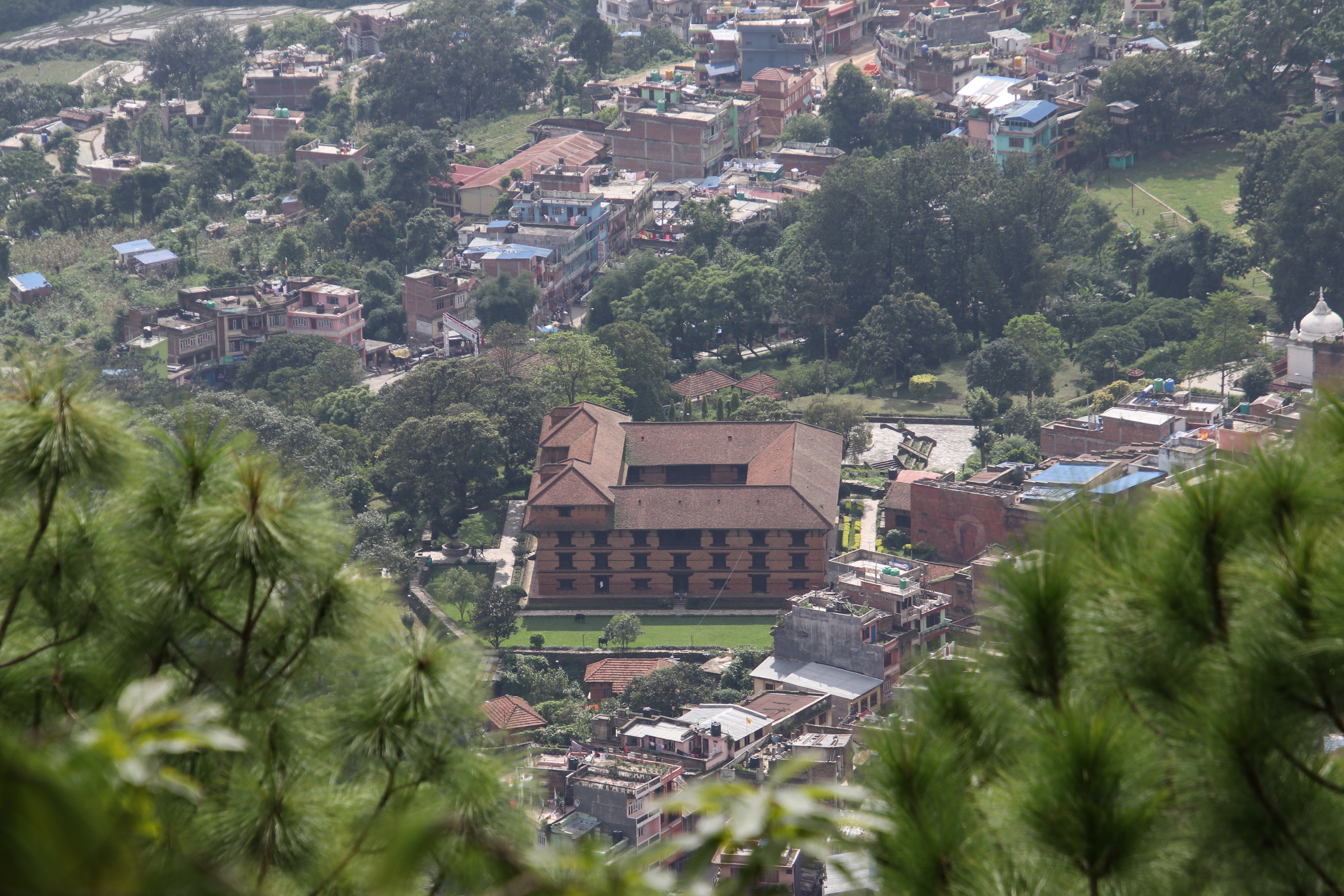
Gorkha
©
Gorkha

Gorkha

Hillside Nepali town where the Shah dynasty began and the Gurkha name took root.

Gorkha is the town that gave the world the Gurkhas. Perched on a dramatic hillside in central Nepal, roughly halfway between Kathmandu and Pokhara, it is where the Shah dynasty built their fortress-palace in the 18th century and from where Prithvi Narayan Shah set out to unify Nepal's warring kingdoms. The courage of the hill fighters who served the Shah kings so impressed the British during the Anglo-Nepalese War of 1814–1816 that they began recruiting them into the British Army — a tradition that continues to this day. The name Gurkha comes directly from this town.

Most travelers rush through on the Kathmandu–Pokhara highway without stopping, which is a mistake. Gorkha rewards a half-day or full day. The hilltop Gorkha Durbar — the fortress, temple complex and palace from which Prithvi Narayan Shah ruled — sits at 1,500 metres above the bazaar and offers a panoramic view of the Annapurna, Manaslu and Ganesh Himal ranges. On a clear morning the view stretches across an enormous sweep of Himalayan peaks. The hike up from the bazaar takes about 45 minutes and is straightforward.

The town itself is honest and unhurried, a world away from the trekking-industry bustle of Pokhara. The Gorkha Bazaar below the Durbar hill is a working market town untouched by tourism, worth an hour's wander and a cheap daal bhat lunch. The surrounding district encompasses Mount Manaslu (8,163 m), the eighth-highest mountain in the world, and the Manaslu Circuit is increasingly popular with trekkers looking for a quieter alternative to the Annapurna Circuit.

Guide

Eating Out

Gorkha is not a destination for food tourism, but eating here is cheap, honest, and satisfying. The Gorkha Bazaar has several daal bhat restaurants that serve the Nepali standard meal — lentil soup, rice, vegetable curry, and pickles — for a very small price. These places have no menus and no pretensions, and they are usually the best option for lunch after the hike up to the Durbar.

The guesthouses around the bazaar area serve a broader range of dishes in the evenings, including the usual trekking-lodge standards: noodles, fried rice, momos, and omelettes. Expect simple, functional cooking.

Alcohol is available at a few of the guesthouses. Local Khukri rum, named after the curved Gurkha blade, is the most interesting option and worth trying once.

Guide

Getting There

Gorkha sits about 140 km northwest of Kathmandu and 100 km east of Pokhara. The turnoff from the Prithvi Highway (Kathmandu–Pokhara road) is at Anbu Khaireni (also called Abu Khaireni), from where a road winds 24 km north up the Daraundi Khola valley to Gorkha Bazaar.

By bus, take any Pokhara-bound bus from Kathmandu's Gongabu Bus Park and ask to be let off at Anbu Khaireni — the journey takes around four hours. From there local minibuses and jeeps cover the final 24 km to Gorkha in about an hour. Buses also run directly to Gorkha from both Kathmandu and Pokhara. Most guesthouses can advise on current schedules, as these change seasonally.

Gorkha makes a natural stopover if you are traveling between Kathmandu and Pokhara overland, breaking the journey into two days and seeing something few tourists bother with.

Guide

Things to Do

Gorkha's main draw is its hilltop fortress, but the town and surrounding hills reward further exploration. The walk up to the Gorkha Durbar is itself half the experience — the path winds through terraced fields and small shrines with the Himalayan panorama expanding with every step. Within the Durbar complex, the Gorakhnath Temple is the spiritual heart of the site — the tutelary shrine of the Shah dynasty and a place of active pilgrimage. Beyond the Durbar, Upallokot offers even higher viewpoints for those willing to scramble further.

The Gorkha Bazaar is worth an hour of wandering before or after the Durbar visit — it is an ordinary Nepali hill-town market with none of the tourist veneer of Pokhara or Kathmandu. The Gorkha Museum near the lower palace adds historical depth, and Tallo Durbar — the lower palace — is an often-overlooked complement to the fortress above. For trekkers, Gorkha is a starting point for the Manaslu Circuit, one of Nepal's finest and least crowded long treks.

Guide

When to Go

The best months to visit Gorkha are October and November, when the post-monsoon air is clear and the Himalayan views from the Durbar are at their finest. The mountains — Annapurna, Manaslu, Ganesh Himal — are snow-capped but the skies are reliably cloudless, and temperatures at the Durbar's 1,500-metre elevation are pleasantly cool rather than cold.

March and April are the second best period. Rhododendrons bloom across the surrounding hills, temperatures are comfortable, and the views are good before the pre-monsoon haze builds. Spring is also the main trekking season for the Manaslu Circuit, so the trails are more active.

The monsoon (June–September) brings heavy rain, leeches on the hiking paths, and persistent cloud that obscures the mountain views. The Durbar is still accessible, but you will likely see nothing of the Himalayas. December through February is cold at higher elevations — the Larkya La pass on the Manaslu Circuit is typically closed — but the bazaar and lower parts of town remain mild and can be visited year-round.

The Dashain festival (October) and Tihar (October/November) are the most important festivals in Nepal and are celebrated enthusiastically in Gorkha. If your visit coincides with either, expect the bazaar to be particularly lively.