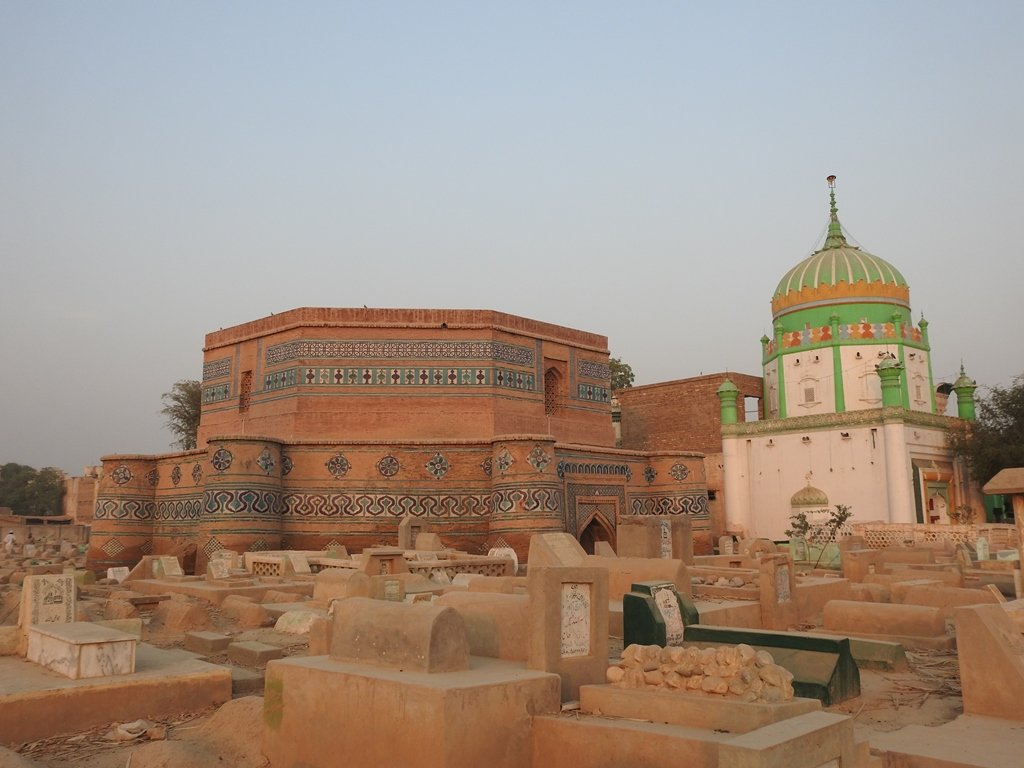
Dera Ghazi Khan — universally abbreviated to D.G. Khan — is a city of around half a million people in the southwestern corner of Punjab, close to the border with Balochistan. It sits at the confluence zone where the Indus and its tributaries flatten out onto the plains; the Sulaiman Mountains rise dramatically to the west.
Founded in 1494 by the Baloch chieftain Ghazi Khan Mirrani, the city was long a centre of Balochi culture and tribal administration, and retains that character. The dominant tribes — Mazari, Leghari, Khosa, Rind, Qaisrani — are names that carry weight in both Punjab and Balochistan politics, and D.G. Khan remains a place where feudal-era landholding patterns are still largely intact. The city itself is a busy, dusty, functional Punjab market town, not much visited by travellers but a useful stopping point on routes between the Punjab heartland and Balochistan.
The area is known for its textile industry, particularly the D.G. Khan Cement Company, and the surrounding district produces cotton, wheat, and sugar cane. The Taunsa Barrage on the Indus to the north is a significant irrigation works and a gathering point for migratory birds. Taunsa Sharif, a few hours north, has one of the most-visited Sufi shrines in southern Punjab.