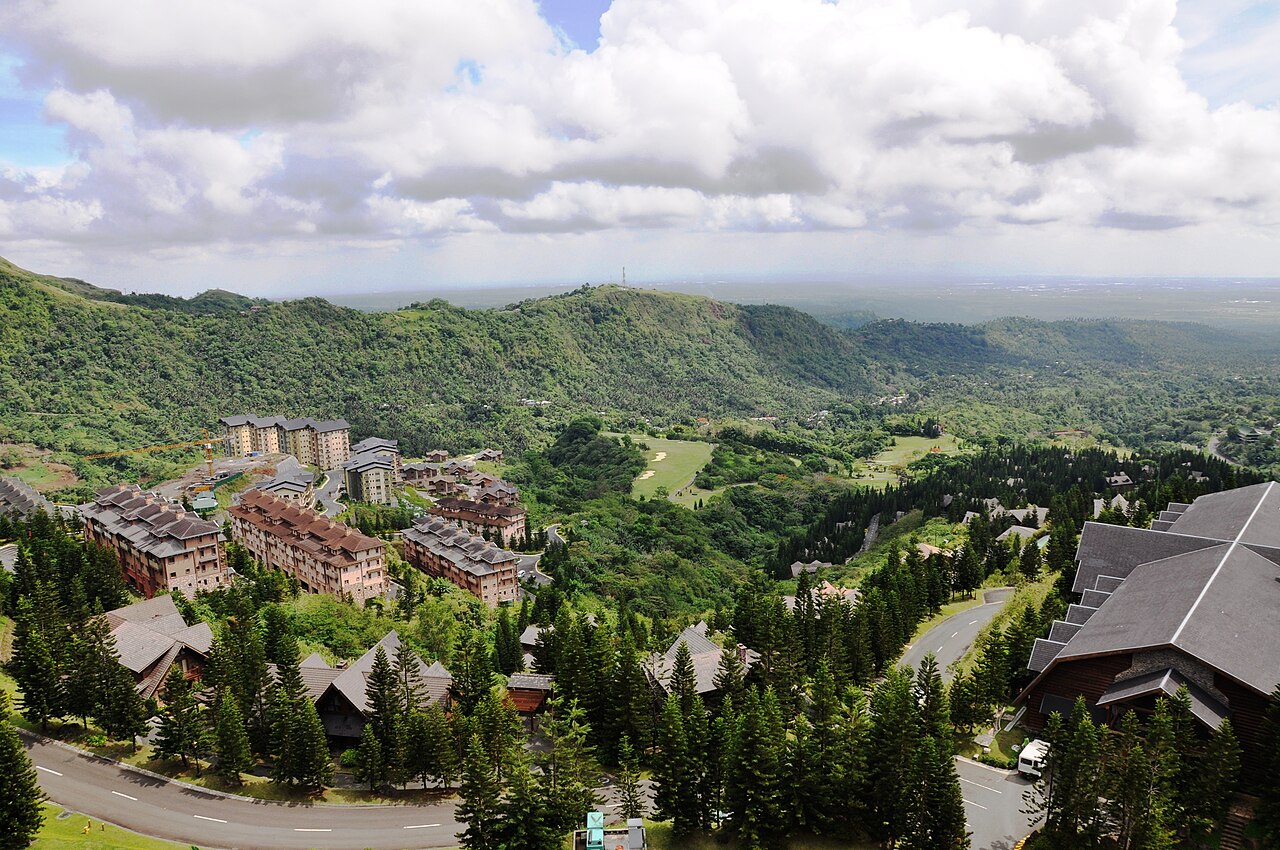
Tagaytay is a small hill town about 55 km south of Manila in the province of Cavite, Philippines. It sits at around 600 metres on the rim of a vast volcanic caldera, which gives it two things that make it, by a comfortable margin, the most popular weekend escape from the capital: a genuinely cool climate (daytime highs are 5–10°C lower than steamy Manila) and an extraordinary view. From the edge of the ridge, the land drops away into the circular bowl of the Taal Caldera and the great crater lake that fills it. In the middle of the lake sits Volcano Island, and on the island is a smaller crater lake — one of the handful of places on earth where you can see a lake on an island in a lake on an island in an ocean.
Taal Volcano, in the centre of that bowl, is one of the most active in the Philippines; it last erupted dramatically in January 2020, sending an ash plume 15 km into the sky, closing Manila airport, and displacing thousands of people from the shoreline villages. Climbing the volcano itself has been restricted since the 2020 eruption; check current conditions before trying to go down to the lakeshore at Talisay and take a boat across. Even without climbing it, the view of Taal from the Tagaytay ridge — especially at sunrise, before the clouds build up — is extraordinary.
Beyond the view, Tagaytay is a weekend-escape town with everything that implies: private resorts, expensive restaurants along the Tagaytay–Nasugbu highway, a concentration of cafés and zip-lines and kitsch attractions like the giant Sky Eye Ferris wheel and the People's Park in the Sky (a never-finished Marcos-era hilltop mansion turned viewpoint). The best way to see it is on a long morning drive from Manila, stopping for bulalo (the local beef bone-marrow soup) and tawilis (a freshwater sardine found only in Taal Lake) at one of the cliffside restaurants, before heading back to the city before the traffic builds.