Al-Khobar is a modern Gulf city that grew from a small fishing settlement into a substantial urban center within a single generation, driven entirely by oil. Together with Dammam and Dhahran, it forms the principal conurbation of Saudi Arabia's Eastern Province — the center of gravity for the kingdom's oil industry and home to the headquarters of Saudi Aramco, one of the world's most valuable companies. The city has little historical depth to speak of, but as a portrait of Gulf urbanism — its ambitions, its contradictions, its comfort-oriented present — it is more interesting than its reputation suggests.
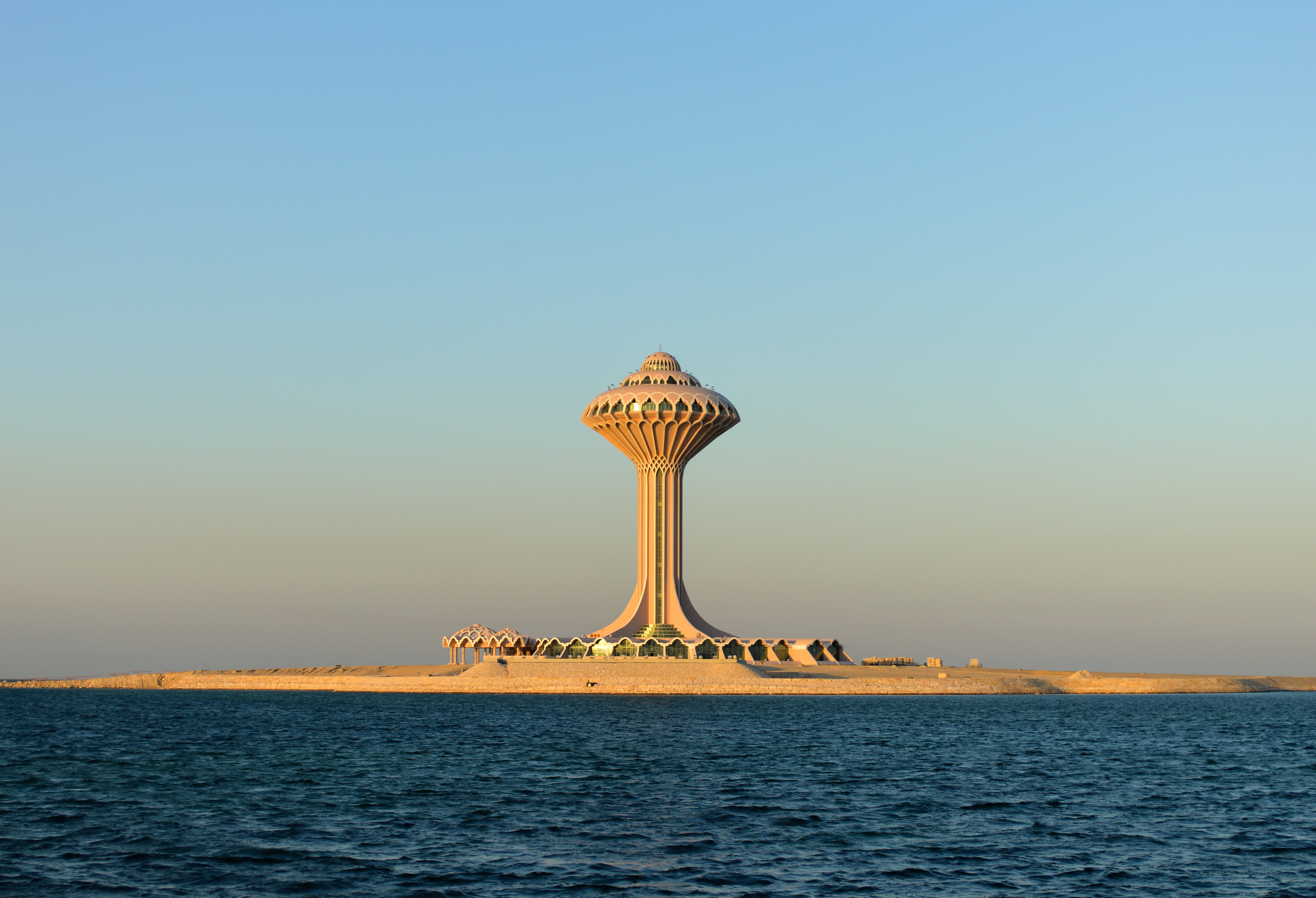
The Corniche stretches several kilometers along the Gulf shore and is genuinely pleasant, particularly in the cooler months between October and April. Families walk and cycle in the evenings, food stalls operate along the waterfront, and the views extend across the water to Bahrain, whose silhouette is visible on clear days. The unmistakable Khobar Water Tower marks the centre of the seafront. The King Fahd Causeway, which has connected Saudi Arabia to Bahrain since 1986, departs from just north of the city; Bahrainis and Saudis use it heavily on weekends. A small dhow harbor near the city center is a reminder of the fishing and pearling economy that preceded oil.
The expatriate community in Al-Khobar is substantial, drawn largely by the oil industry. This has shaped the city's commercial character: there are well-stocked supermarkets, a wide range of restaurants covering many cuisines, and a functional array of shopping centers. The city serves as a comfortable base for visiting Dhahran — where the Snøhetta-designed Ithra cultural centre is the standout cultural building in the Gulf — the Half Moon Bay beach area to the south, or crossing to Bahrain for the day.