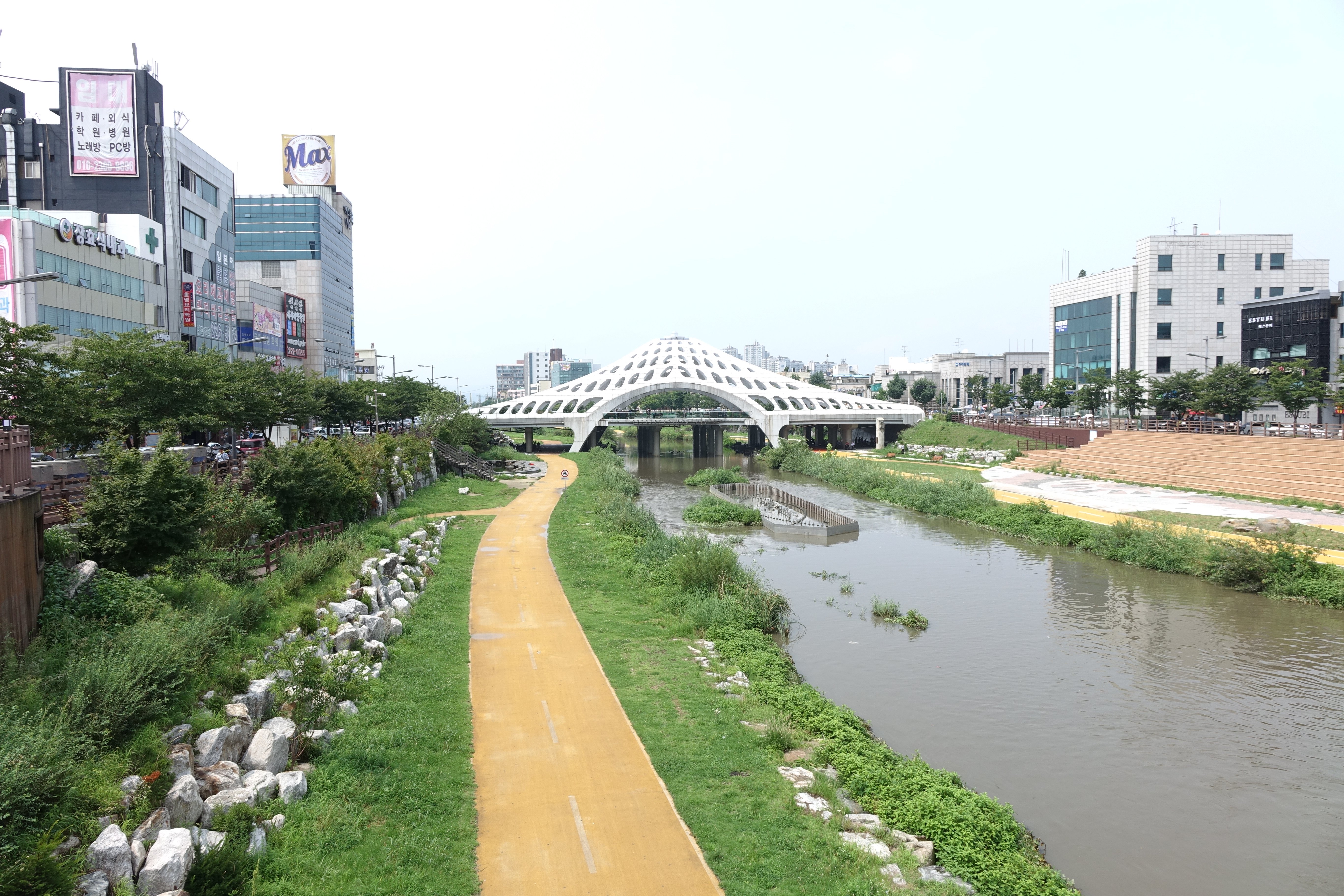
Gwangju is South Korea's city of conscience: proud, political, artistic, and very serious about food. It is the largest city in the Honam southwest, but it feels different from Seoul or Busan. The pace is easier, the streets are less frantic, and the local identity is unusually strong.
The city's modern story turns on the May 1980 uprising, when citizens resisted military rule and were violently suppressed. That history is not tucked away. You meet it at the May 18th National Cemetery, in memorial halls, and in the tone of a city that still sees itself as a defender of democracy.
Gwangju is also one of Korea's better art cities. The Asia Culture Center anchors the downtown cultural district, while the Gwangju Biennale gives the city an international art rhythm every two years. Away from the centre, Mudeungsan National Park rises close enough for a real mountain day without leaving the metropolitan area.
Come hungry. Jeolla cuisine has a reputation inside Korea for generous side dishes and deep flavours, and Gwangju is one of the easiest places to taste it. Between 1913 Songjeong Station Market, tteokgalbi in Songjeong, kimchi culture, and the downtown drinking streets around Geumnam-ro and Chungjang-ro, the city gives you more than enough reason to stay after the museums close.