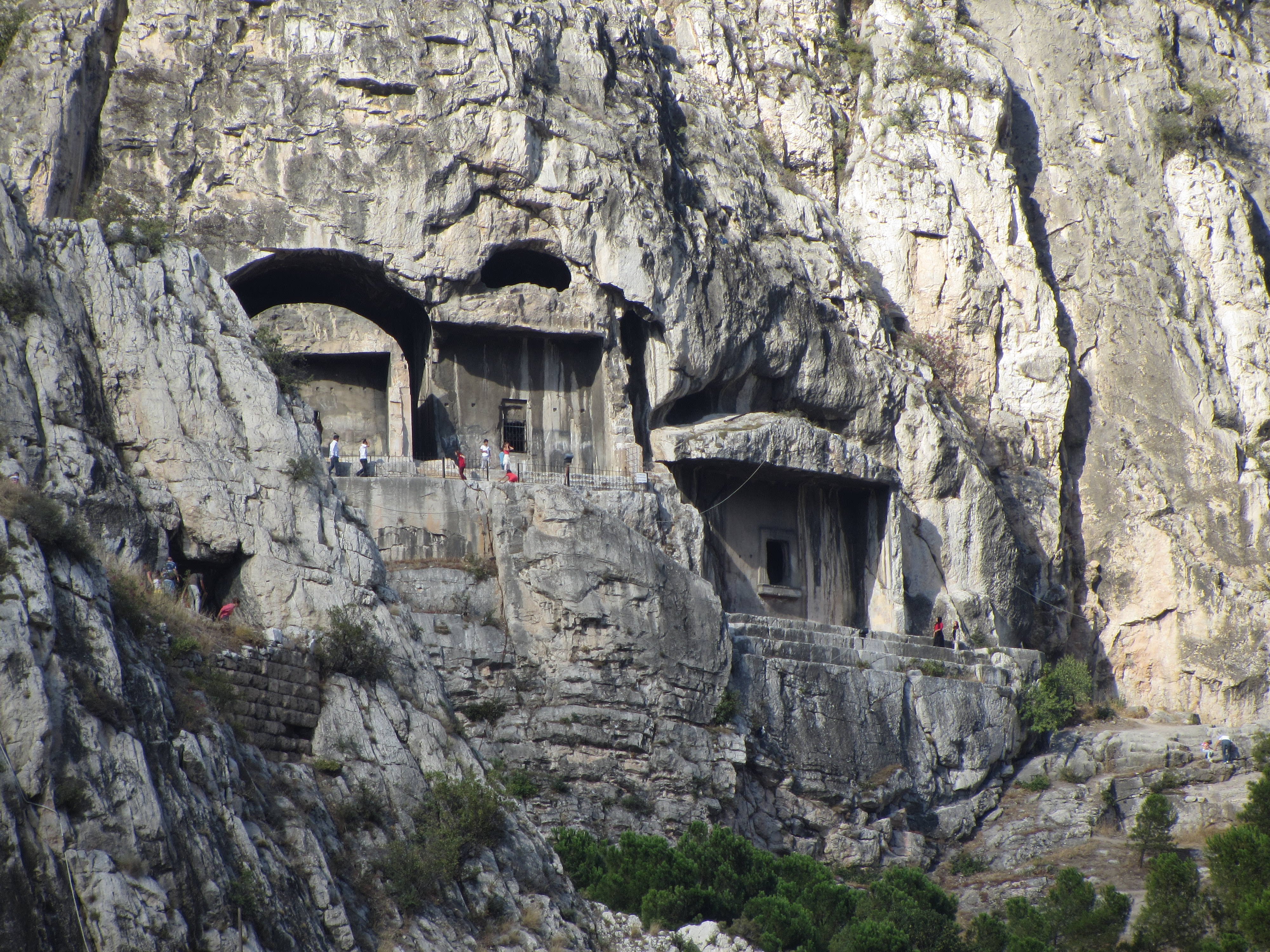
Amasya is one of Turkey's most rewarding small cities, and one of its least visited by outsiders. Tucked into a dramatic gorge carved by the Yeşilırmak River, it is bookended by rock-cut royal tombs on one side and Ottoman timber mansions reflected in the water on the other. It feels like a place that has made peace with its own improbability.
The city's history is long and densely layered. It was a major Pontic royal capital, a Roman administrative centre, an important Seljuk town, and under the Ottomans a city where princes were sent to learn to govern before they could rule. Mehmed II — who conquered Constantinople — was schooled here. That princely tradition gave Amasya an architectural richness that larger cities have often bulldozed; here the mosques, medreses, and old houses simply accumulated over the centuries.
The most dramatic feature is the Tombs of the Kings of Pontus, carved directly into the cliff face above the north bank of the river. They are illuminated at night, turning the gorge walls into something theatrical. Below them, Amasya Castle commands the ridgeline of Mount Harşena. The old town at river level has the Bayezid II Mosque, handsome Ottoman houses, and the Amasya Museum with its unexpectedly fine mummy collection — a group of seven-century-old embalmed Mongol officials found in near-perfect condition.
Amasya is compact enough to walk end to end in an afternoon, though the castle requires more effort. The riverfront is genuinely beautiful in the early morning before the tour groups arrive. It makes an excellent overnight stop on a journey between the coast and the interior, and most visitors find themselves wishing they had stayed longer.