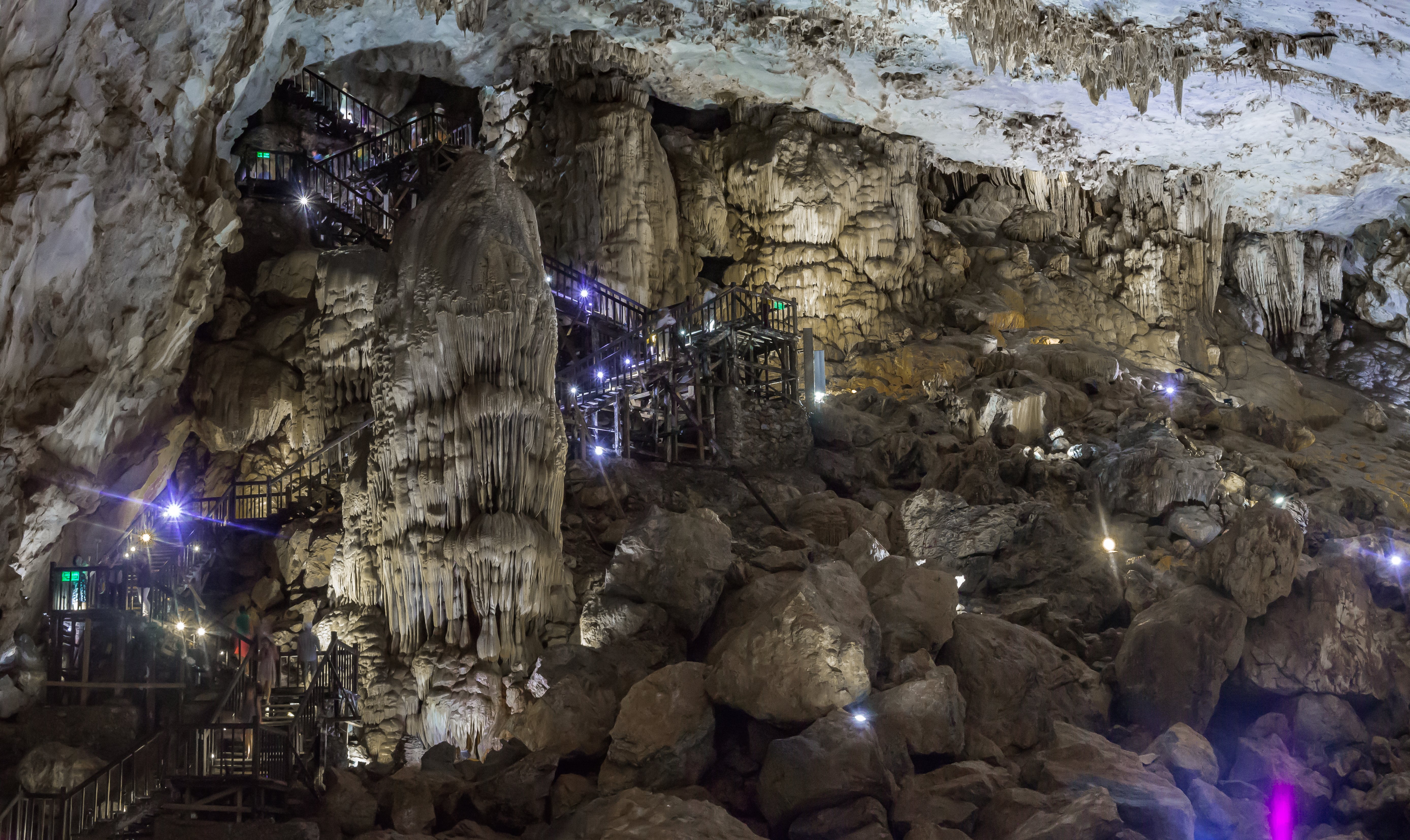
Phong Nha - Ke Bang is a 200,000-hectare national park in central Vietnam's Quang Binh province, straddling the eastern flank of the Truong Son range near the Laotian border. It was recognised as a UNESCO World Heritage site in 2003, and again in 2015, for a reason that only fully registers when you see it in person: the limestone massif hides what is, by most measures, the largest and most extraordinary cave system on the planet.
Son Doong, discovered in 1991 and first explored in 2009, is the largest cave in the world — big enough to hold a Boeing 747 and containing its own jungle and weather system inside it. Visiting requires a multi-day expedition with a single licensed operator and is expensive, but the shorter caves on the main tourist circuit are accessible, cheap, and still astonishing. Phong Nha Cave itself, the one that gave the park its name, is explored by boat — you float into the cliff on a wooden longtail and glide through echoing chambers full of stalactites. Paradise Cave, 31 kilometres long (of which the first kilometre is open to visitors), has the feel of a cathedral. Tu Lan and Hang En involve walking, wading, and swimming through caves, and are the most popular adventure tours.
Above ground, the park is a patchwork of primary tropical forest, karst towers, and small rivers — habitat for gibbons, bears, the saola (an antelope-like ungulate so rare it is sometimes called the Asian unicorn), and hundreds of rare plants. The Ho Chi Minh Trail ran through these valleys during the American War, and you can still see sections of it, along with the bomb-blasted remains of supply stations.
The gateway town is Phong Nha village, a strip of guesthouses, cafés, and tour operators along the Son river, a short drive from the main cave entrances. Come in February–August for dry weather. The park is six hours by overnight train from Hanoi or Hue to Dong Hoi, then an hour's taxi or bus ride.