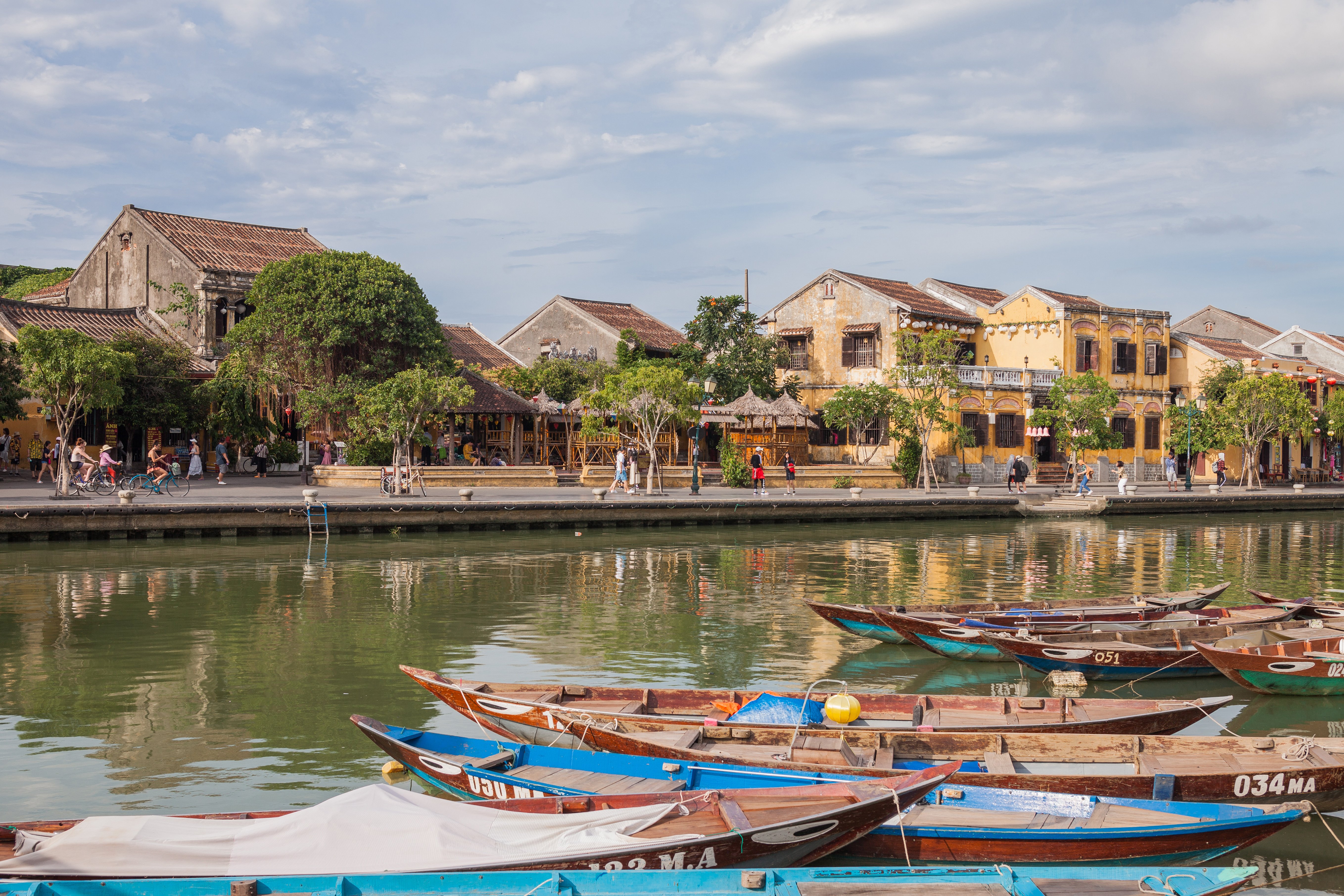
Hoi An is a remarkably well-preserved ancient trading port on the central Vietnamese coast, now a UNESCO World Heritage Site. For several centuries it was one of Southeast Asia's most important commercial hubs, drawing merchants from China, Japan, and the West — a history still visible in the architecture of the Old Town, which blends Chinese merchant houses, Japanese covered bridges, and French colonial shopfronts.
The town was largely spared the destruction of the Vietnam War, making it one of the few places in Vietnam where you can walk streets that look much as they did centuries ago. The Japanese Covered Bridge, the assembly halls of the Chinese congregations — above all the Phuc Kien Assembly Hall — and the rows of lantern-lit merchant houses are the main draws. Old merchant houses like Tan Ky and Quan Thang can be visited on the combined Old Town ticket. The surrounding countryside — rice paddies, bicycle paths, and the beach at An Bang — is equally worth exploring.
Food is a serious reason to visit. Hoi An has its own regional dishes: white rose dumplings, cao lau noodles (said to rely on water from a specific ancient well), and a bánh mì from Bánh Mì Phượng that has earned a genuine reputation. The cooking schools here are among the best in Vietnam — Red Bridge combines a market tour with a boat trip. The town has also become well known for its tailors; Yaly Couture is among the most consistently recommended, though allow at least two days for fittings.