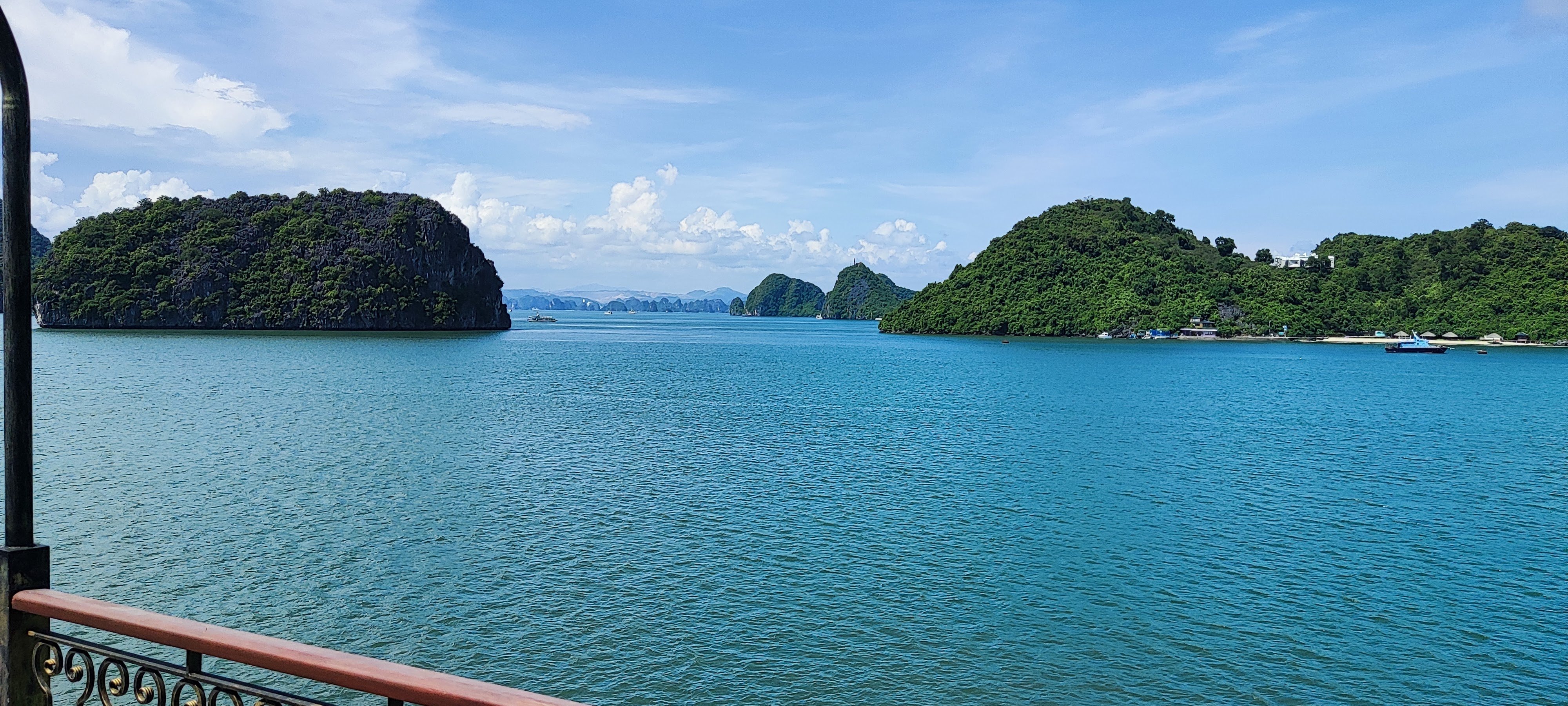
Ha Long Bay is one of the most spectacular natural landscapes in Asia. Over 1,900 limestone islands and karst formations rise from the Gulf of Tonkin in the northeastern corner of Vietnam, draped in green jungle and riddled with caves, creating a seascape that looks like a Chinese ink painting brought to life. It is a UNESCO World Heritage Site, and deservedly so. About 170 km east of Hanoi, it draws visitors from around the world.
The best way to see it is from the water. Overnight cruises aboard traditional wooden junks — departing from Ha Long City or from Cat Ba Island — give you time to watch the early morning mist lift off the water, to kayak into sea caves and hidden lagoons, and to swim in coves that the day-trippers never reach. The famous limestone formations have names — Dog Rock, Incense Burner Island, Fighting Cock Rock, Human Head Island — and the scale of the landscape only becomes apparent once you are inside it, dwarfed by towers that rise 200 metres from the sea.
Cat Ba Island, at the southern edge of the bay, is an increasingly popular base. Its national park has hiking trails through tropical forest, and the island has a more relaxed atmosphere than the mainland port towns. Nearby Bai Tu Long Bay, to the northeast, receives far fewer visitors than the central heritage zone and offers a quieter version of the same landscape.