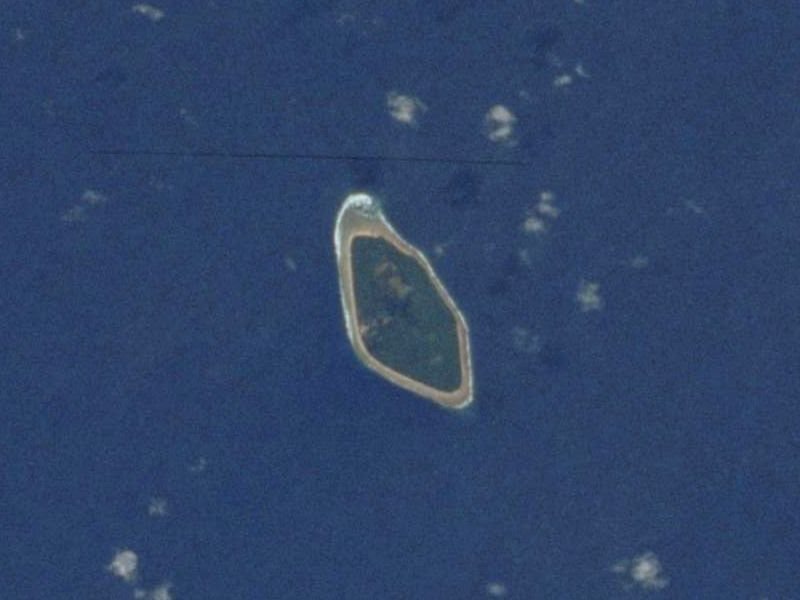
Nanumanga is a small, reef-enclosed island in the northern part of Tuvalu, and one of the few islands in the country that is not a true atoll. Instead of a central lagoon, Nanumanga has two small, landlocked ponds — the larger Vaiatoa in the north and the smaller Ha'apai in the south — surrounded by dense vegetation. The island is roughly oval, about three kilometres long, and home to a community of around 500 people living in two villages, Tokelau and Tonga, on the western shore.
The island made international headlines in the 1980s when divers discovered an underwater cave near the reef that contained what appeared to be ancient fire pits, suggesting human habitation going back thousands of years, well before Polynesian settlement of the wider Pacific. The Caves of Nanumanga are submerged and difficult to access, but the discovery added to the archaeological interest in Tuvalu's earliest inhabitants.
Getting to Nanumanga requires patience. The inter-island vessel from Funafuti calls irregularly, sometimes only once a month, and landing through the reef passage can be tricky in rough seas. There are no tourist facilities — if you do visit, you will be relying entirely on local hospitality. But that remoteness is precisely the point: Nanumanga offers a glimpse of traditional Tuvaluan life almost untouched by the outside world.