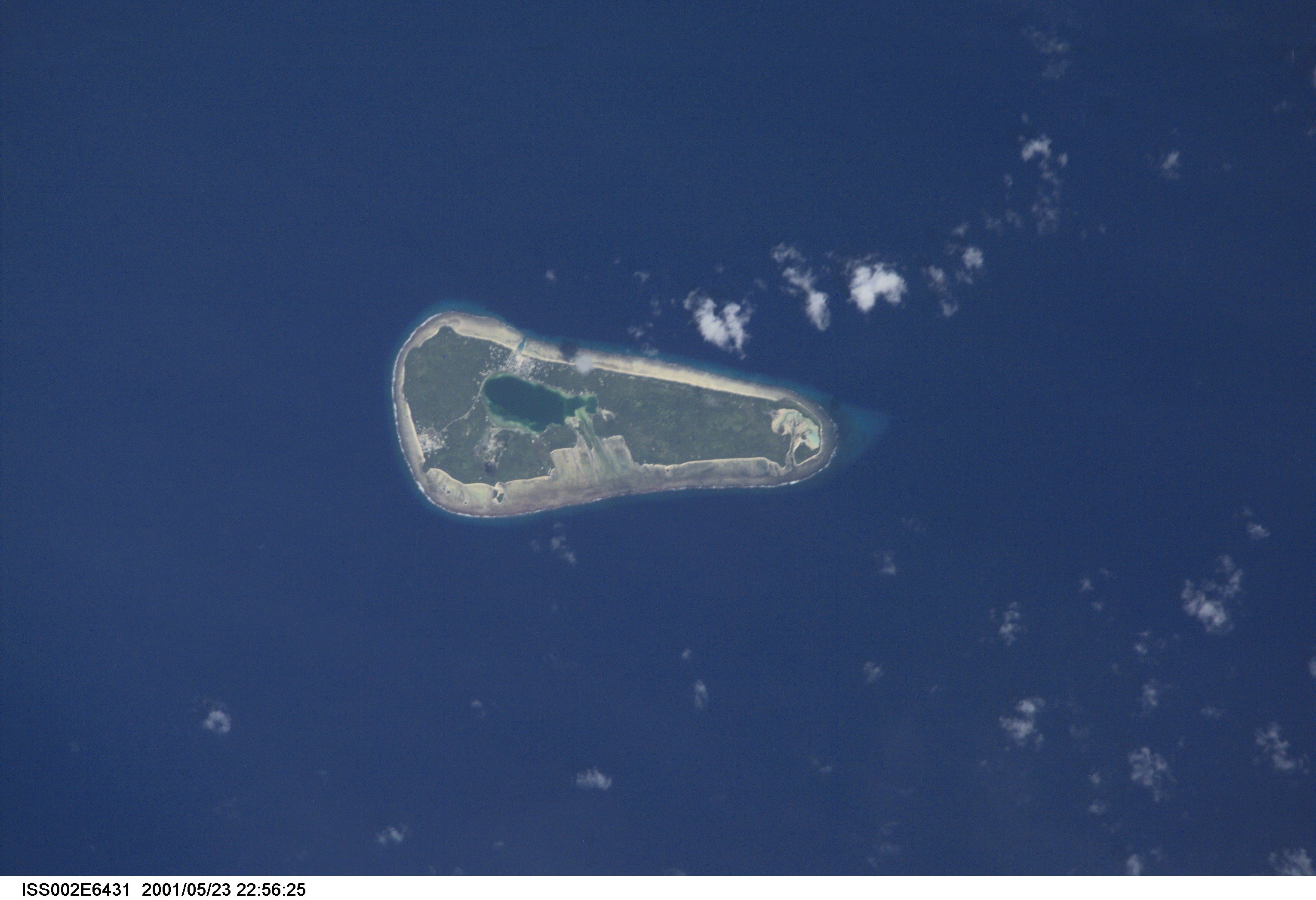
Vaitupu is the largest island of Tuvalu by land area and one of the more densely populated. It is a classic reef island rather than a true atoll: a roughly oval lump of coral and palm forest about five and a half kilometres long, enclosing two small shallow lagoons in its interior. Around 1,600 people live here, almost all of them in the village of Asau on the western side.
Vaitupu's distinction within the country is educational rather than scenic. Motufoua Secondary School, at the southern end of the island, has been Tuvalu's only senior secondary school for decades, and almost every Tuvaluan teacher, civil servant, and politician of the post-independence era passed through it. The school was the site of a tragedy in 2000 — a dormitory fire killed nineteen girls and one teacher, the worst single disaster in the country's recent history — and a memorial on the school grounds commemorates them.
The island has a more complicated colonial past than most of its neighbours. In 1947 a group of Vaitupuans, frustrated with land pressure at home, purchased the island of Kioa in northern Fiji from a planter and resettled around fifty families there. Kioa remains a Tuvaluan-speaking community in Fiji to this day, and the connection between the two islands runs deep — a quiet act of Polynesian self-determination decades before independence.
Outside the school and the village there is not a great deal to see in the touristic sense — a couple of small interior ponds, the Catholic church in Asau, a wide reef-flat on the lagoon side that is good for low-tide reef walking, and a great many coconut palms. There is no formal tourist accommodation. If you have made the trip out on the inter-island vessel from Funafuti you will have a host arranged through Tuvaluan contacts, and you will be welcomed accordingly.