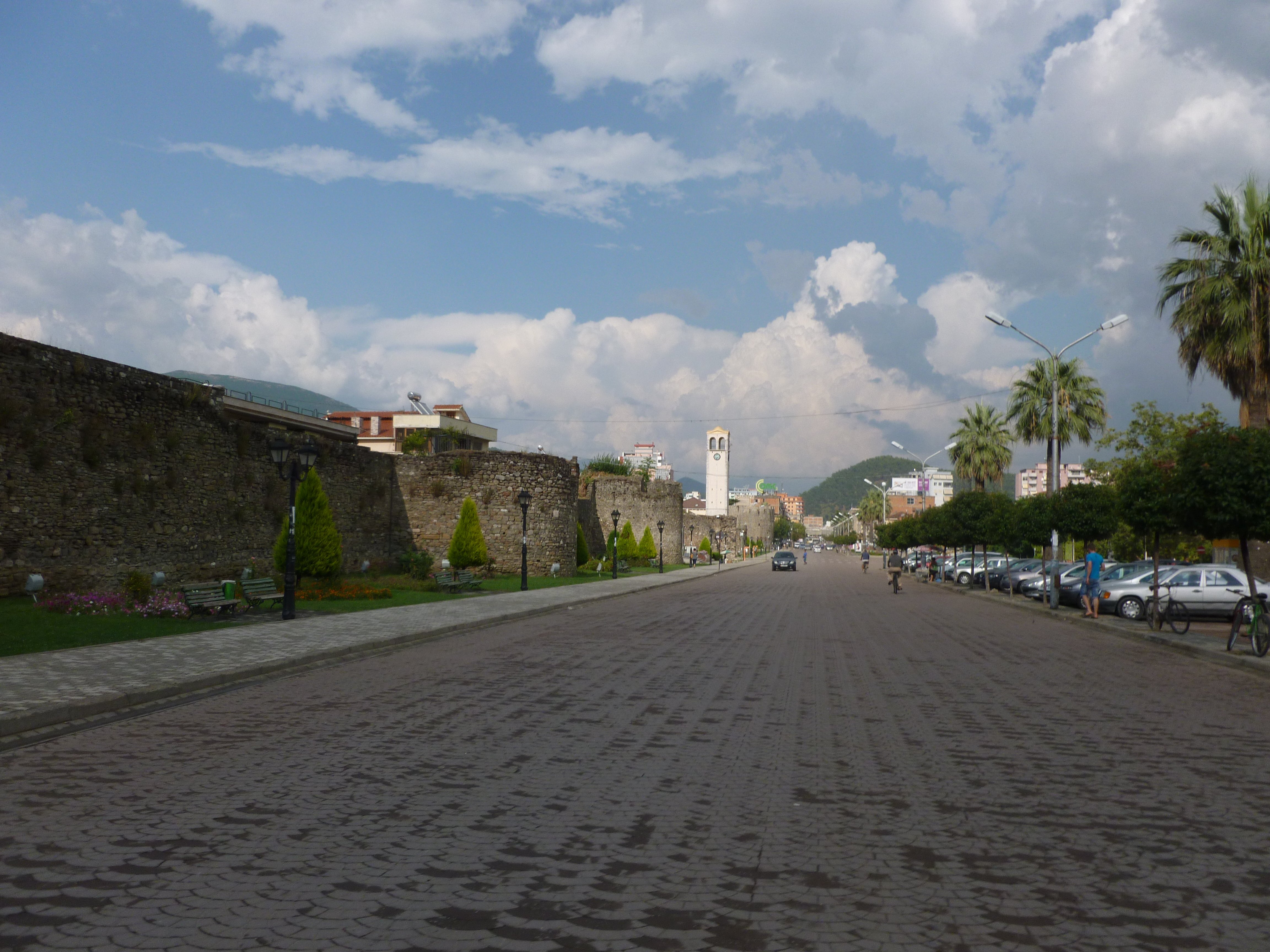
Elbasan is a mid-sized city in central Albania, sitting in the broad Shkumbin river valley between Tirana and the mountains that climb toward North Macedonia. It is an industrial town — a massive Soviet-built steel plant dominates the outskirts and left a mark on the city's character — but at its heart is a remarkably intact Ottoman walled city that most visitors driving through never bother to stop for. They should.
The old town is enclosed by 15th-century castle walls, built by the Ottomans on the site of the ancient Roman garrison town of Scampis. Inside those walls you find a tight grid of streets, old churches and mosques standing side by side, and an old bazaar quarter that still functions as a real market. The scale is human and unhurried. It takes an hour or two to walk properly, and it feels a long way from the Tirana tourist trail.
The city's history layers fast. The Romans were here first, on the Via Egnatia — the road that linked Rome to Constantinople. The Ottomans rebuilt it as a military stronghold in 1466. The communists tried to industrialise it into an Albanian Sheffield. Today it is a city of around 115,000 that has absorbed all of that and is quietly getting on with itself. The Ethnographic Museum and the Ottoman Baths complete the core of the old town worth seeing.
Elbasan is most naturally a stop on the route between Tirana and Korçë or Pogradec. The castle and the old town can be seen in two to three hours; with lunch, it makes a comfortable half-day stop.