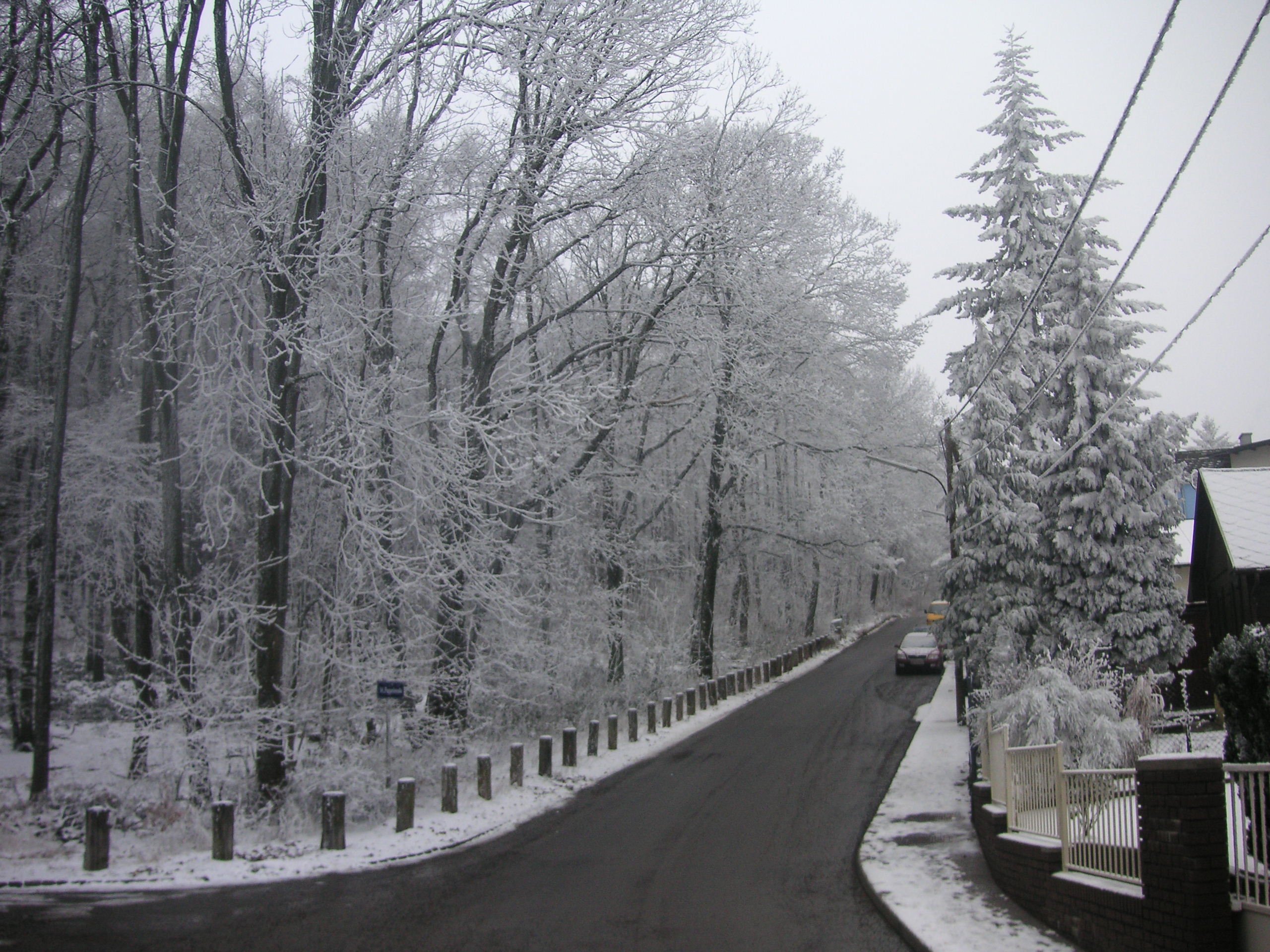
The Wienerwald is the wooded range of low limestone hills that wraps around the west and north of Vienna — roughly 1,000 square kilometres of beech and oak forest, meadows, vineyards, and small spa towns, declared a UNESCO Biosphere Reserve in 2005. It is the city's green lung and weekend playground: where the Viennese walk, cycle, ride, and end the afternoon at a Heuriger wine tavern. For a forest that begins at the end of a tram line, it is remarkably wild, with marked trails that climb out of the suburbs and within an hour leave the city behind entirely.
From the city the easiest gateways are in the north, where the ridge of the Kahlenberg and its neighbour the Leopoldsberg rise above the steep vineyard slopes of Grinzing and Nussdorf. The 38A bus from Heiligenstadt climbs to the Kahlenberg terrace, the classic viewpoint over the rooftops, the Danube, and the plain stretching east toward Slovakia. From the top, paths drop back down through the vineyards to the wine villages, so a walk can be neatly bookended by a glass of Grüner Veltliner under the vines.
In the west the woods are entered through the Lainzer Tiergarten, a former imperial hunting reserve that is now a fenced nature park of wild boar, red deer, and ancient beeches, threaded with easy walking trails and reachable by U-Bahn and a short bus ride. Further out, the spa towns of Baden and the hunting lodge at Mayerling — where Crown Prince Rudolf died in 1889 — sit on the southern fringe of the forest, both within a comfortable day trip of the city.
The Wienerwald has long held a particular place in the Viennese imagination: it is the landscape of Schubert's walks and Johann Strauss's Tales from the Vienna Woods, and the green backdrop against which the whole imperial city was built. Most of it can be reached on a public-transport ticket, which makes it one of the simplest escapes from any European capital — pack walking shoes, take a tram to the edge of town, and within minutes you are under the trees.