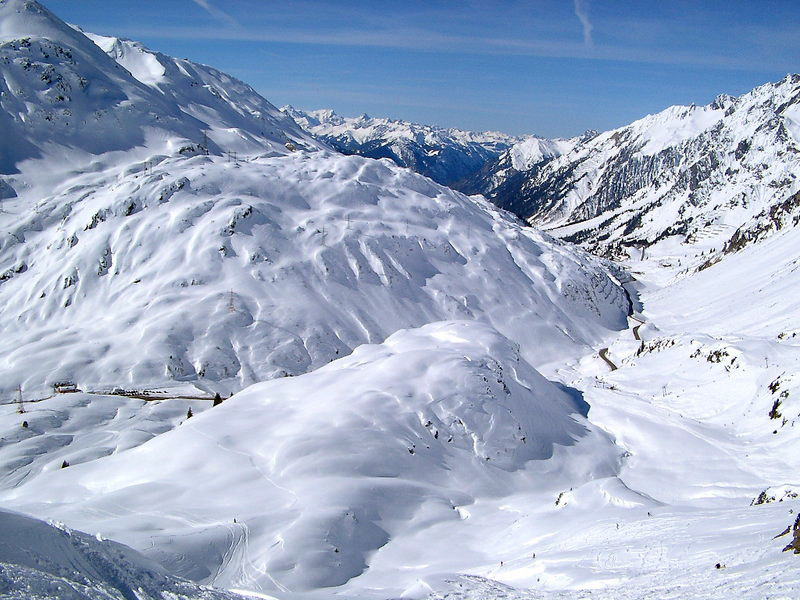
The Arlberg is not actually a mountain but a high pass connecting the Austrian provinces of Tyrol and Vorarlberg — and around it sits one of the finest ski regions in the world. The terrain spans from 1,300 to 2,811 metres, with over 270 kilometres of groomed pistes, 180 kilometres of off-piste runs, and 83 lifts all accessible on a single pass.
The five towns of the Arlberg each have their own character. St. Anton is the most famous — sporty, cosmopolitan, and with a legendary après-ski scene. Lech is more refined and upmarket. Zürs, one of the oldest ski resorts in Austria, is small and exclusive. Stuben is quiet and traditional. St. Christoph sits right at the top of the pass and is home to one of the oldest ski schools in the world.
The Arlberg is considered the birthplace of Alpine skiing — Hannes Schneider developed the Arlberg technique here in the 1920s. The skiing tradition runs deep, and the infrastructure reflects it: free ski buses connect the towns, and the recent Flexenbahn gondola has linked the previously separate Lech/Zürs and St. Anton ski areas into one enormous network.
In summer, the mountains are excellent for hiking, climbing, and mountain biking. The flower-covered Alpine meadows and dramatic peaks make it a very different — and much quieter — place than in winter.