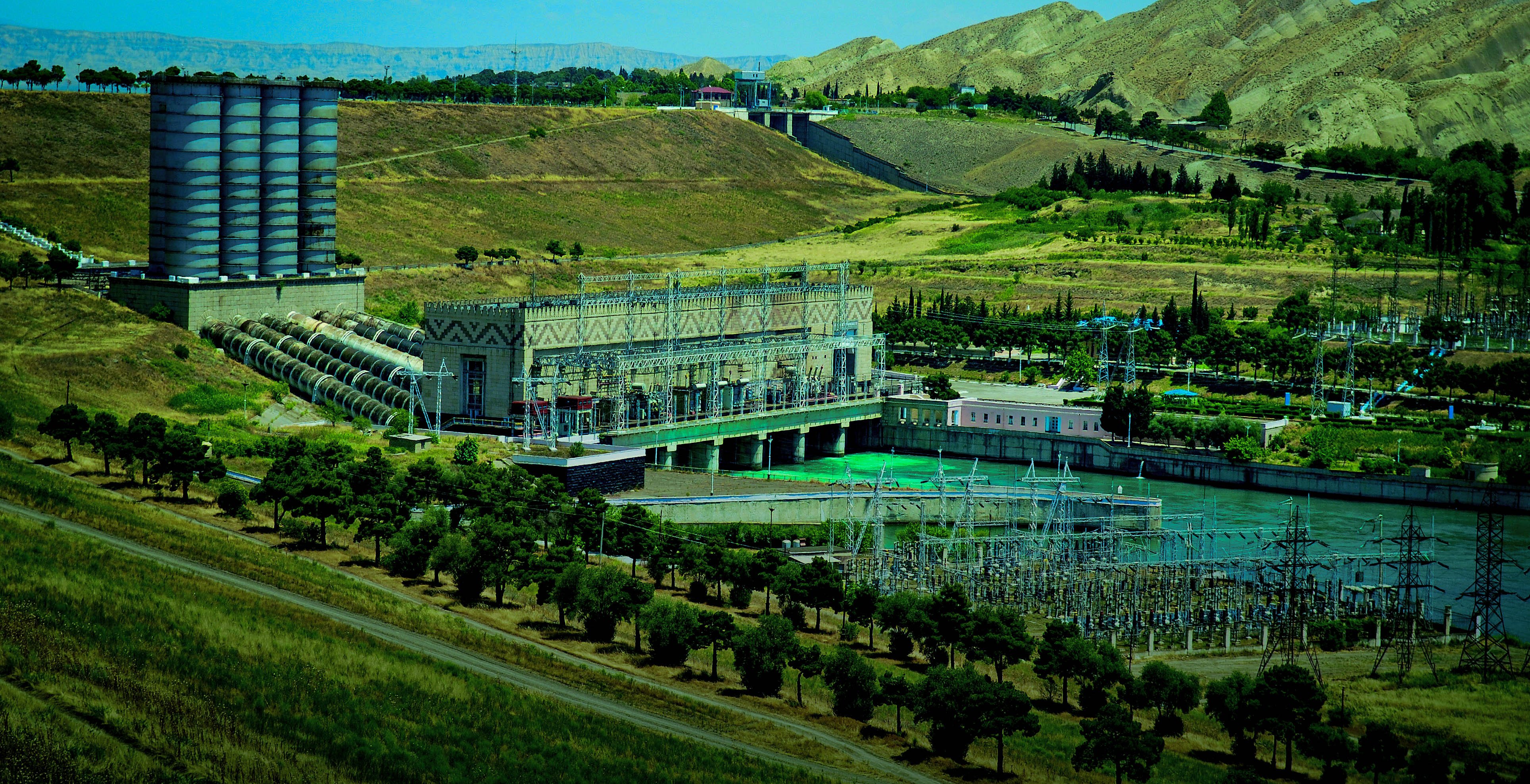
Mingechevir sits on the Kura River about 275 km west of Baku, and its two claims to fame are separated by millennia: human settlement here dates back 5,000 years, and in the 1950s it became the site of the largest hydroelectric dam in Azerbaijan. Both facts shape the town you see today.
Archaeological work in the area revealed continuous occupation from the Albanian period onward, with rich trading and manufacturing evidence across multiple eras. Much of what was uncovered now sits in Baku — some sites were submerged when the dam created the Mingechevir Reservoir, an artificial lake covering 605 square kilometres that remains the largest body of water in Azerbaijan. The local history museum holds many of the finds that stayed behind.
The dam itself, built in 1953 and operated by Azerenergy, brought the town electricity, flood control, and irrigation, and gave it the pleasant lakeside setting near the reservoir's small beach. The Kura rises in Georgia and flows southeast toward the Caspian — the lower 500 km are navigable, and a canal network connects it to the Araz River.
Since the 1940s Mingechevir has been a centre of light industry: cotton and woollen textiles, knitwear, household goods, and souvenirs. The population today is close to 100,000. The town centre has some interesting architecture and generous parkland; the riverbank area is particularly pleasant, lined with restaurants and tea houses. Mount Bozdağ, about ten kilometres south, makes a good half-day excursion.