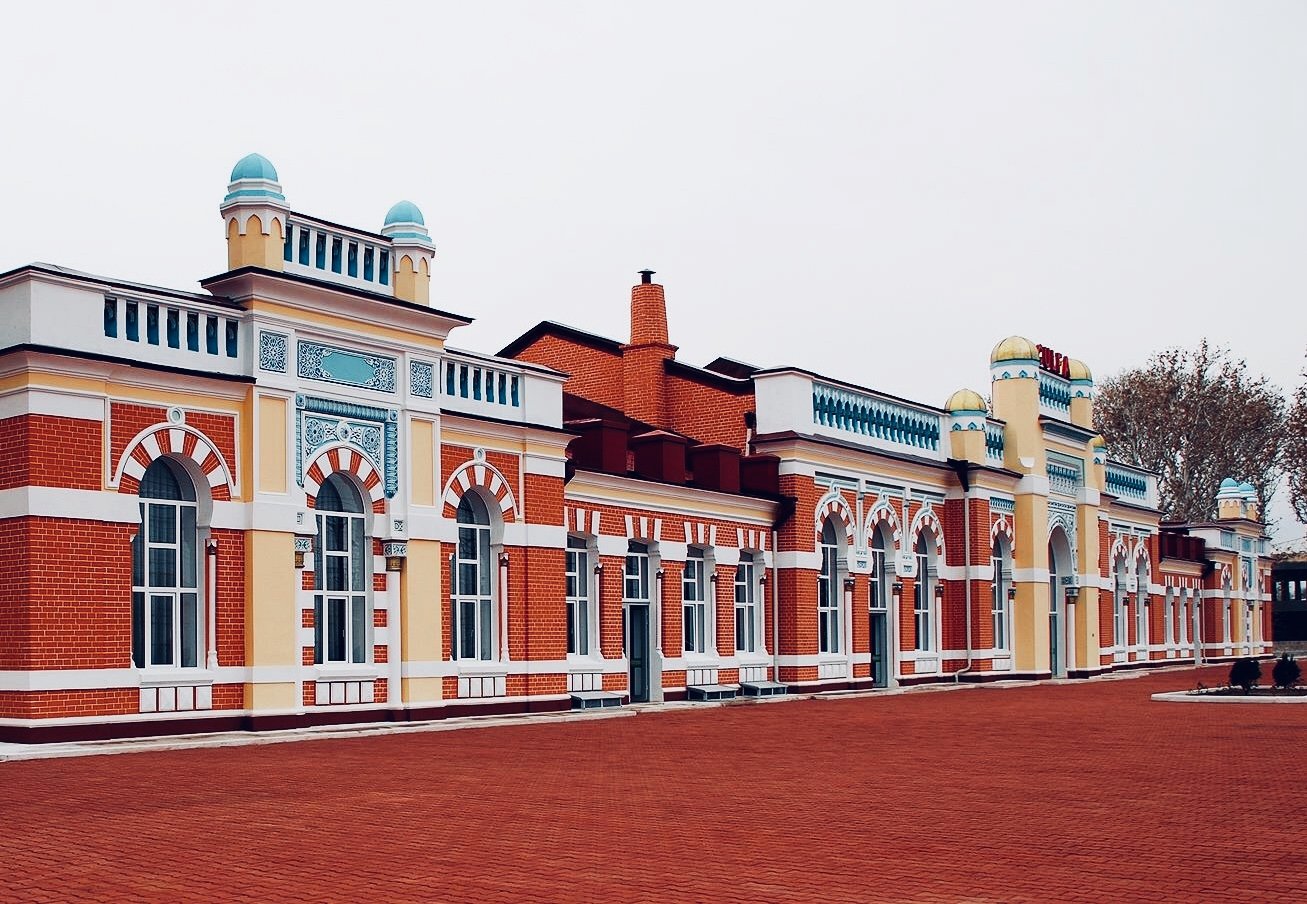
Julfa is a border town on the southern edge of the Nakhchivan exclave, pleasantly set on the left bank of the Araz river, facing its sister town Jolfa across the water in Iran. It is a place where a remarkable history dwarfs the modest present.
The area was once a thriving Armenian cultural and trade centre on the ancient caravan routes, then known by its Armenian name Jugha. Wars between Turkey and Persia through the fifteenth to seventeenth centuries brought repeated devastation. The worst came in 1604, when Shah Abbas I, unable to hold his conquests against the Turks, ordered not just a military retreat but the mass deportation of Julfa's 20,000 citizens and the burning of the town. The deportees were marched to Isfahan, where they created "New Julfa" — still a Christian enclave in that city today. The odyssey of these Julfans is depicted in the murals of Isfahan's Vank Cathedral.
Old Julfa, locally known as Cuga, never recovered. You can still trace its former grandeur in the ruins of the old town — the Andreordi, Pobloz, and St. Astvadsadsin churches, the main caravanserai, the remains of a bridge across the Araz, and the thirteenth-century Gulistan burial vault. In a mountain gorge outside the old town, the thirteenth-century Amenaprkich monastery is worth the detour. North of the town, Alinjagala fortress perches atop a dramatic peak and requires a good hour's hike to reach — the views across the Araz into Iran are remarkable.
Modern Julfa, founded in 1848 about two kilometres east of the ruins, has little to see — a pleasant mosque, a rather exuberant train station, and a very basic Soviet-era hotel near it. North of town, on the slopes of the Daridaq range, are the Daridaq mineral springs, used for medicinal purposes. Today Julfa matters primarily as the main border crossing between Nakhchivan and Iran, for both road and rail traffic.