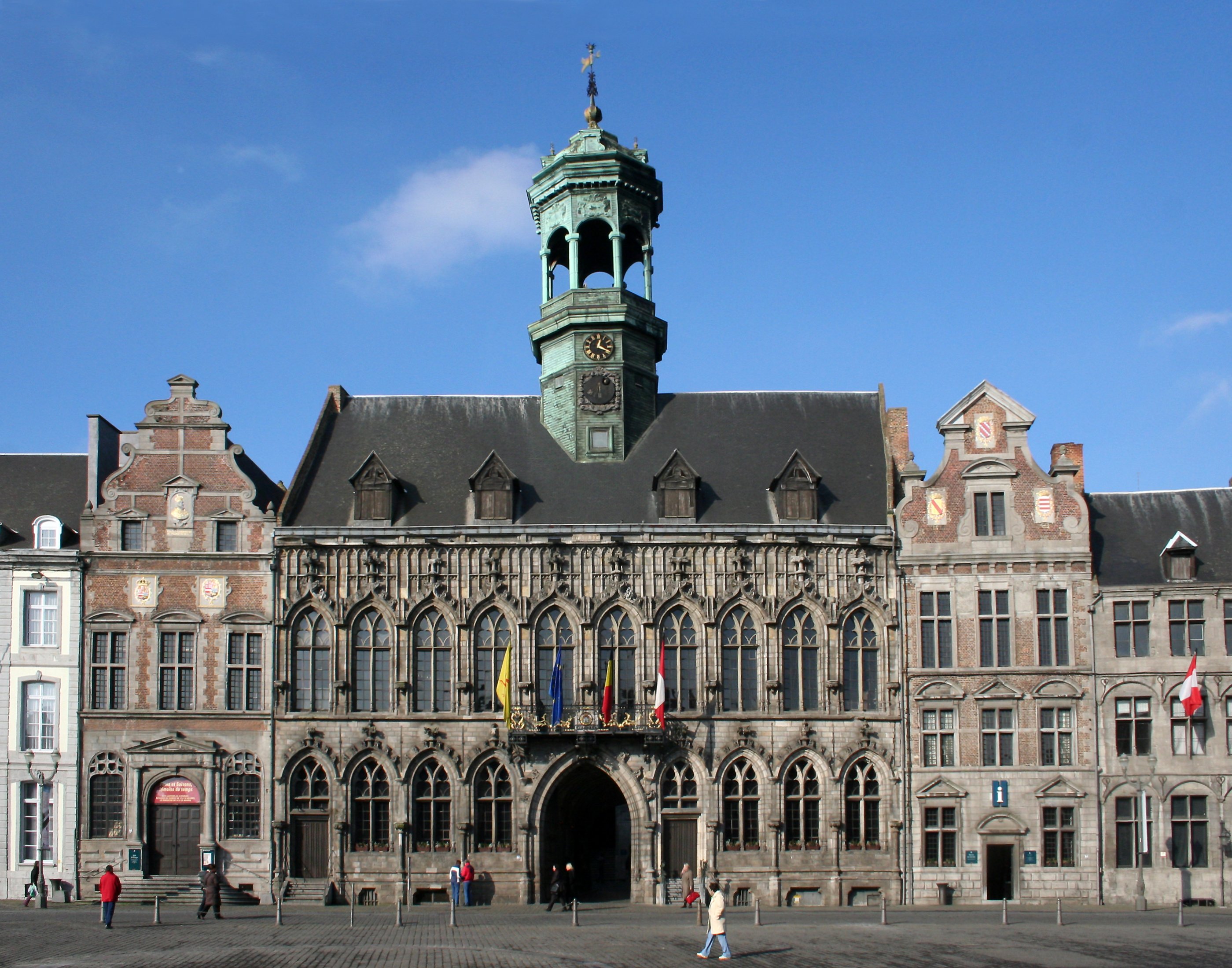
Mons (Bergen in Flemish) is the capital of Hainaut, the French-speaking province in Belgium's southwest. It sits on a small hill about 50 kilometres from Brussels, and is one of those Belgian cities that tourists often skip in favour of Bruges or Ghent — unfairly, because Mons has a beautiful old centre, a rich history, and a cultural scene that earned it the title of European Capital of Culture in 2015.
The city grew up around a 7th-century monastery founded by Saint Waudru, and the Collegiate Church of Sainte-Waudru remains the chief attraction. Its gilded carriage, the Car d'Or, is paraded through the streets every year on Trinity Sunday in a procession that dates back centuries — legend says the city will suffer bad luck if the horses fail to pull the carriage up the hill in a single go. The Grand-Place and its baroque belfry are a UNESCO World Heritage Site — the only baroque belfry in Belgium.
For the British, Mons is most associated with the First World War. It was the site of the first and last major battles fought by the British Expeditionary Force, and the surrounding countryside is dotted with memorials and cemeteries. The Mons Memorial Museum covers the city's wartime history well. A more surprising attraction is the Mundaneum, a museum dedicated to Paul Otlet — a Belgian visionary who in the 1890s created a universal index of all human knowledge and anticipated something like the internet by sixty years. The central core is compact, pedestrianised, and easily walkable — a good half-day stop between Brussels and the French border.