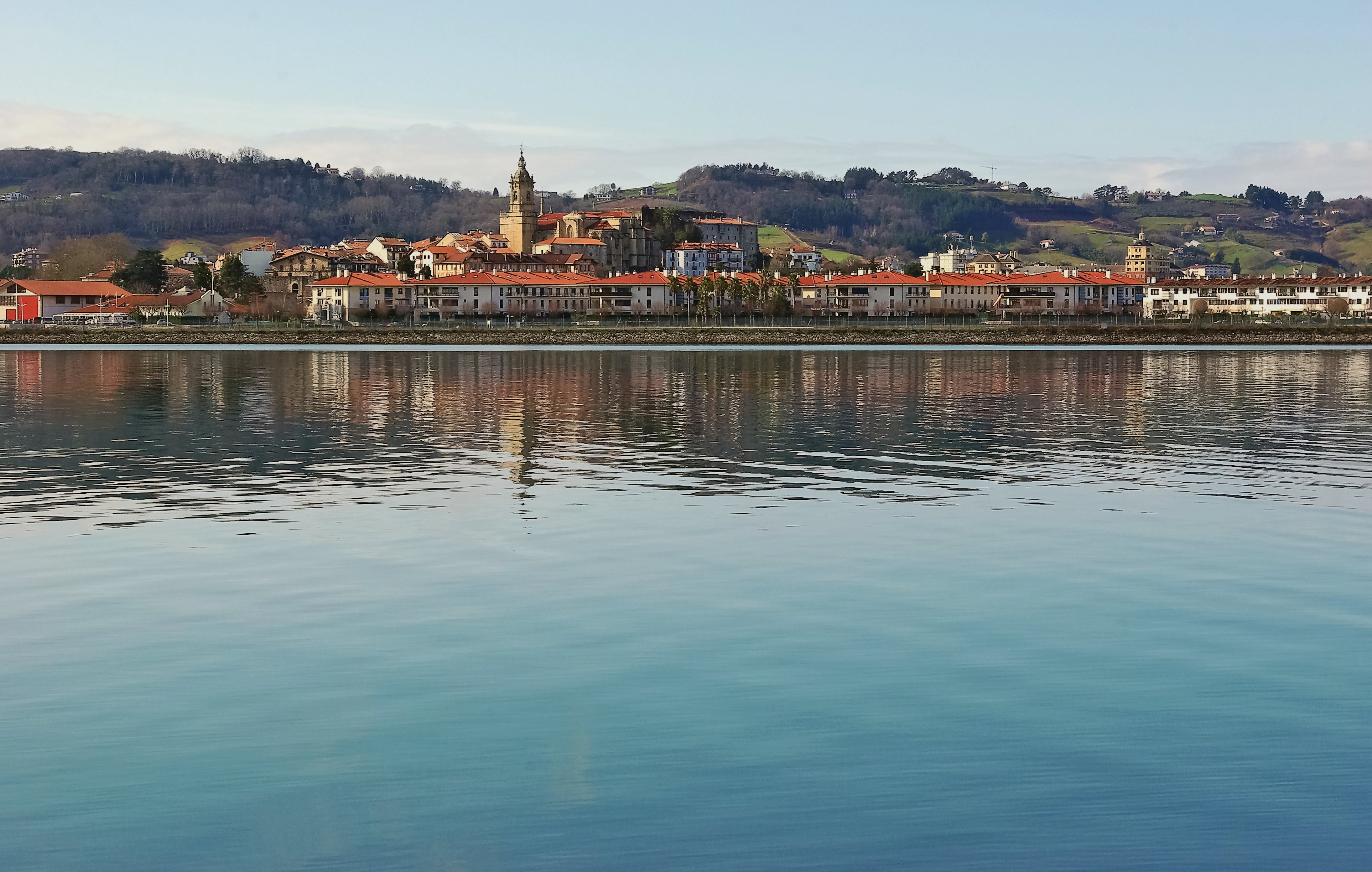
Hendaye is the last town in France before Spain, sitting at the mouth of the Bidasoa river where it empties into the Bay of Biscay. It has one of the finest beaches on the French Basque coast — the Grande Plage, a long, wide crescent of sand that stretches for over three kilometres, shallow enough for families and sheltered enough that the waves rarely get rough.
The town itself is quiet and residential, a contrast to the livelier resorts of Biarritz and Saint-Jean-de-Luz up the coast. That is part of its appeal. The beachfront promenade is pleasant without being flashy, and the restaurants along it serve good Basque cooking at lower prices than its neighbours.
The old quarter, Hendaye-Ville, sits a couple of kilometres inland near the train station. The Great Cross of Hendaye in the church square is a 17th-century stone monument carved with symbols that have generated centuries of mystical speculation. Between the town and the beach, the Domaine d'Abbadia occupies a wild headland: Château d'Abbadia is a spectacular neo-Gothic castle built for a Victorian explorer-astronomer, with cliff walks and views to Spain. In the river itself, Pheasant Island is a tiny islet where the 1659 Treaty of the Pyrenees was signed — it still alternates sovereignty between France and Spain every six months.