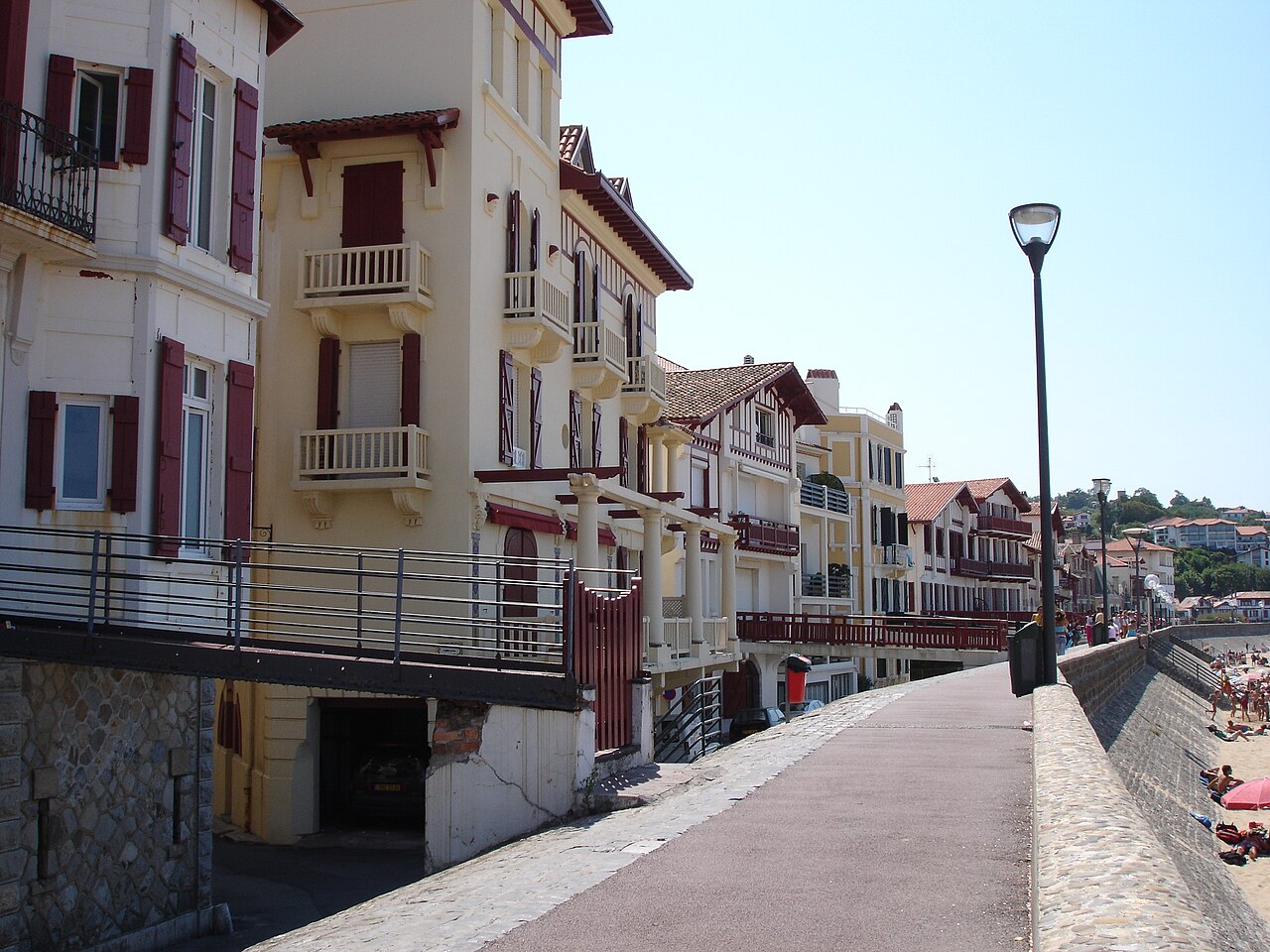
Basque fishing port and beach town pressed between the Pyrenees, the Atlantic, and the Spanish border
Saint-Jean-de-Luz is the most Basque of the French Basque towns — a handsome fishing port and beach resort pressed between the Pyrenees and the Atlantic, just 15 kilometres north of the Spanish border. It feels genuinely different from the rest of France: the architecture is painted red and green, the pelota courts are busy, and the language you overhear on the street is as likely to be Basque as French.
The town made history in 1660 when Louis XIV married the Spanish Infanta Marie-Thérèse here, ending two decades of war between France and Spain. The church where the ceremony took place, the Église Saint-Jean-Baptiste, is the finest example of Basque religious architecture in France — you can still see the door that was bricked up immediately after the royal couple walked through it, so no lesser soul could follow. The royal connection gave the town a gloss of grandeur, but it never lost its fishing-village character.
The main square, Place Louis XIV, is where Saint-Jean-de-Luz does its socialising. Terraces fill with people most of the year, and on summer Sunday mornings a Basque choir performs here. From the square, narrow streets lined with food shops and boutiques lead down to the working port, where the smell of salt and fish reminds you this is still a serious tuna fishing harbour. The beach — a broad arc of sheltered sand — is one of the finest on the Basque coast, protected from Atlantic swells by two stone jetties.
The eating here is outstanding. The restaurants around the main square serve the freshest fish and seafood on the coast, alongside Basque staples like piperade, axoa, and gâteau Basque from the patisseries. This is a small town that repays a day or two — long enough to walk the port, visit the church, eat well, and understand why the Basques are so proud of their corner of the world.
Guide
Eating Out
The food in Saint-Jean-de-Luz is genuinely excellent — fresh Atlantic fish, Basque classics like piperade (eggs with peppers and tomatoes) and axoa (spiced veal with Espelette pepper), and patisseries making gâteau Basque, the almond-cream filled pastry that is the region's signature sweet.
Chez Pablo on the harbour quay is one of the best fish restaurants in town — grilled tuna, chipirones (small squid), and merlu koskera (hake in Basque sauce) at honest prices. Grillerie du Port is another solid choice for fresh-off-the-boat fish simply cooked. For Basque country cooking in a more formal setting, Restaurant Ithurria in nearby Ainhoa (20 minutes by car) is considered one of the finest tables in the Basque country.
For patisserie and gâteau Basque specifically, Pâtisserie Maison Adam on Rue Gambetta has been making the cake since 1660 and claims to have invented it — whether or not that's true, it is very good.
Guide
When to Go
June and September are the best months: warm enough to swim (sea temperature around 18–20°C), the beach not yet overwhelmed, and the town at its most pleasant. July and August are peak season — the town fills with French and Spanish families and prices rise sharply. The weather is reliably fine but the beach gets crowded.
The Fêtes de la Saint-Jean, held in late June, are among the best Basque festivals on the French side of the border: bonfires, dancing, traditional sports, and considerable quantities of txakoli (Basque sparkling wine). The tuna festival in July celebrates the fishing fleet's return from Atlantic grounds.
The off-season (October–April) is quiet but not unpleasant — the town shrinks back to something like its actual self, the sea is grey and dramatic, and the restaurants that stay open are often the better ones.