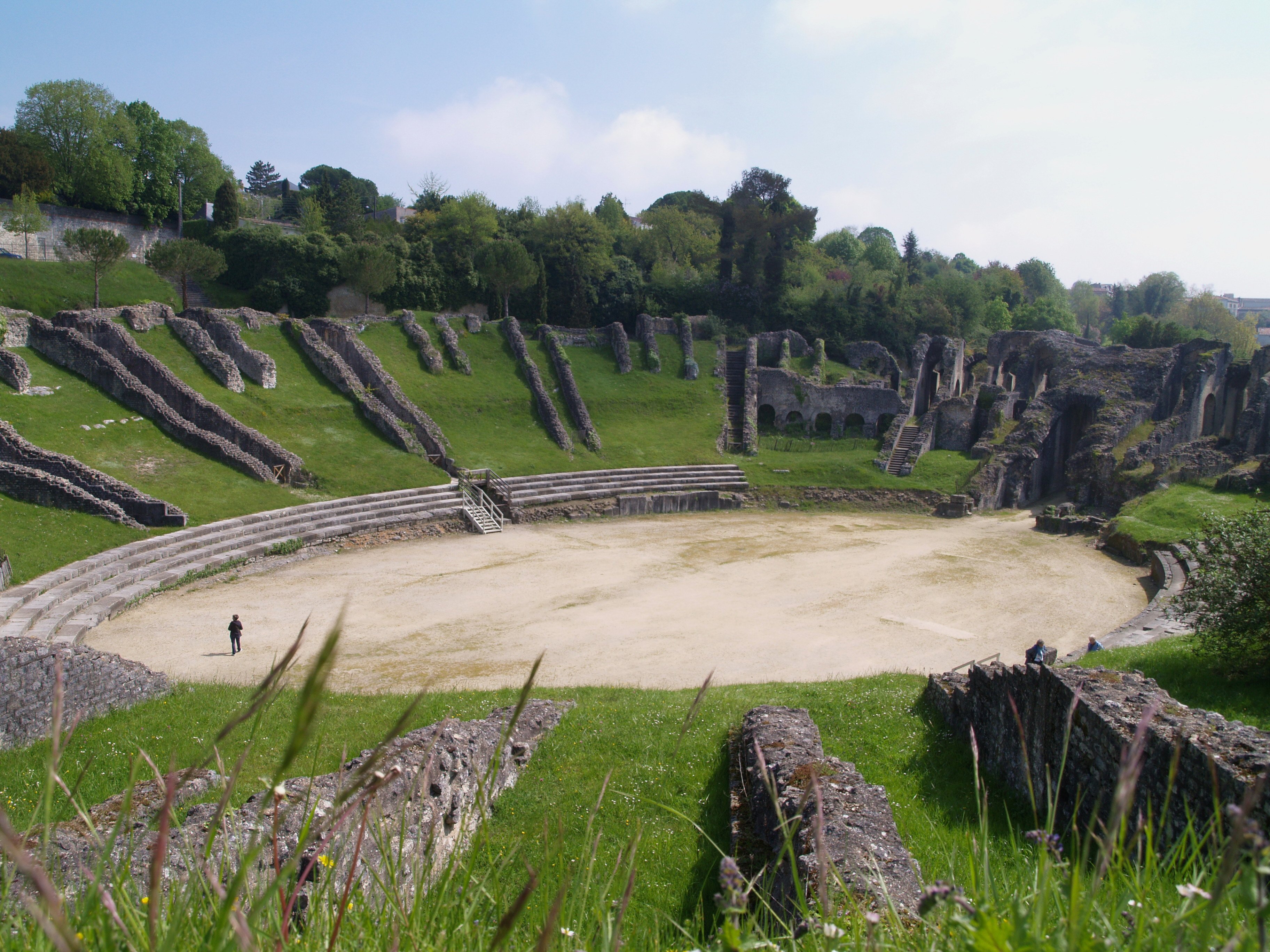
Saintes is one of the most historically layered towns in southwest France, but most travellers heading down the Atlantic coast bypass it for Bordeaux or the beaches. This is their loss. The Romans called it Mediolanum Santonum and made it the capital of the province of Aquitania Prima; they left behind a triumphal arch, an amphitheatre, and baths substantial enough that the town never quite forgot who it used to be. The Saintonge region that surrounds it carries one of the great Romanesque legacies of France — a style of church decoration found nowhere else, characterised by elaborately carved facades in white limestone.
The Arch of Germanicus, built in 19 AD and moved stone by stone to its current riverside position in the 19th century to save it from road-widening, stands above the Charente as a reminder of the town's Roman seniority. The Gallo-Roman amphitheatre further up the hill is one of the better-preserved Roman arenas in France, used today for concerts rather than gladiatorial combat. The Abbaye aux Dames, founded in the 11th century and restored after various indignities including use as a prison and a barracks, is now a cultural centre that regularly hosts classical music festivals.
The old town between the cathedral and the river is pleasant to walk, with arcaded streets, a food market on weekday mornings, and enough decent restaurants to justify a night's stay. Cognac is thirty kilometres to the east; La Rochelle is sixty kilometres to the north. Saintes makes a good base for both, and unlike either city it is small enough to feel manageable.