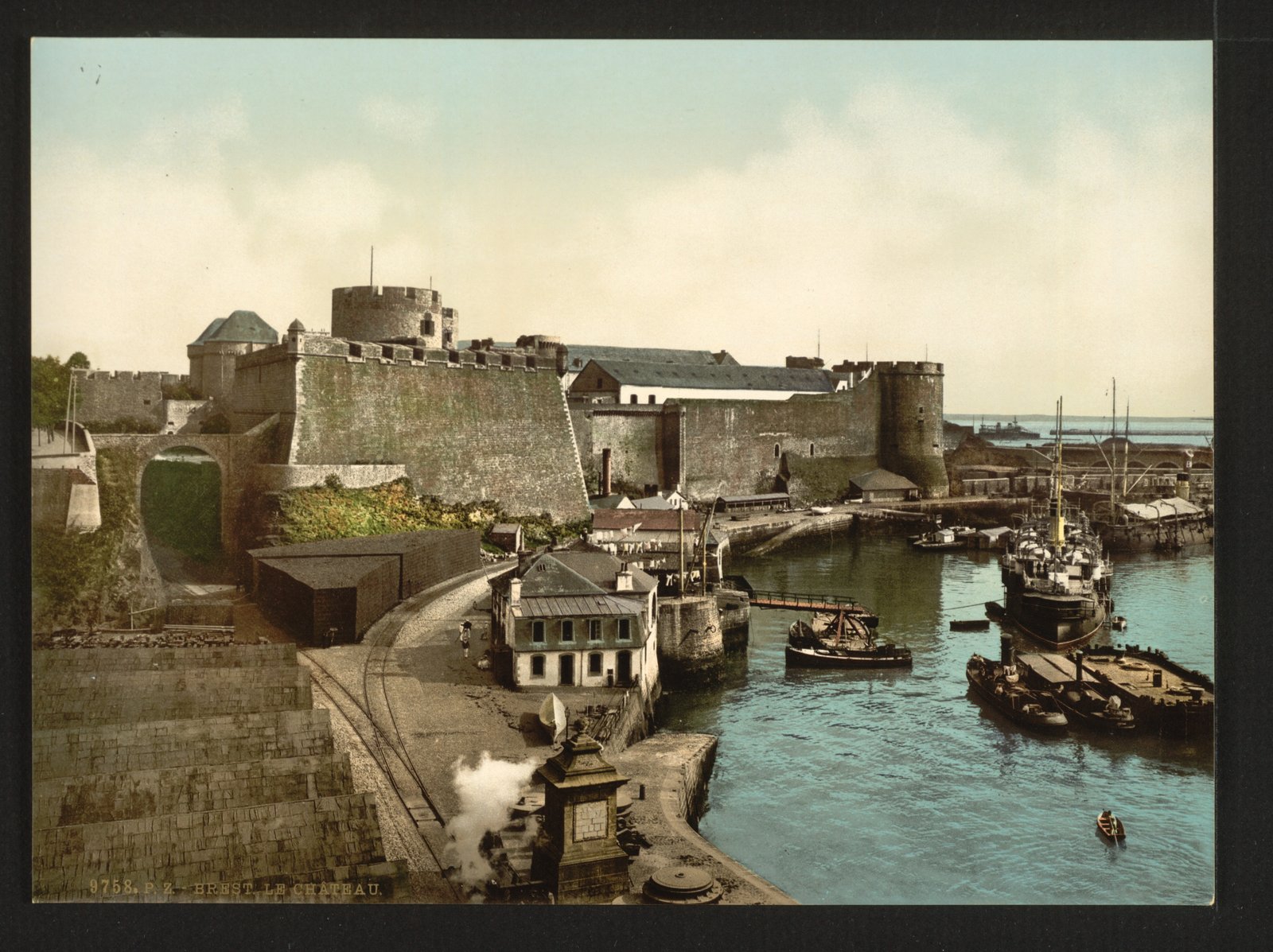
Brest sits at the far western tip of Brittany, a naval city of considerable strategic importance and a character that is entirely its own. It faces the Atlantic directly, and the weather — changeable, wet, and frequently spectacular — is as much a presence in the city as the port, the military installations, and the wide postwar boulevards that were rebuilt after Allied bombing flattened most of the old town in 1944.
The city is one of France's most important naval bases and has been since Richelieu ordered its development in the 17th century. The Château de Brest at the harbour mouth is the only significant building in the city to survive the war, and the Musée de la Marine inside it traces the naval history that shaped everything here. The Penfeld river, which runs through the heart of the military zone, divides the city in two: the civilian commercial centre on one bank, the arsenal and naval dockyards on the other, separated by the dramatic Pont de Recouvrance, a vertical-lift bridge that is the highest of its type in Europe.
For visitors, Brest is a city that rewards a different kind of attention than a heritage destination. The Rue de Siam — the city's main commercial street, named after a 1686 diplomatic visit from Siamese ambassadors — runs from the harbour up through the rebuilt centre. The Cours d'Ajot is a beautiful tree-lined promenade above the military port, one of the best places in France to watch ships. Océanopolis is a serious oceanography museum and aquarium on the harbour edge that is exceptional by any standard.
The Recouvrance neighbourhood on the right bank of the Penfeld is the most atmospheric part of the city — a warren of older streets that largely escaped the wartime bombing because the Nazis forbade Allied forces from bombing their own naval base. It has a rougher, more genuine feel than the rebuilt left bank.