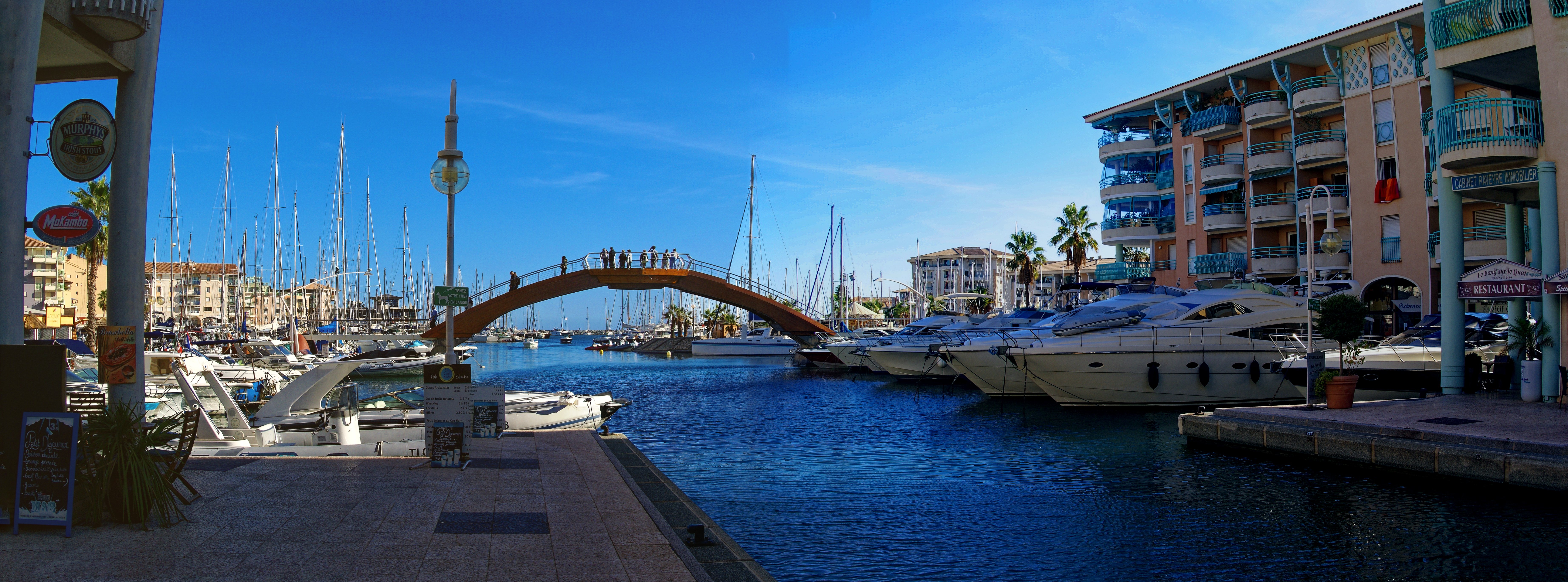
Fréjus sits quietly on the Var coast between Saint-Raphaël and the Massif de l'Estérel, and it punches well above its weight historically. The Romans called it Forum Julii and established it as a major naval base — what remains is one of the most substantial collections of Roman ruins in France outside of Provence's more famous sites. You can walk from a Roman theatre to an arena to the traces of a harbour wall all within a few minutes, which gives the old town a depth that beach resorts along this stretch of coast rarely match.
The medieval cité épiscopale, built around Fréjus Cathedral, is a place of genuine atmosphere: a baptistery that dates back to the fifth century, cloister gardens with Roman column fragments, and streets narrow enough that the buildings nearly touch overhead. This part of town feels far removed from the camping grounds and marinas that have grown up around it over the twentieth century.
The beach is long and pleasant, shared with the neighbouring town of Saint-Raphaël, and the area has good access to the red rock landscapes of the Estérel massif for hiking and cycling. For anyone using the Riviera as a base, Fréjus makes a more affordable and less hectic alternative to Cannes or Nice, with trains connecting both directions in under an hour.
The town has one oddity worth knowing: thanks to its colonial military history, it houses the Missiri Mosque, a striking replica of the Djenné mosque in Mali built for Senegalese troops stationed here in the early twentieth century. It stands incongruously in a residential area north of the centre and is unlike anything else on the Côte d'Azur.