Mont-Saint-Michel is one of the most recognisable sights in Europe — a granite island topped by a medieval abbey, rising from vast tidal flats on the border of Normandy and Brittany. At high tide the mount becomes an island; at low tide, the sea retreats to reveal kilometres of sand.
The abbey dates from the 10th century and was built by Benedictine monks (not Cistercians, despite a common confusion). During the Hundred Years' War it was one of the few places in western France that never fell to the English, thanks to its tidal defences and thick ramparts. After the Revolution it served as a prison before being restored as a monument.
Today the mount draws enormous crowds. The single street, the Grande Rue, is lined with souvenir shops and restaurants, and in summer the crush can be oppressive. Go early in the morning or late in the afternoon, or visit out of season. The abbey interior is worth the climb — the Merveille, the 13th-century Gothic complex on the north face, is extraordinary.
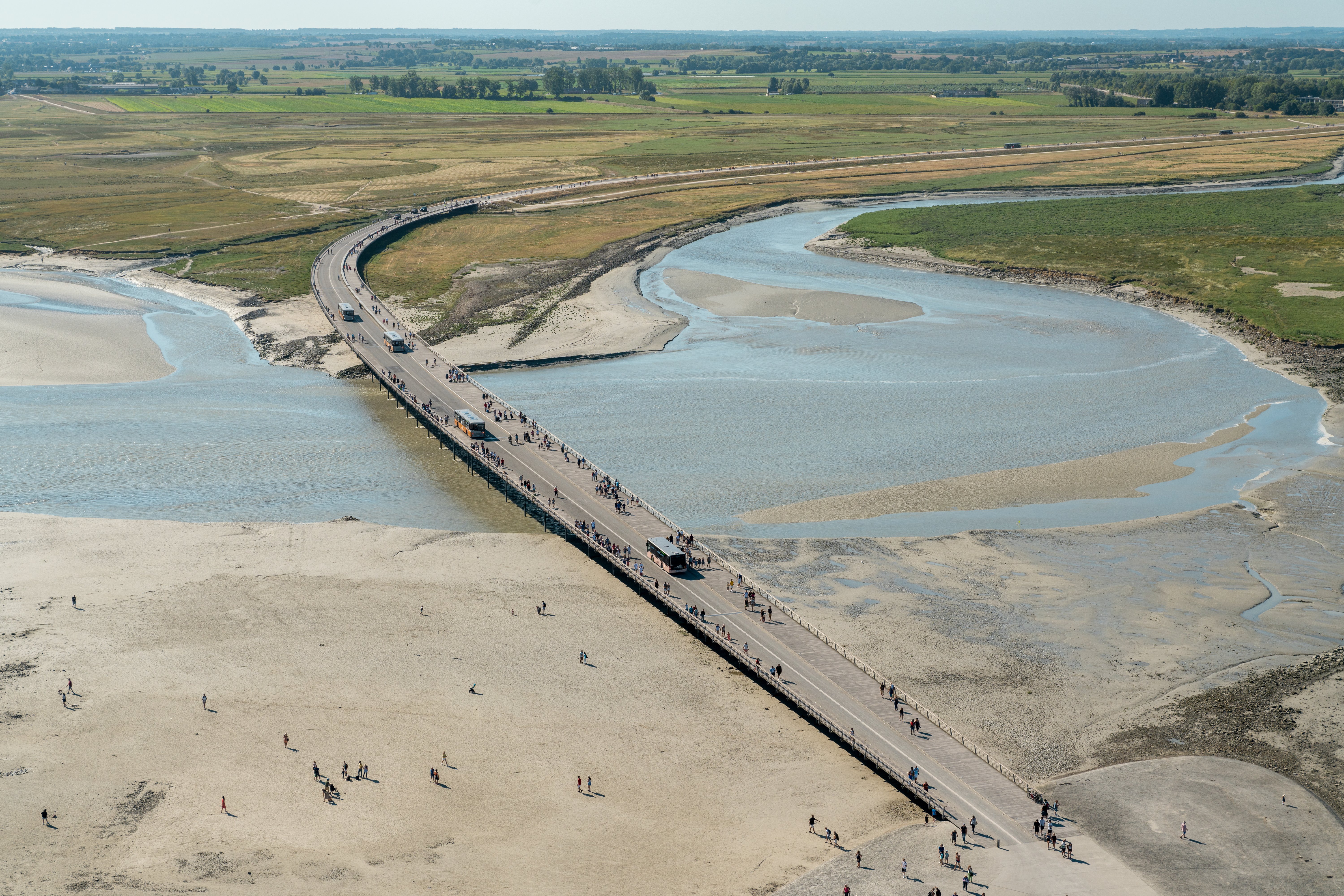
A new bridge-causeway completed in 2014 replaced the old road and car park, allowing the tides to flow around the mount again. Shuttle buses and a footpath now connect the mainland car park to the island. Walking across the flats at low tide with a guide is one of the best experiences here, but do not attempt it without one — the quicksands and incoming tides are genuinely dangerous.