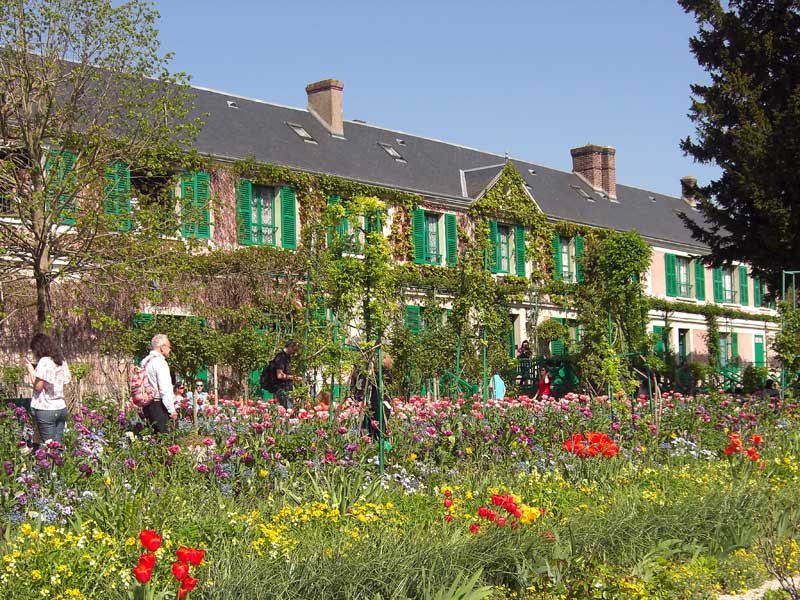
Giverny is a small village halfway between Paris and Rouen, and its fame rests almost entirely on one man: Claude Monet lived and painted here for 43 years until his death in 1926. His house and gardens are the reason to come.
The gardens are the main event. Monet designed them himself — the Clos Normand with its riotous flower beds, and the Japanese-inspired water garden with the famous lily pond and the green footbridge that appears in painting after painting. Walk through and you see the paintings come to life. As Monet himself described the pond: "I opened up a ditch so that I could fill the little pond that I had dug in my garden. I love water but I also love flowers. That's why, when the pond was filled, I wished to decorate it with plants. I took a catalogue and made a choice any old how. That's all."
The house itself is open to visitors — the blue kitchen, the yellow dining room, and Monet's collection of Japanese prints are all preserved. The Musée des Impressionnismes, a short walk from the house, shows changing exhibitions of Impressionist and post-Impressionist work.
The village has a Romanesque church, cobbled streets, and several painters' ateliers. It gets very busy in summer. The gardens are open from April to November; arrive early to beat the coach tours.