Eisenhüttenstadt is one of Germany's strangest postwar towns: a steelworks city founded by East Germany in 1950 and built as a socialist model settlement. It was called Stalinstadt for a few years, and the name still tells you the tone of the place better than any brochure could.
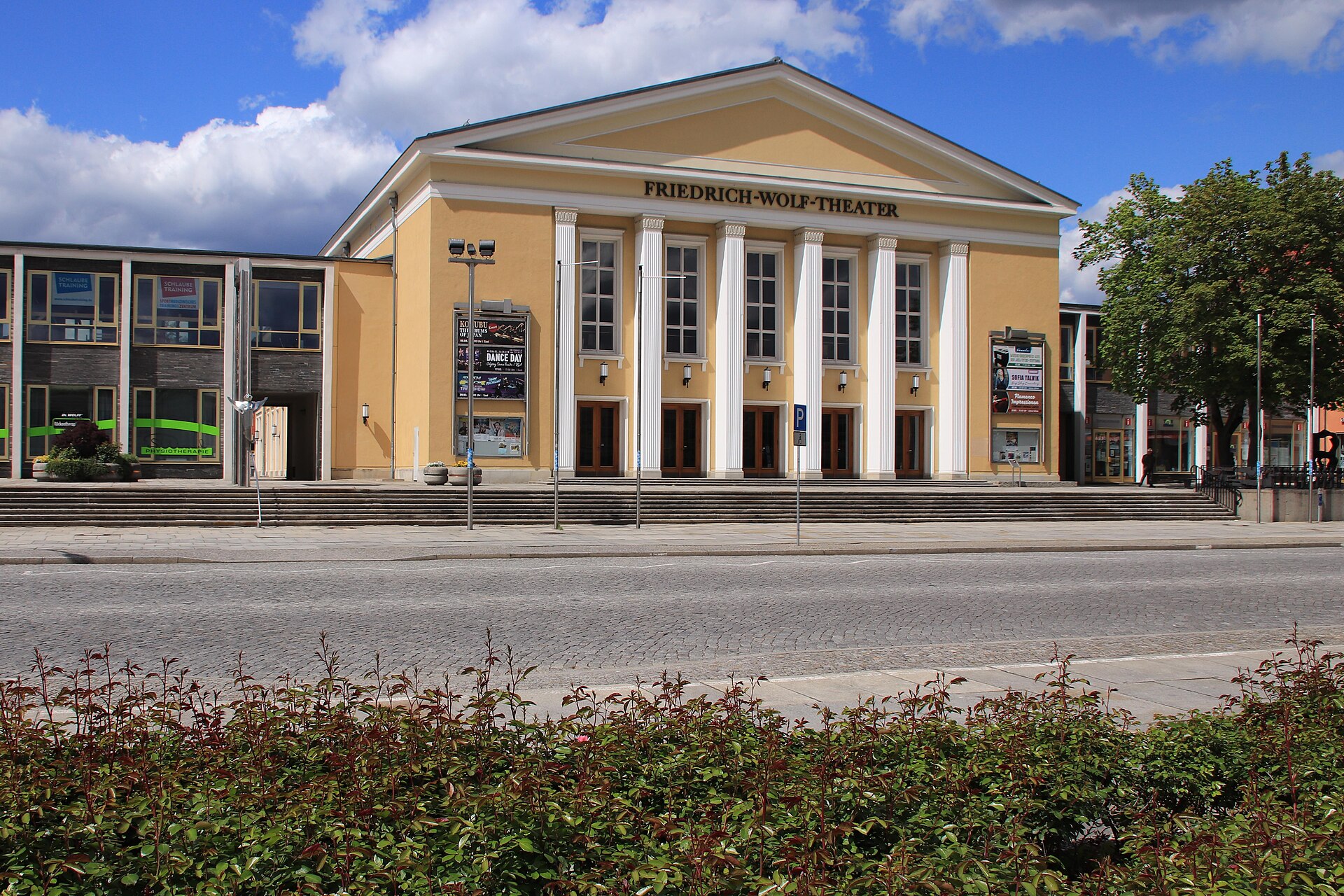
The appeal is architectural and historical rather than conventionally pretty. The planned centre, with its broad axes and 1950s monumental housing, is a rare place where GDR urban ideals can still be read at walking speed. The Museum Utopie und Alltag gives the everyday-life context, while the Friedrich-Wolf-Theater shows the civic ambition built into the new city.
East of the planned city, old Fürstenberg on the Oder is a different layer: older streets, river trade, war history, and the border with Poland close by. Eisenhüttenstadt is not for everyone, but if you care about 20th-century cities, ideology in brick, or the afterlife of the GDR, it is far more interesting than its size suggests.