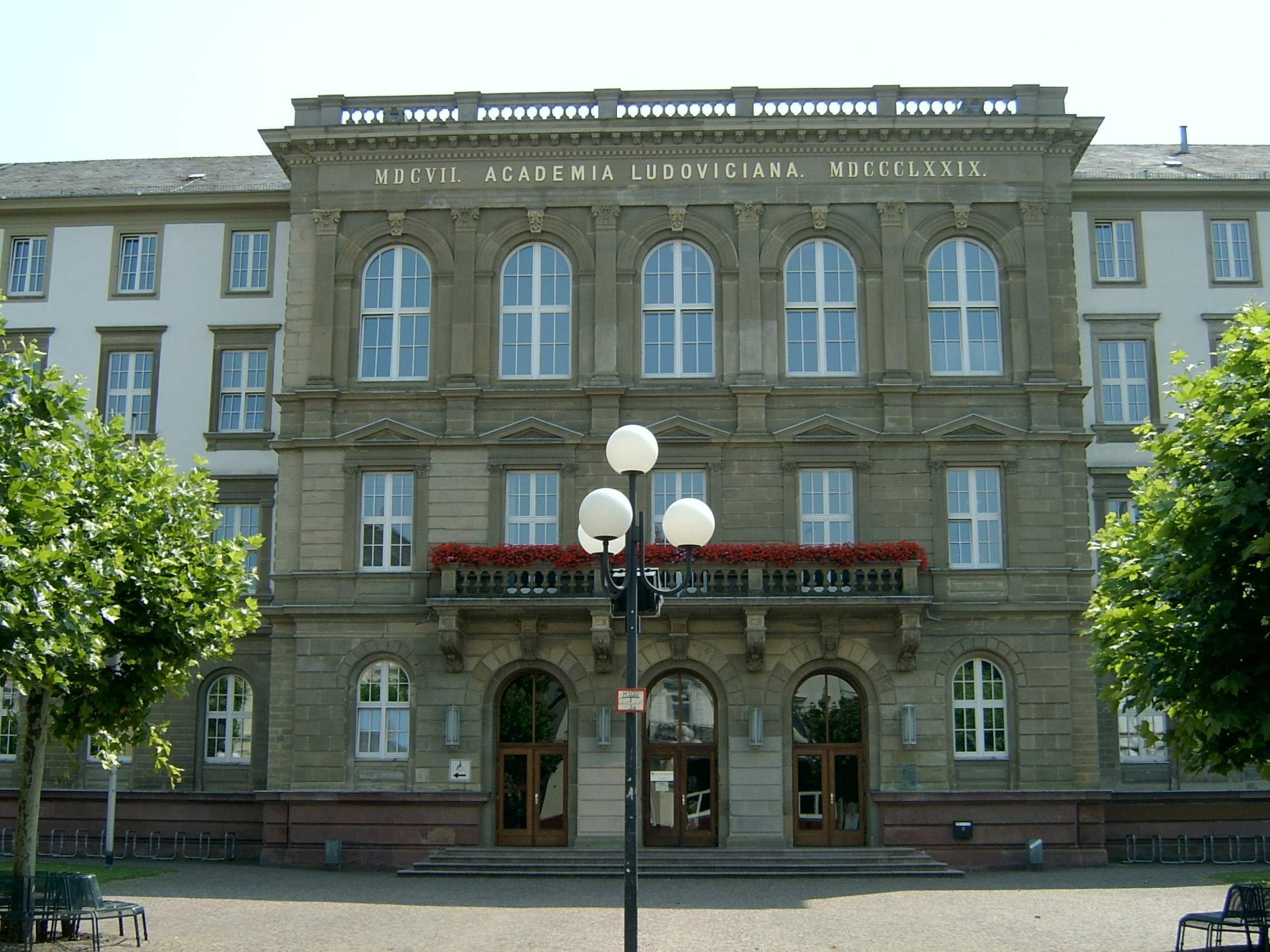
Giessen is a city of more than 850 years standing in the middle of Hesse, roughly halfway between Frankfurt and Marburg. It sits on the River Lahn and has around 73,000 inhabitants. Though the inner city was largely destroyed in World War II, a few historic buildings survived: the Old Castle (Altes Schloss), the Burgmannenhaus, and the Zeughaus among them.
Giessen is defined by its university, the Justus Liebig University, the second oldest and second largest in Hesse. With around 28,000 students the city has one of the highest student-to-population ratios in Germany, which gives it an energy well above what its size would suggest. Famous scientists worked here in the 19th century — Röntgen and Liebig among them. That tradition of scientific inquiry is still visible: the Liebig Museum, housed in Liebig's original laboratory, is one of the most atmospheric small science museums in Germany, and the Mathematikum is a world-first hands-on mathematics museum that draws visitors from across the country.
Outdoors, the River Lahn is the main attraction — popular for canoeing, cycling, and swimming in summer. The surrounding Middle Hessian highlands offer hiking through green countryside dotted with small castles. The Botanical Garden, dating to 1609, is one of the oldest in Germany and worth an afternoon.