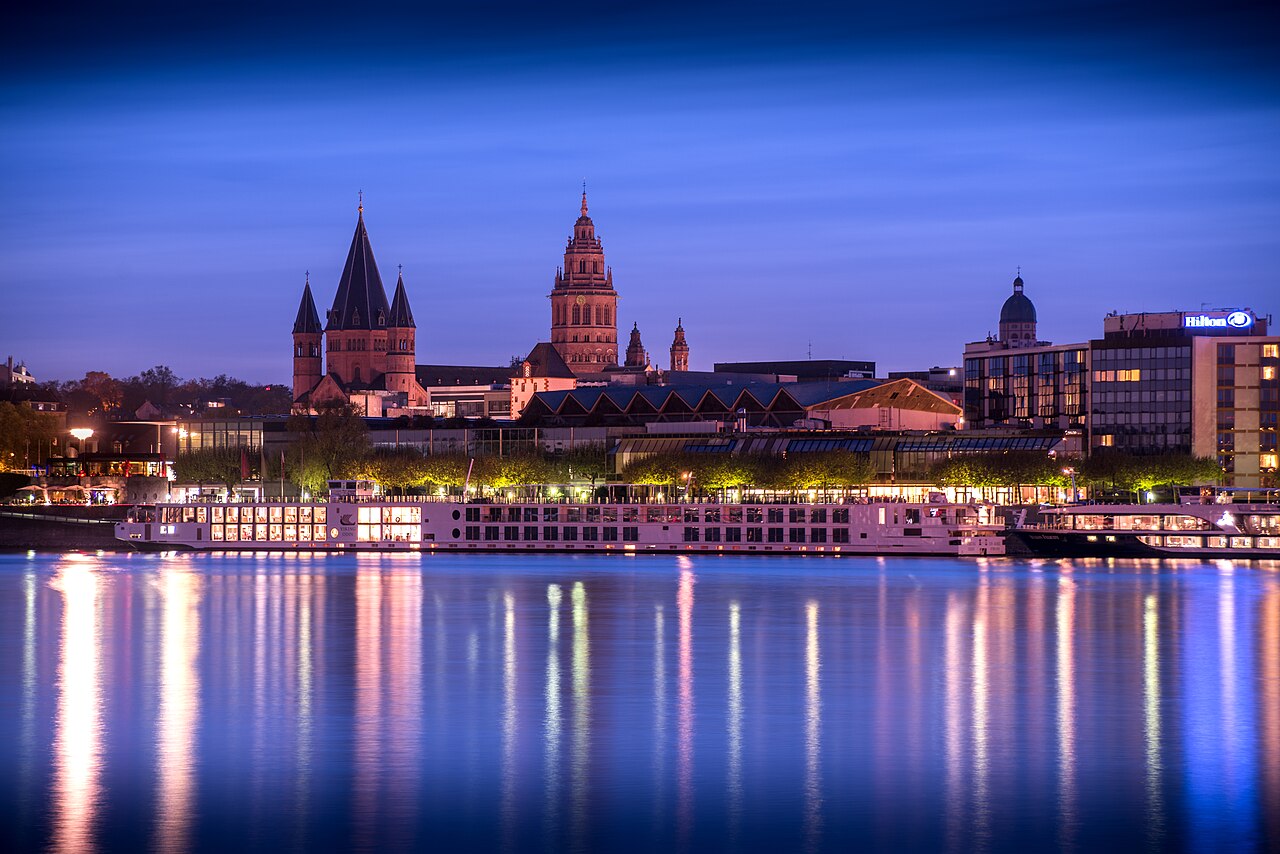
Mainz is a 2,000-year-old city on the Rhine, the capital of Rhineland-Palatinate and one of those German cities that is vastly more interesting than its reputation suggests. Founded as a Roman military camp, it became the seat of powerful medieval archbishops and the city where Johannes Gutenberg invented the printing press. The massive Romanesque cathedral, begun in 975, still dominates the skyline.
The old town was heavily damaged in the bombing of February 1945, but Mainz rebuilt with character rather than concrete. Baroque churches and half-timbered houses survived or were restored, and the modern additions — including the striking new synagogue — sit comfortably alongside them. The Gutenberg Museum, one of the oldest printing museums in the world, houses two original Gutenberg Bibles. St. Stephan's Church holds nine luminous Marc Chagall stained-glass windows, donated as an act of Jewish-German reconciliation. The Landesmuseum has one of the strongest Roman collections in Germany.
Mainz is also a wine city. The surrounding Rheinhessen region is Germany's largest wine-growing area, and the annual wine festival in late August or early September fills the old town with stalls and crowds. Carnival (Fastnacht) is the other major event — Mainz rivals Cologne and Dusseldorf for the wildest celebrations in Germany. The rest of the year, the bars and restaurants along the Augustinerstrasse and the Rhine promenade keep things lively.