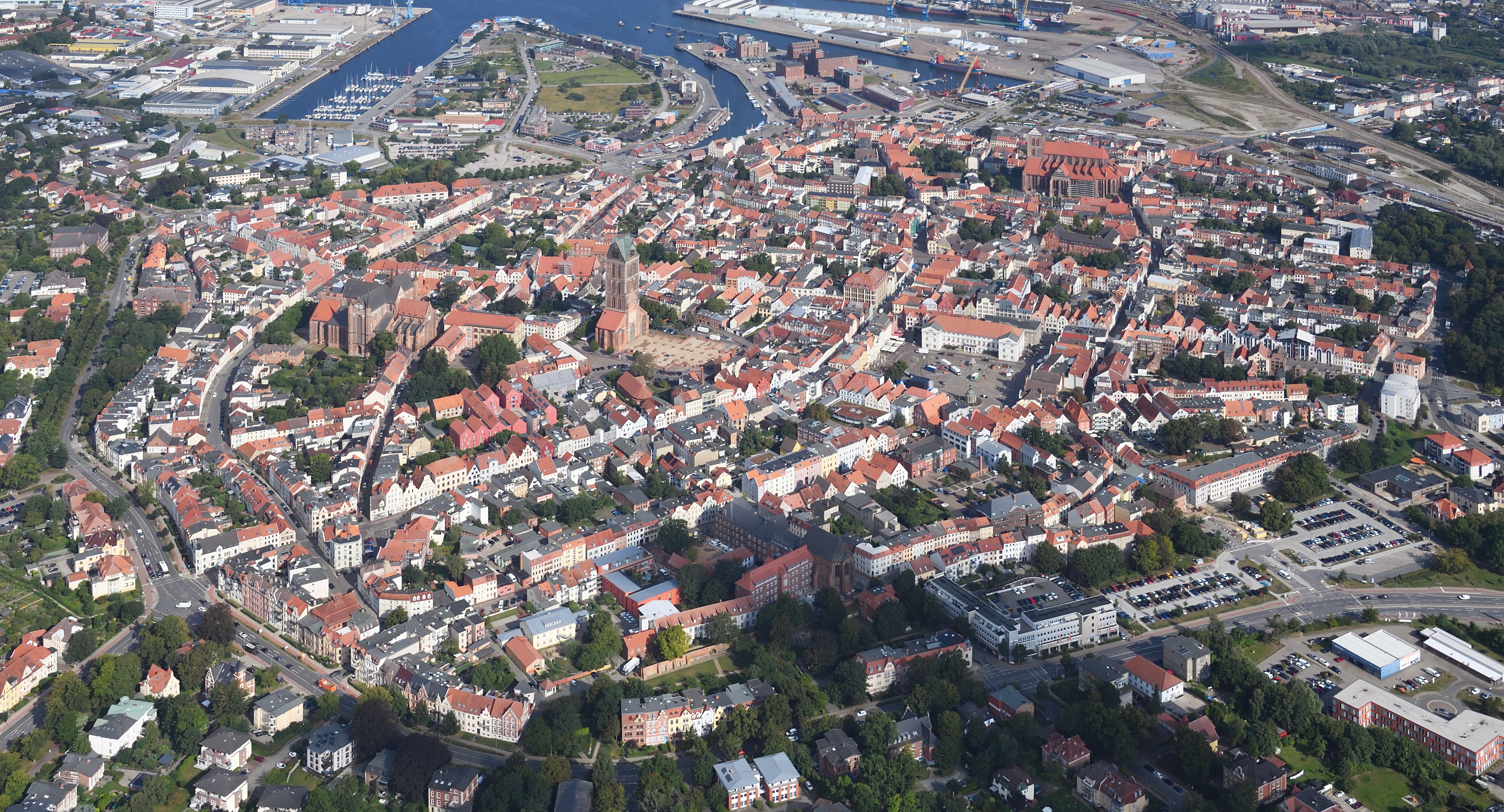
Wismar is a Hanseatic port town on the Baltic coast of Mecklenburg-Western Pomerania, with one of the best-preserved medieval town centres in northern Germany. Founded in the thirteenth century, it grew wealthy through Baltic trade and was a Swedish possession from 1648 to 1803 — a history still visible in some of the street names.
The skyline is dominated by three imposing medieval brick-built churches, and the Market Square, one of the largest in northern Germany, is ringed with carefully restored gabled houses including the Alter Schwede and the ornate Wasserkunst fountain. The old harbour, still a working port, adds character to the waterfront. Wismar and neighbouring Stralsund were jointly listed as a UNESCO World Heritage Site in 2002 for their outstanding examples of Brick Gothic architecture.
The city has about 50,000 inhabitants and a relaxed, walkable quality that makes it an easy day trip from Rostock or Schwerin, or a quiet overnight stop on a journey along the Baltic coast.