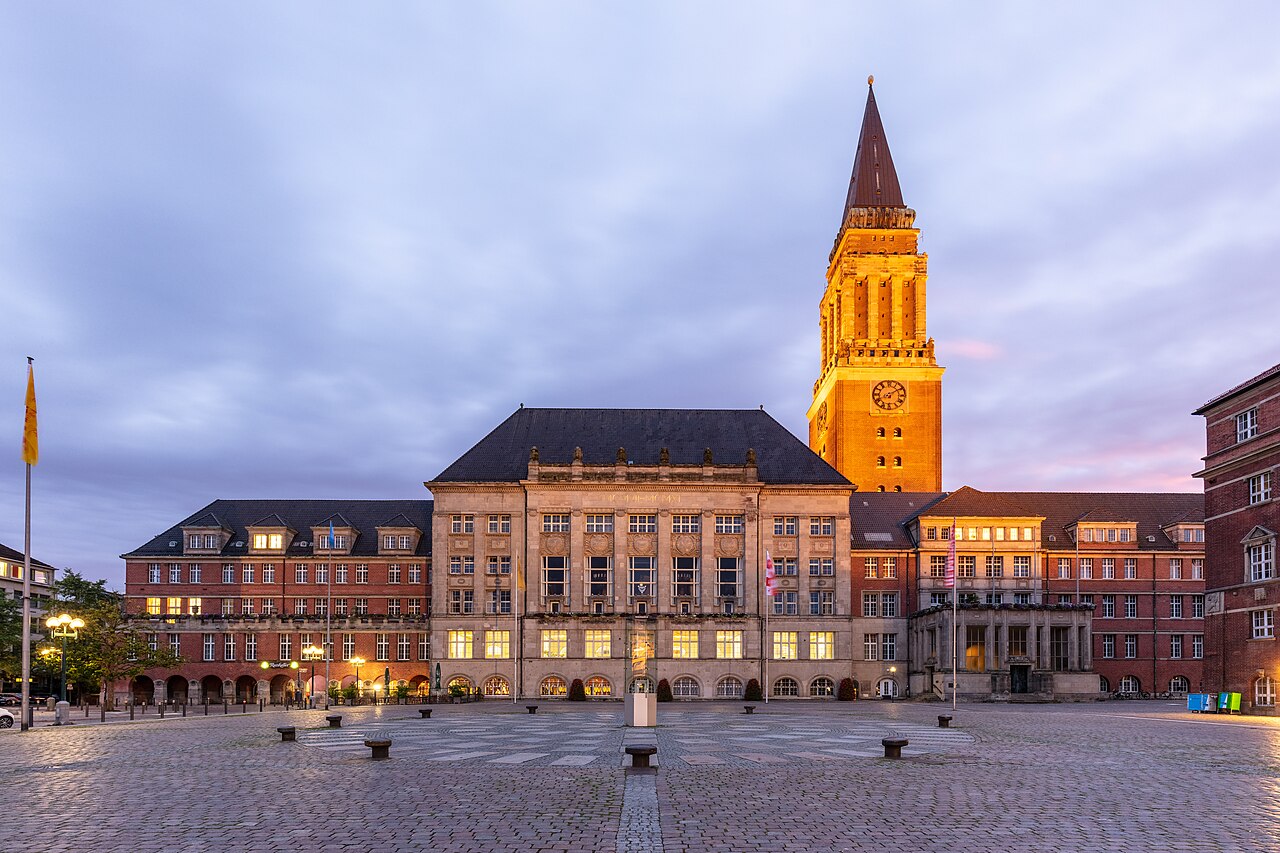
Kiel is the state capital of Schleswig-Holstein, a port city of around 250,000 people at the western end of the Baltic Sea. Its position at the mouth of the Kiel Canal — the world's busiest artificial waterway — has shaped everything about it: the economy, the culture, and the steady flow of ferries heading to Scandinavia and the Baltic states. It is a functional, likeable city without much tourist polish, and most visitors experience it briefly, waiting for a boat north.
Those who stay longer find a city with genuine character. The Kieler Förde, the long inlet that splits the city from its eastern shore, gives Kiel a waterfront unlike most inland German cities. Sailors have gathered here for generations, and the annual Kieler Woche in late June is the world's largest sailing regatta — around 5,000 racing yachts fill the fjord while the city turns itself over to ten days of concerts, markets, and open-air celebrations. It draws over a million visitors from across Europe.
The historic city centre was largely destroyed in the Second World War and rebuilt in the utilitarian style of the 1950s and 60s, so Kiel is not a city of picturesque old towns. Instead its pleasures are practical and maritime: walking the Kiellinie waterfront promenade, watching the giant ferries arrive and depart, cycling the fjord paths, or crossing to the village of Laboe on the eastern shore to visit the Laboe Naval Memorial and U-995. The Holtenau locks at the northern end of the canal, where ocean-going ships glide improbably through a residential suburb, are an oddly compelling sight.
Kiel has strong Scandinavian links — you can feel it in the design of the shops, the cycling culture, and the straightforward friendliness of the locals. It is also a university city, with a lively student population that gives the centre more energy than its industrial reputation might suggest.