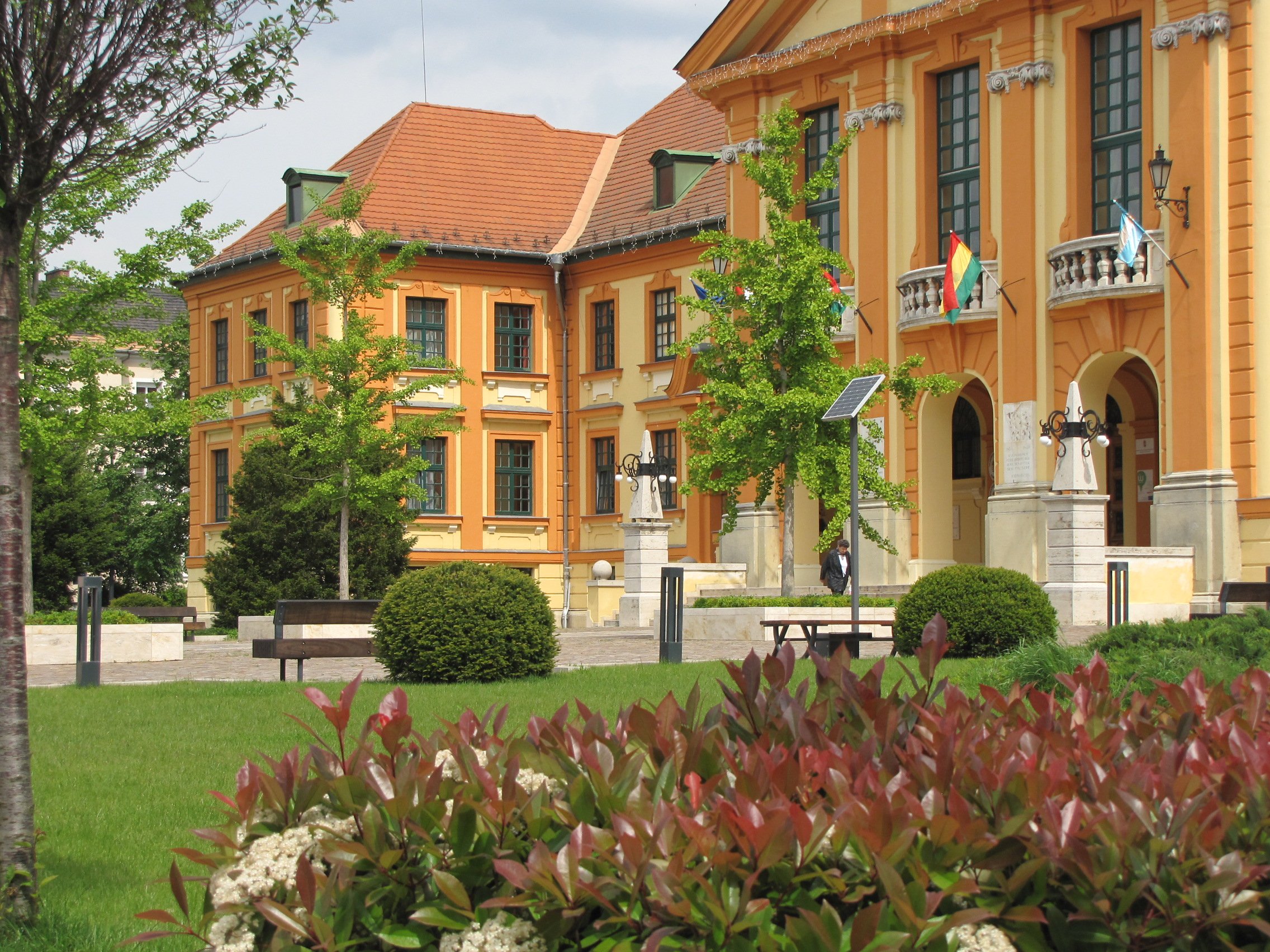
Komarom sits on the Hungarian bank of the Danube, directly across from its Slovak twin Komarno. The 1920 Treaty of Trianon split what had been a single town in two, and the border still runs along the river — a visible reminder of the region's tangled history. The Hungarian side has around 20,000 inhabitants and feels quietly proud of its layered past.
The town's standout attraction is its 19th-century fortification system, which is genuinely remarkable in scale. Star Fort, Igmánd Fort, and Fort Monostor were all built between 1850 and 1877, and together they form one of the most complete such networks in Central Europe. The engineering is impressive: the upper levels have settled into the ground over the years, so grass and wildflowers now grow over what were once battlements. Fort Monostor can be visited and gives a real sense of the system's ambition.
The older part of the town, Szőny, sits on the site of Brigetio — a Roman legionary fortress and civilian town that was one of the key bases on the Pannonian frontier. The Klapka György Museum holds finds from the excavations, including mosaics and everyday objects from Roman life. Elsewhere in town you'll find the 18th-century Catholic memorial church in Szőny, an 18th-century granary, and a couple of modest galleries.
Komarom also has a thermal bath complex fed by mineral-rich groundwater. It's popular with locals year-round and worth a stop if you're in the area.