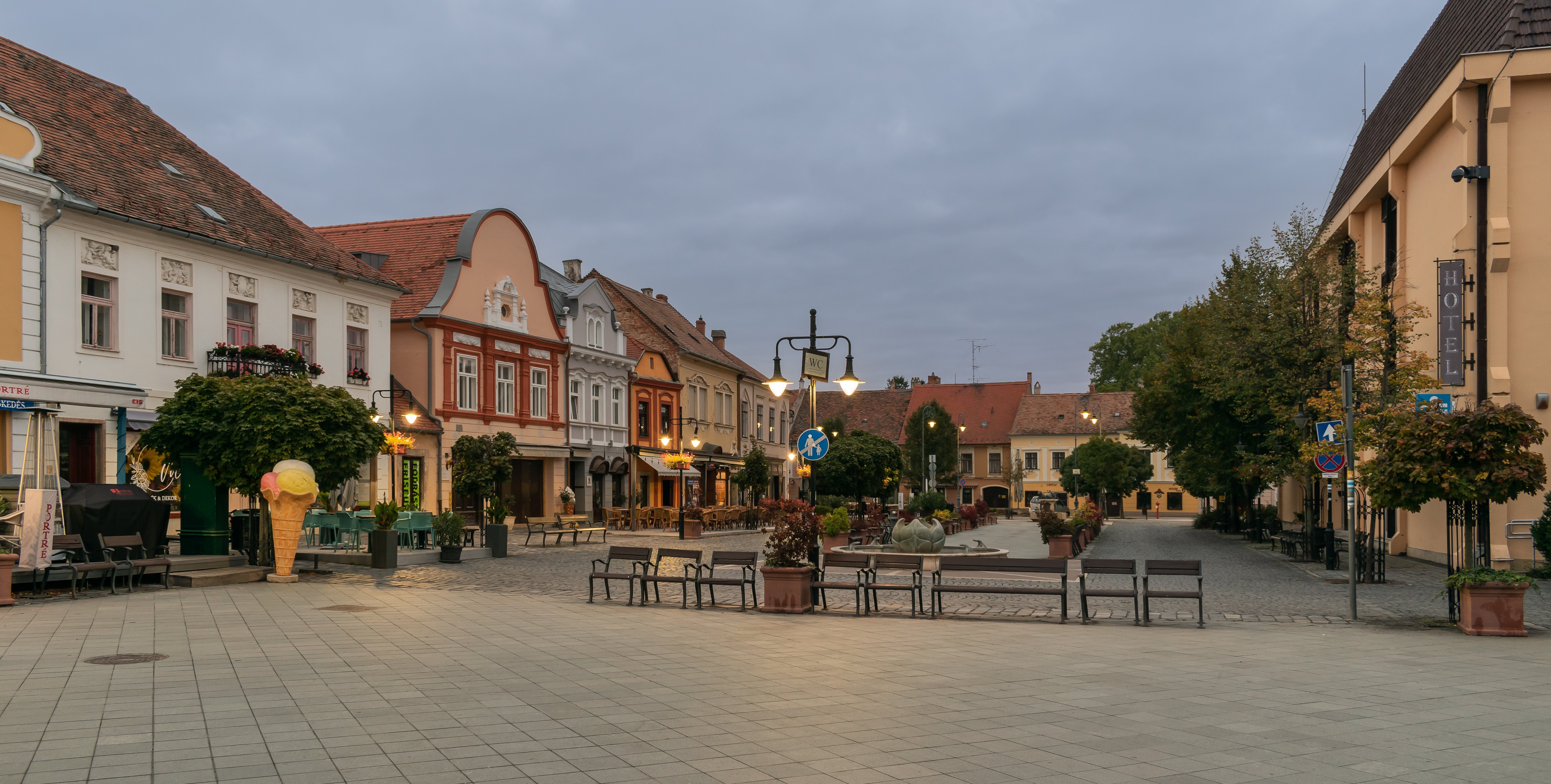
Kőszeg is one of Hungary's most charming small towns, tucked right against the Austrian border at the foot of the Kőszeg Mountains. It is best known for a single extraordinary event: in August 1532, the tiny garrison of Jurisics Castle held off the Ottoman army of Suleiman the Magnificent for 25 days — or, by some accounts, 25 days of formal siege plus weeks of skirmishing — delaying the sultan's march on Vienna long enough that he abandoned the campaign. Every day at 11am, church bells ring across the town to commemorate the moment the Ottomans finally retreated. The tradition has continued for nearly five centuries.
The old town is beautifully preserved and small enough to walk in an hour. Jurisics tér, the main square, is lined with painted baroque and Renaissance townhouses in shades of ochre and terracotta, anchored by the Church of the Sacred Heart and framed by the old Heroes' Gate. The castle itself is modest but atmospheric, with a small museum chronicling the siege and the town's medieval history. The whole scene feels unhurried and largely untouched by mass tourism — it has none of the coach-party crowds that descend on nearby Sopron.
Kőszeg also sits at the heart of a small wine region. The local Kékfrankos grape — the same as Austria's Blaufränkisch — produces honest, medium-bodied reds that pair well with the town's Hungarian cooking. Beyond wine, the Kőszeg Mountains offer easy hiking through beech and oak forests. The Írott-kő, at 884 metres the highest point in Transdanubia, sits on the Austrian border and makes a pleasant half-day walk. Kőszeg is an easy day trip from Sopron or Szombathely, but it deserves an overnight stay — the town empties of visitors by evening and is at its quietest and most atmospheric then.