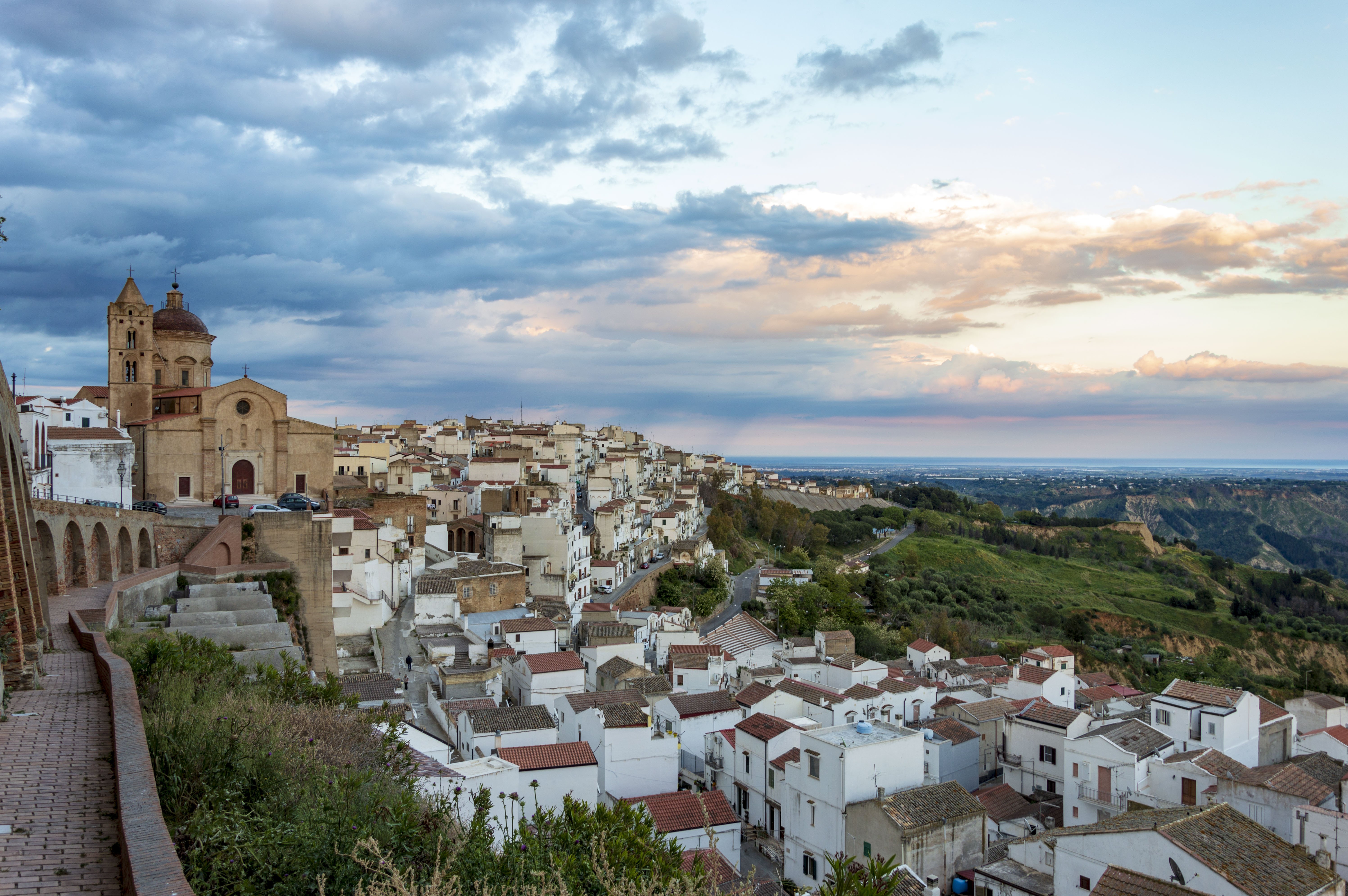
Pisticci is a hilltop town in Basilicata, perched dramatically above the calanchi — deeply eroded clay ravines that give the surrounding landscape a stark, lunar beauty. The town has a long history: it flourished under the Normans, and the old centre retains a tangle of narrow streets and white-washed houses.
In 1688 a catastrophic landslide destroyed the area around the castle and killed over 400 people. Many survivors built small houses near the edge of the ravine, and this row of distinctive white houses — the Dirupo — can still be seen clinging to the cliff edge. Nearby, in the hamlet of San Basilio, the Masseria Fortificata is a fortified farmstead built by the Normans under Roger I and later converted into an abbey by Basilian monks in 1133. The surrounding terrain is rough and wild, good for hiking. Pisticci is also the birthplace of Amaro Lucano, the herbal bitters that have been produced here since 1894.