Europe > Italy > Campania > Herculaneum
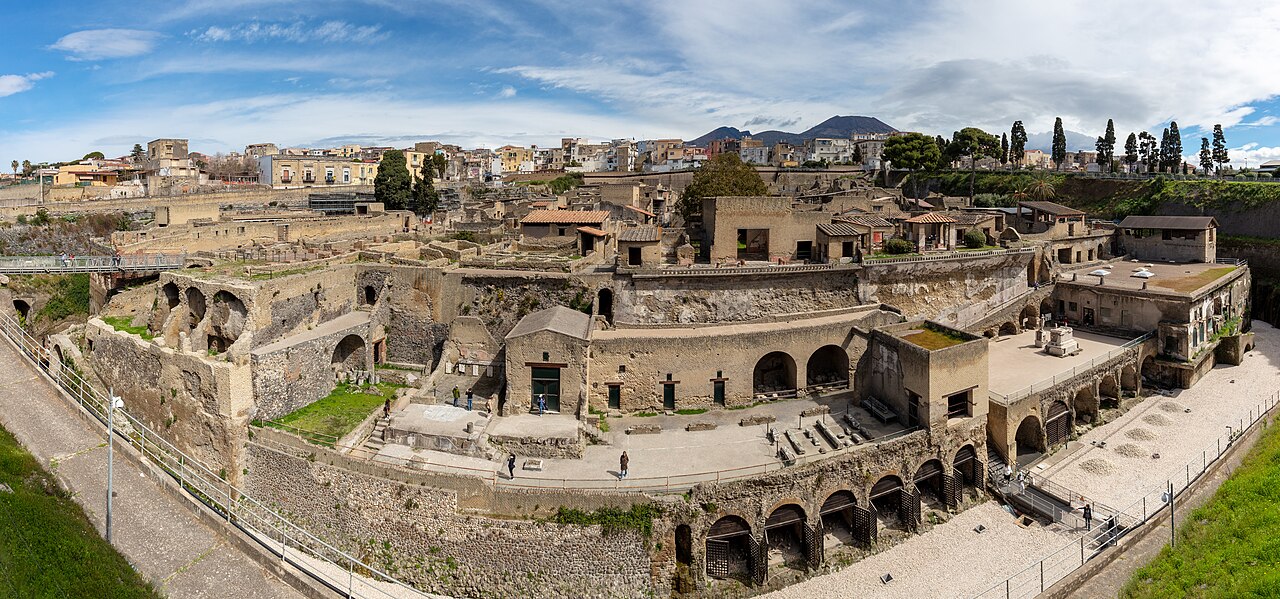
Herculaneum (modern Ercolano) was a small, prosperous Roman resort town on the Bay of Naples, destroyed in the same 79 AD eruption that buried Pompeii. Where Pompeii was smothered by ash and pumice, Herculaneum was engulfed by pyroclastic surges — superheated flows of gas and rock that carbonised wooden objects, food, cloth, and furniture rather than simply burying them. The result is a site that, in some respects, is more vivid than Pompeii.
Wooden roof beams, beds, doors, and even a boat have survived in carbonised form. The House of the Mosaic Atrium has its geometric mosaic floors intact; the House of the Wooden Partition preserves a hinged wooden screen. The thermopolia (hot food shops) still have their marble counters with embedded ceramic jars.
For years it was believed the population had evacuated before the eruption. Excavations of the marina in the 1980s found hundreds of skeletons sheltering in the boat sheds — men, women, children, freeborn and slaves — who did not escape. The bones are still there.
Herculaneum is smaller than Pompeii (only about a third of the site has been excavated; the rest lies under the modern town of Ercolano) and sees fewer visitors, which makes for a calmer experience. Allow 2-3 hours. The Circumvesuviana from Naples Piazza Garibaldi stops at Ercolano Scavi (20 minutes; also served by trains from Sorrento).