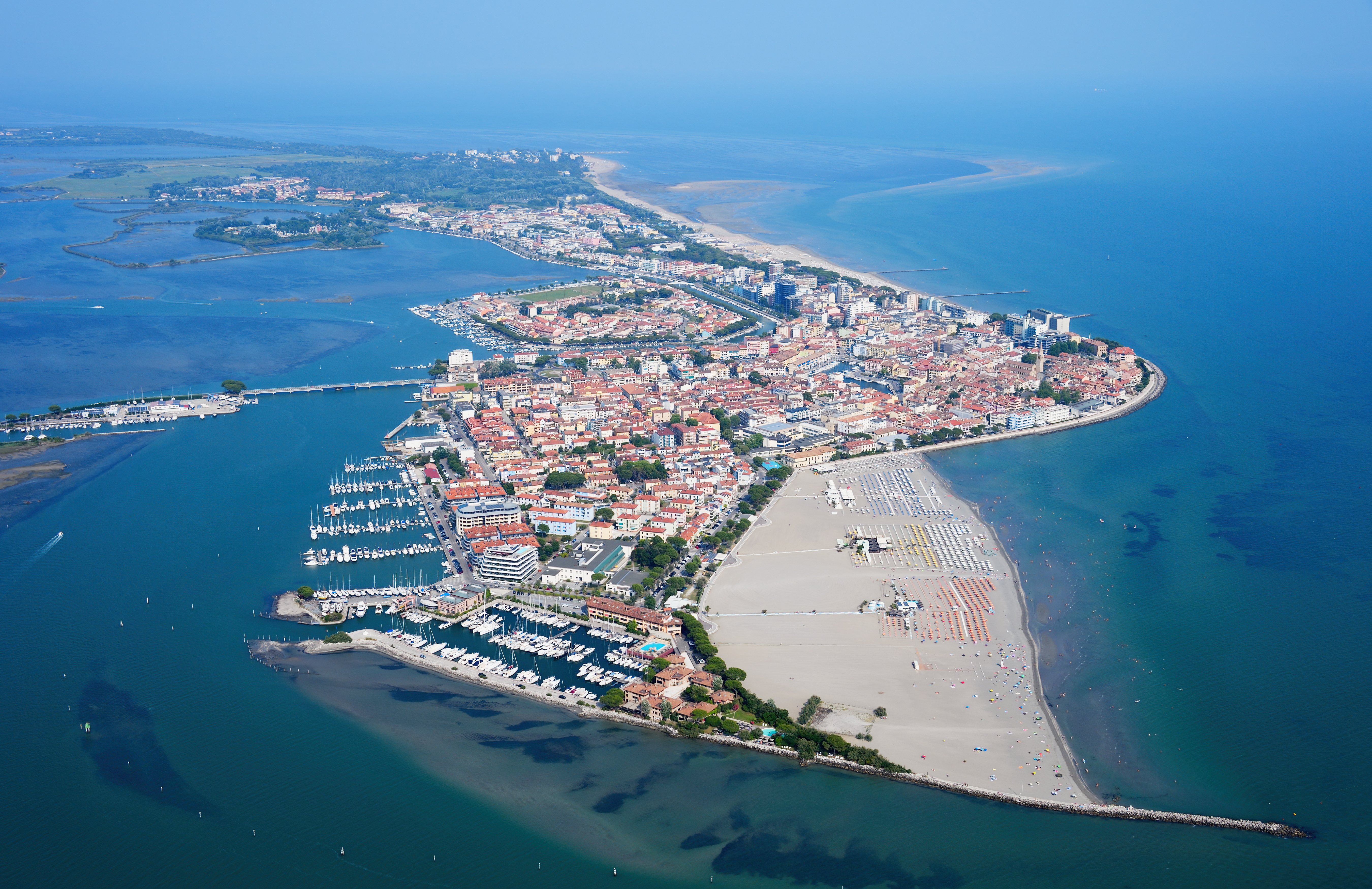
Grado
©
Grado

Grado

Lagoon island town in Friuli Venezia Giulia, with early Christian basilicas and old resort bones.

Grado is a small island town in the lagoon of Friuli Venezia Giulia, connected to the mainland by a causeway. Known as the "Sunny Isle" (Isola del Sole), it has been a seaside resort since the late nineteenth century, when Austro-Hungarian aristocrats came for the mild climate and the thermal springs. The old town on the western end of the island is a maze of narrow streets and tiny squares with early Christian basilicas — the Basilica di Sant'Eufemia and the Basilica di Santa Maria delle Grazie date from the fifth and sixth centuries.

The beaches face south into the Adriatic, with calm, shallow water and fine sand that makes them good for families. The lagoon behind the island is a protected nature area of salt marshes, channels, and small islands — boat trips through the lagoon are one of Grado's particular pleasures. The town has a strong food tradition, particularly the local fish stew boreto alla graisana.

Guide

Beaches

Grado is unusual on the Italian Adriatic in that its beach faces directly south — the result of being on a barrier island rather than the mainland coast. The water is shallow far out (perfect for children), the sand is fine and pale, and on a clear day you can see the snowy peaks of the Julian Alps rising in the north from the water's edge.

The main beach is divided into stabilimenti (paid concession sections with sun loungers and parasols) and a few free public stretches. The eastern end, near Pineta, is quieter and quieter still are the Costa Azzurra and Spiaggia Costa Azzurra coastal walks. To the west, the Spiaggia Schiusa is a long, sandy free beach with thin pine woods behind it. Grado also has a thermal bathing establishment (Terme Marine) drawing on the saline springs that gave the place its 19th-century reputation as a health resort.

Guide

Day Trips

Grado is well placed for half-day or full-day excursions to nearby coastal and Friulian sites.

  • Aquileia — 10 km north, the ancient Roman city and the seat of the patriarchate from which Grado later inherited; UNESCO-listed for its basilica with one of the largest early Christian mosaic floors in the world
  • Palmanova — about 30 km north, a Venetian-built star-shaped fortress town from 1593, perfectly preserved
  • Trieste — 50 km east, Italy's most idiosyncratic city
  • Lignano Sabbiadoro — across the lagoon to the west, the Adriatic's largest and most developed beach resort, for contrast
Guide

Eating Out

Grado's cuisine is unapologetically of the sea, and the local fish stew boreto alla graisana — a long-simmered preparation of mixed fish (traditionally turbot, hake, sea bass, or whatever the boats brought in), olive oil, garlic, vinegar, lots of pepper, and almost no tomato — is the signature dish. It is served with white polenta. Almost every osteria in the old town offers it; the better ones list which fish they used that morning.

Beyond boreto, look for sardoni in savor (marinated sardines), schie con polenta (small lagoon shrimp), and the Friulian wines, especially Friulano (the local white) and Refosco (a robust red from the Karst hinterland). The traditional dessert is the dolce alla graisana, with raisins and pine nuts.

Trattoria de Toni — a long-standing family restaurant in the old town serving classic Gradese seafood and an excellent boreto.

Osteria Alla Borsa — Calle della Borsa. Tiny and old-fashioned, with a short blackboard menu and a strong reputation for the lagoon dishes.

Tavernetta all'Androna — Calle Porta Piccola. More ambitious modern cooking using local fish; intimate setting in a tucked-away corner of the centro storico.

Guide

When to Go

Grado is at its busiest in July and August, when Italian families fill the beach hotels and the temperature is reliably in the high 20s and low 30s with a sea-warmed humidity. June and September are easier — quieter, warm enough for swimming, and the lagoon bird-life is more visible.

The Perdòn de Barbana, the great floating Marian procession across the lagoon, takes place on the first Sunday of July and is an extraordinary spectacle if you can be here for it. The autumn Boreto alla Graisana food festival celebrates the local fish stew with set menus across the town's restaurants. Winters are cool, often misty, and most beach facilities close — though the centro storico stays atmospheric and the thermal baths run all year.