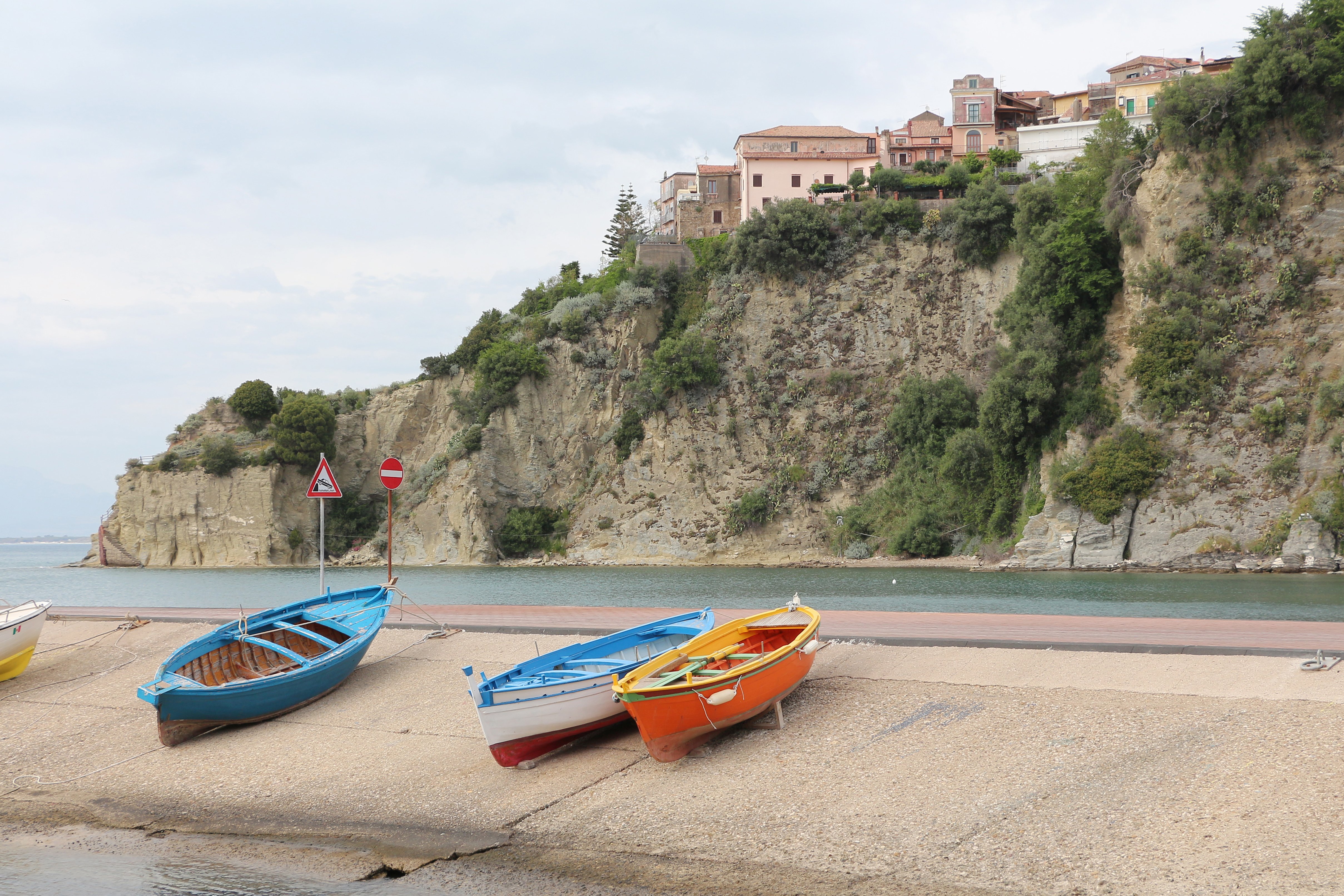
Cilento coast town where a Byzantine promontory fortress guards Campania's southern shoreline
Agropoli is the main town on the southern stretch of Campania coast, at the northern edge of the Cilento National Park (a UNESCO World Heritage Site). The name comes from the Greek akropolis — the Byzantine settlers who fortified the promontory were making a direct reference to Athens. Before them came the Greeks, who built a temple to Artemis here; before them, the indigenous Lucanian people.
The old town occupies the promontory above the modern town and harbour, with the Castello Angioino-Aragonese at its summit and narrow lanes winding down to the Aragonese gate. Entry to the castle is free; from the battlements you look south along the Cilento coast and, on clear days, north to the Greek temples at Paestum. The lower town and seafront are functional rather than beautiful but have clean beaches, good seafood restaurants, and the infrastructure for a beach holiday.
Agropoli makes a practical base for the Cilento — Paestum is 15 km north, the Cilento coast extends south, and the Cilento hills are accessible by car. The town has a train station on the Naples–Reggio Calabria line, about 1 hour 20 minutes from Naples.
Guide
Beaches
Agropoli has good beaches for a town of its size, and the water quality in this part of the Cilento coast consistently earns Blue Flag certification. The main town beach, Lido Azzurro, stretches north of the marina and has both free sections and paying lidos with sunbeds. It gets crowded in July and August.
For more space, the beaches south of the promontory are better. Baia di Trentova, a small cove about 2km south of the centre, is sheltered and has cleaner water than the town beach. You can reach it on foot from the old town along the coastal path, though the last stretch is steep. The coves further south along the Cilento coast — accessible by car or boat — are significantly less crowded and scenically finer.
The sea here is warm enough for swimming from June through October. Note that the paid lidos control access to the best sections of sand; the free beaches can be rocky in places but are fine with water shoes.
Guide
Day Trips
Agropoli's strongest suit as a destination is its location. It sits at the edge of the Cilento National Park — one of Italy's largest protected areas and a UNESCO World Heritage Site — and within easy reach of several outstanding day trip destinations.
Paestum, 15km north, has three of the best-preserved Greek temples in the world, better than anything in Greece itself for sheer state of preservation, and a museum with stunning painted tomb frescoes from the 4th century BC. Allow a half-day.
The Cilento coast south of Agropoli has beautiful coves and seaside villages. Acciaroli, Pioppi, and Pisciotta can all be reached by car in under an hour; each has a fishing harbour and good seafood. The interior of the Cilento — the hill town of Teggiano, the Certosa di Padula (a vast Carthusian monastery) — rewards a full day by car.
Guide
Getting There
Agropoli has a train station on the Naples–Reggio Calabria line. Trenitalia runs frequent Regionale services from Naples Centrale; the journey takes about 1 hour 20 minutes to 1 hour 40 minutes depending on the service. The station is in the lower town, about 1km from the beach and 2km from the old town — walkable with light luggage, or a short taxi ride.
By car from Naples, take the A3 motorway south (direction Salerno-Reggio Calabria) and exit at Battipaglia or Eboli, then follow the SS18 coastal road south. The drive is about 1 hour 20 minutes without traffic. Parking in the lower town is easier than in the old town, where access is restricted.
From Salerno (the main hub for the Amalfi and Cilento coasts), Agropoli is about 45 minutes by train and around 30 minutes by car on the A3. CSTP buses also connect Salerno to Agropoli and the Cilento coast towns, useful for getting around without a car once you're in the area.