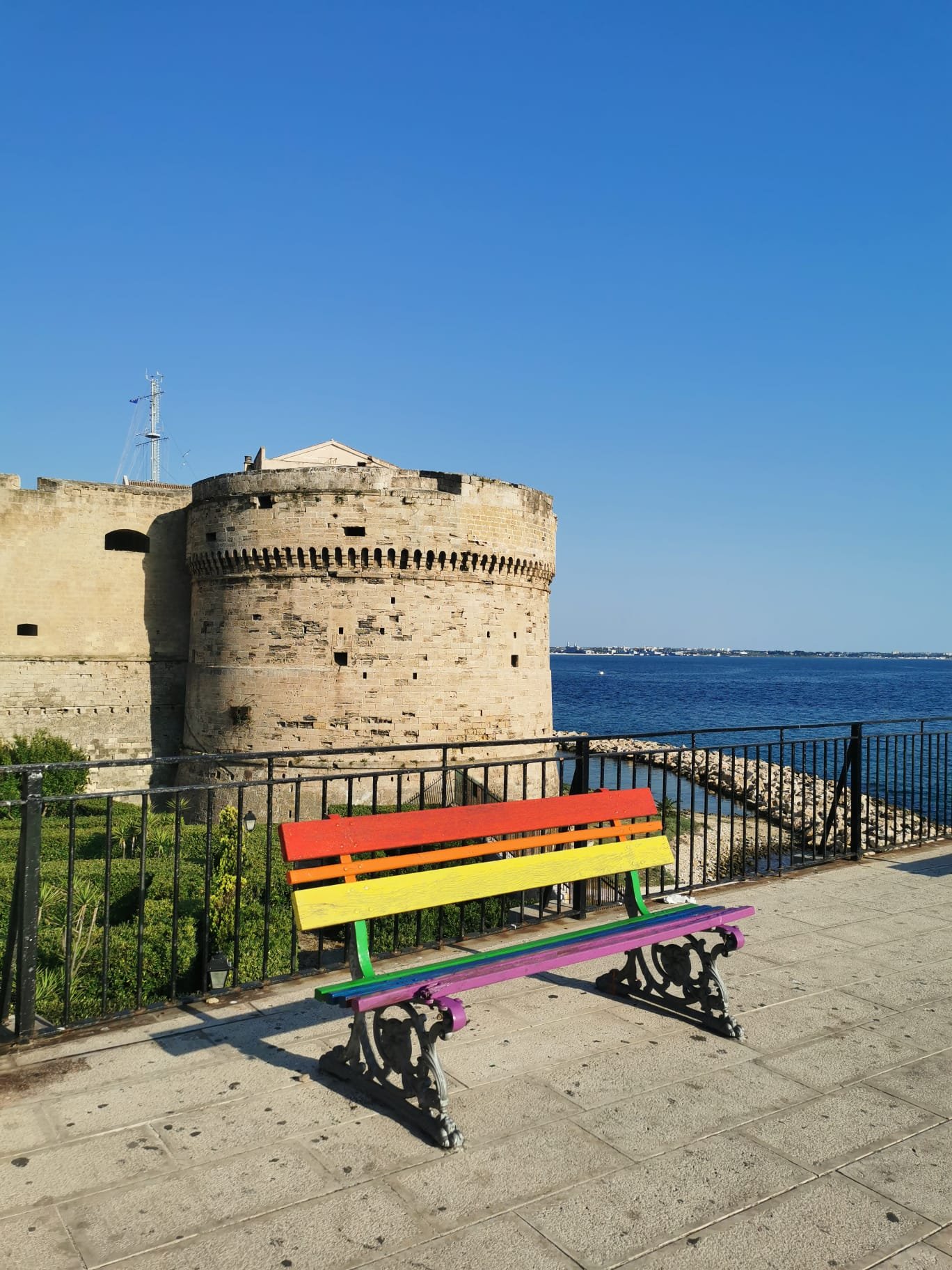
Taranto sits at the top of the Gulf of Taranto in southern Puglia, an ancient city built on a narrow peninsula between two bodies of water: the open Mar Grande to the west and the sheltered Mar Piccolo to the east. The city was founded by Spartan colonists in the 8th century BC and flourished as the most powerful city of Magna Graecia. Today it wears its layers of history visibly — Greek temples, a Norman-Aragonese castle, a florid baroque cathedral, and the massive steelworks that have defined (and burdened) the city's modern economy all occupy the same geography.
The historic centre occupies the original island, connected to the mainland by two bridges: the iconic Ponte Girevole, a swing bridge that still opens to let ships through, and the older Ponte di Porta Napoli. The old city is genuinely historic but run-down in places — there is real grit here, which makes it more interesting than a polished museum town. The National Archaeological Museum (MArTA) is one of the finest archaeological collections in Italy, with an exceptional display of Magna Graecia goldwork.
Taranto is also the home of the Tarantella — the frantic spider-dance supposedly performed by women bitten by the tarantula spider (which takes its name from the city). Whether the connection is real or mythological, it gave the world one of its most recognizable folk dances. The city's Easter processions, particularly the Hours of the Addolorata, are among the most intense in southern Italy.
Day trips from Taranto can include Matera to the west or the coast road east toward Lecce. The seaside at Pulsano and the saline (saltpans) at the mouth of the Mar Piccolo attract flamingoes and other waders in season.