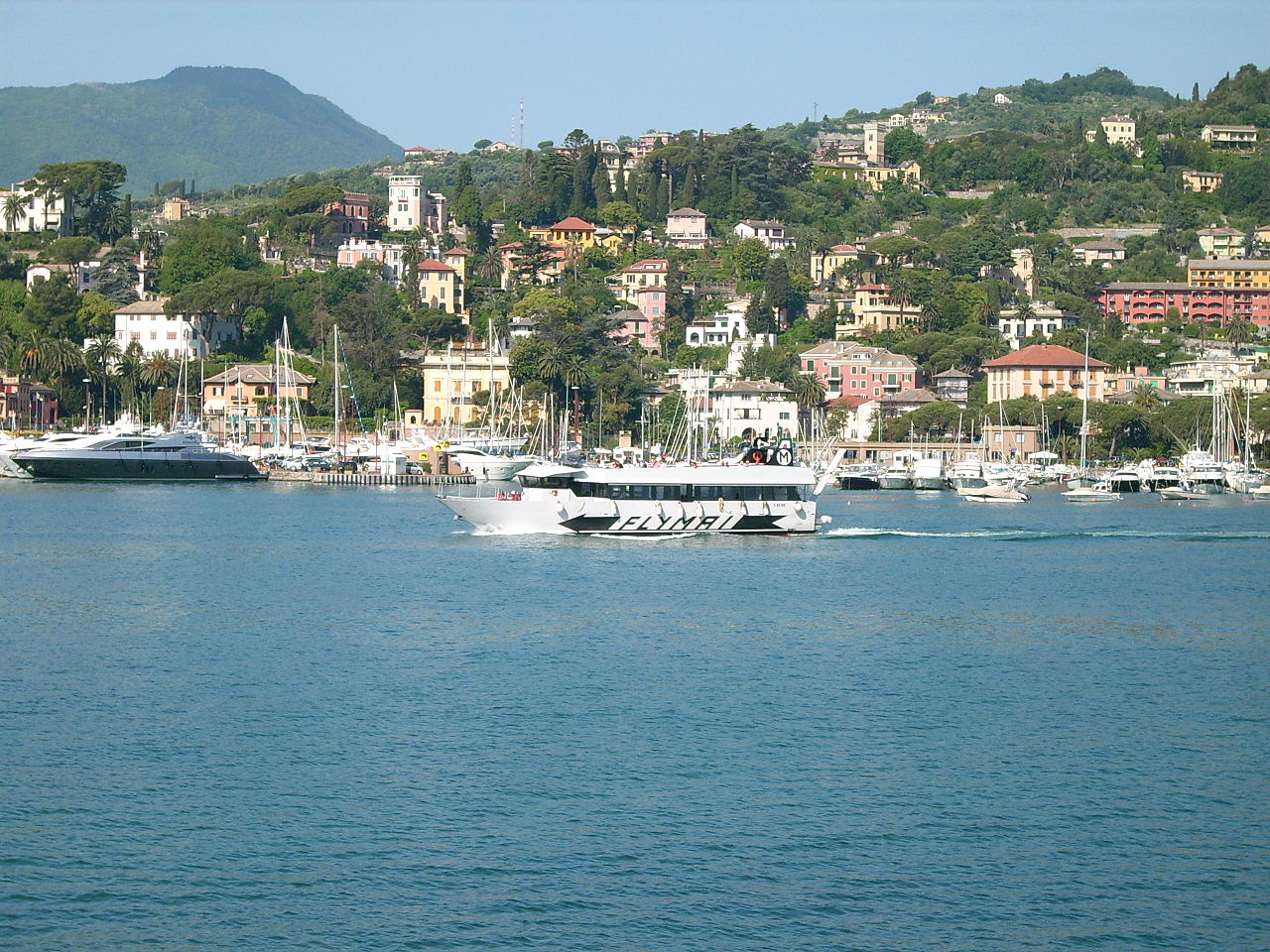
Tigullio Gulf resort town with a sea-edge castle, palm-lined promenade, and Montallegro cable car
Rapallo is the largest town on the Tigullio Gulf, with around 30,000 residents and a long history as a resort. Its symbol is the Castello di Rapallo — a small sixteenth-century fort on a rocky islet just off the promenade, once a defence against Saracen pirates, now a venue for temporary exhibitions with its feet in the sea. The Lungomare Vittorio Veneto curves around the harbour in the classic Ligurian fashion, all palm trees and pastel-painted hotels.
The town's most distinctive excursion is the cable car to the Sanctuary of Montallegro, rising 612 metres to a hilltop church with sweeping views over the gulf and, on clear days, out to Corsica. The sanctuary dates from the sixteenth century and its walls are covered with a remarkable collection of votive offerings — small painted panels recording disasters narrowly averted by divine intervention.
Rapallo has a minor place in twentieth-century history: in November 1920 it hosted the negotiations that produced the Treaty of Rapallo, settling the border dispute between Italy and Yugoslavia that had simmered since WWI. The literary connection is better known in some circles — Ezra Pound lived here through much of the 1920s and 1930s, and Max Beerbohm spent his final decades on the seafront.
In early July, Rapallo holds its main festival in honour of the Madonna di Montallegro. The Castello di Rapallo is set ablaze with fireworks in one of the most spectacular displays on the Riviera. The town is also a practical base: Portofino is 15 minutes by ferry, and the Cinque Terre is reachable by train or summer boat service.
Guide
Day Trips
Rapallo's position in the middle of the Tigullio Gulf makes it an excellent base. Portofino is the obvious first choice — 15 minutes by ferry in summer, a little longer by road. The village is small and the harbour is one of the most photographed in Italy; go early in the morning or late in the afternoon to beat the day-tripper crowd.
The Cinque Terre is reachable by train (change at La Spezia) or by summer ferry, which calls at the villages from the sea. Riomaggiore is the closest village; the full ferry run covers all five. Chiavari, the next major town east along the gulf, is 20 minutes by train and has a good antiques market on the second weekend of each month.
Guide
Getting There
Rapallo is on the main Genoa–La Spezia coastal railway line. Trains from Genoa Brignole take around 30 minutes; there are frequent departures throughout the day. From Milan, change at Genoa; from Florence, change at La Spezia or travel via Pisa and the coast. The station is central, five minutes on foot from the seafront.
By car, Rapallo is on the A12 motorway (Genova–Livorno), exit Rapallo. The drive from Genoa takes about 35 minutes outside of summer traffic. Parking in the centre is limited and metered; the car parks near the marina are the most convenient.
In summer, Tigullio ferries connect Rapallo with Portofino, Santa Margherita Ligure, and — on longer runs — the Cinque Terre. The ferry to Portofino takes about 15 minutes and is a more enjoyable approach than the road. Check Tigullio ferry timetables at the embarcadero on the promenade.