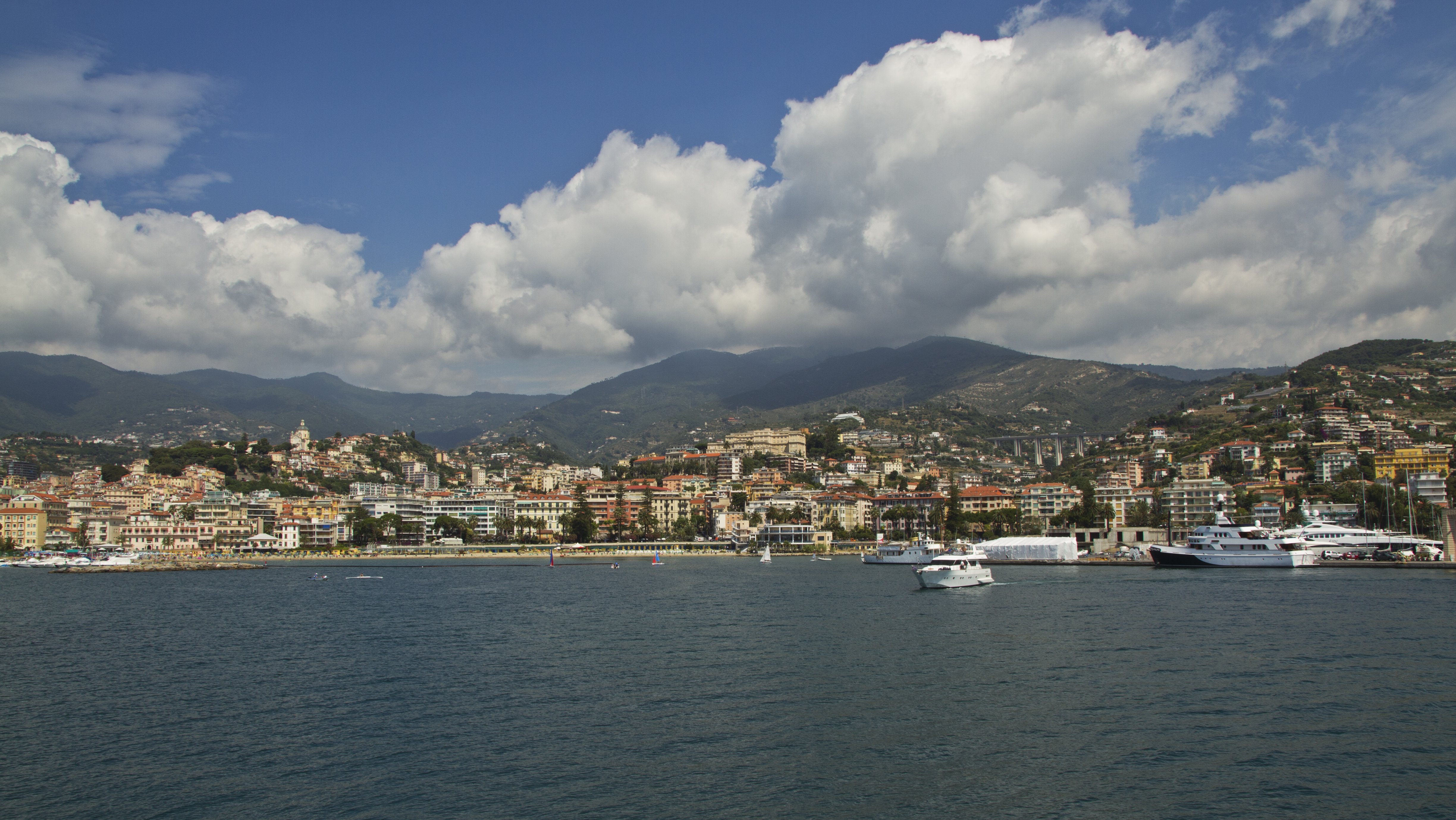
Sanremo is the grand old resort of the Italian Riviera, draped across the hillside between Capo Verde and Capo Nero in an amphitheatre facing the sea. It has been drawing visitors since the 19th century — Russian aristocrats, British wintering parties, and later the Italian establishment — and still carries an air of faded Belle Époque glamour in its seafront hotels, the Casino Municipale, and the palm-lined promenades.
The town is best known internationally for two things: the annual Sanremo Music Festival, which has launched Italian pop careers since 1951, and the Milan–Sanremo cycling classic, one of the sport's oldest one-day races. But the real pleasure is in wandering. The old town, La Pigna, climbs steeply from the waterfront in a tangle of narrow alleyways, stone staircases, and shuttered houses — quiet, shaded, and largely free of tourists. At the top of La Pigna, the Santuario della Madonna della Costa offers the best view in town.
Sanremo also sits at the heart of the Ligurian flower industry. The hills behind town are covered with greenhouses growing carnations, roses, and mimosa. The wholesale flower market is one of the largest in Europe, operating in the small hours of the night. The climate is exceptionally mild, making it a pleasant destination year-round.
Alfred Nobel spent his final years here and died at Villa Nobel in 1896 — it is now a museum and one of the town's most interesting and least-visited sights. The 24-kilometre coastal cycling path built on the old railway line is the most enjoyable way to explore the seafront.